
Une rentrée scolaire tout en douceur : 5 rituels pour rassurer son enfant et apaiser ses émotions

appréhension rentrée scolaire rituel

Cartable neuf, nouvelle classe, nouveaux visages… La rentrée scolaire est une aventure excitante, mais elle peut aussi réveiller chez certains enfants une belle dose d'appréhension. Et du côté des parents, entre l'organisation logistique, le petit dernier à porter et l'aîné à rassurer devant le portail, l'équation n'est pas toujours simple non plus. Bonne nouvelle : quelques rituels simples, répétés jour après jour, suffisent souvent à transformer cette angoisse en petit rendez-vous rassurant, pour toute la famille.

Sommaire

Pourquoi la rentrée bouscule autant les émotions des enfants

Changement de rythme, nouveaux repères, séparation d'avec le cocon familial : la rentrée cumule à elle seule plusieurs sources de stress pour un tout jeune cerveau encore en construction. Ce n'est pas "dans la tête", c'est une réaction tout à fait normale face à l'inconnu, qui touche des enfants très différents, du petit qui découvre la crèche ou la maternelle à celui qui change d'école en primaire.

Selon l'étude Enabee menée par Santé publique France auprès d'enfants du CP au CM2, "13 % des 6-11 ans présentent au moins un trouble probable de santé mentale, dont 5,6 % à dominante émotionnelle (anxiété, tristesse)". Un chiffre qui rappelle qu'accompagner les émotions de son enfant à la rentrée n'a rien d'anecdotique, et que quelques gestes du quotidien peuvent vraiment faire la différence.

Ce qu'il faut retenir, c'est que la sécurité affective d'un enfant se construit avant tout dans la répétition et le contact. Un rituel fiable, un geste tendre au bon moment, un parent disponible quelques minutes : voilà ce qui rassure bien plus qu'un long discours rationnel sur "pourquoi il ne faut pas avoir peur".

Le rituel du soir, pour ancrer la sécurité avant de dormir

Un enfant rassuré le soir est un enfant qui aborde le lendemain plus sereinement. Gardez (ou instaurez dès maintenant, si ce n'est pas encore le cas) une routine du coucher courte et immuable : bain, histoire, câlin, phrase rituelle du type "à demain, je t'aime". La régularité compte plus que la durée. Un enfant qui sait exactement à quoi s'attendre chaque soir dort mieux, et un enfant qui dort mieux gère mieux ses émotions le lendemain.

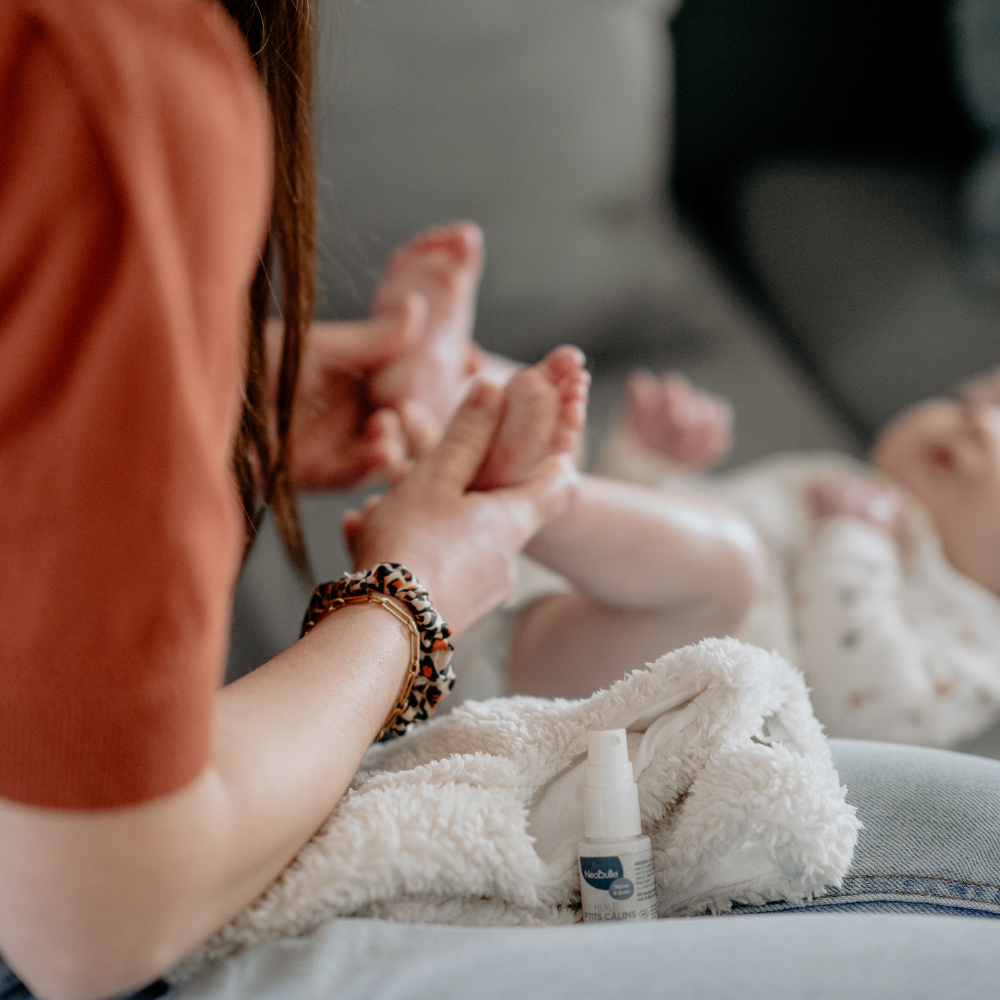
Un moment de massage doux avant le coucher peut aussi devenir ce petit sas de décompression tant attendu, y compris chez les plus grands qui aiment encore beaucoup le contact physique avec leurs parents, même s'ils ne le demandent plus toujours spontanément. Quelques minutes de contact, mains sur le dos, favorisent la détente et renforcent la complicité parent-enfant, un vrai plus quand les journées sont chargées d'émotions nouvelles.

Pour ce moment de massage, notre huile P'tits Câlins accompagne les tout-petits dès la naissance, avec une texture neutre pensée pour le contact peau à peau. Pour les enfants un peu plus grands, notre huile Douce Nuit, spécialement pensée pour le massage du soir, s'intègre facilement à la routine du coucher : quelques minutes chaque soir, toujours au même moment, suffisent à envoyer un signal clair au cerveau de l'enfant, "c'est l'heure de se détendre".

Verbaliser les émotions, avec des mots simples

Un enfant qui n'a pas les mots pour dire "j'ai peur" ou "je suis triste" l'exprime souvent par le corps : mal au ventre, pleurs au réveil, agitation, difficultés d'endormissement. Donnez-lui un vocabulaire simple pour nommer ce qu'il ressent, sans jugement et sans minimiser.

Le "baromètre des émotions" fonctionne très bien dès 3-4 ans : un petit dessin avec plusieurs visages (content, inquiet, triste, en colère) que l'enfant pointe du doigt chaque matin ou chaque soir. Nommer une émotion, c'est déjà commencer à l'apprivoiser. Vous pouvez transformer ce moment en petit rituel familial, à faire ensemble autour de la table du petit-déjeuner ou juste avant le coucher.

Pour créer une ambiance propice à ces échanges, notre spray d'ambiance Détente & dodo peut accompagner ce temps de parole en douceur, en instaurant un fond olfactif apaisant dans la chambre au moment de la discussion du soir. Un petit geste sensoriel qui aide toute la maisonnée à ralentir, sans remplacer bien sûr l'échange verbal, qui reste l'essentiel.

Un objet-relais pour faire le pont entre la maison et l'école

Doudou, petit mouchoir parfumé au parfum de la maison, photo glissée dans la poche du cartable… Un objet transitionnel permet à l'enfant d'emporter un morceau de sécurité avec lui. Ce besoin de contact et de repère olfactif ou tactile ne disparaît pas d'un coup à 3 ou 6 ans, il évolue simplement de forme.

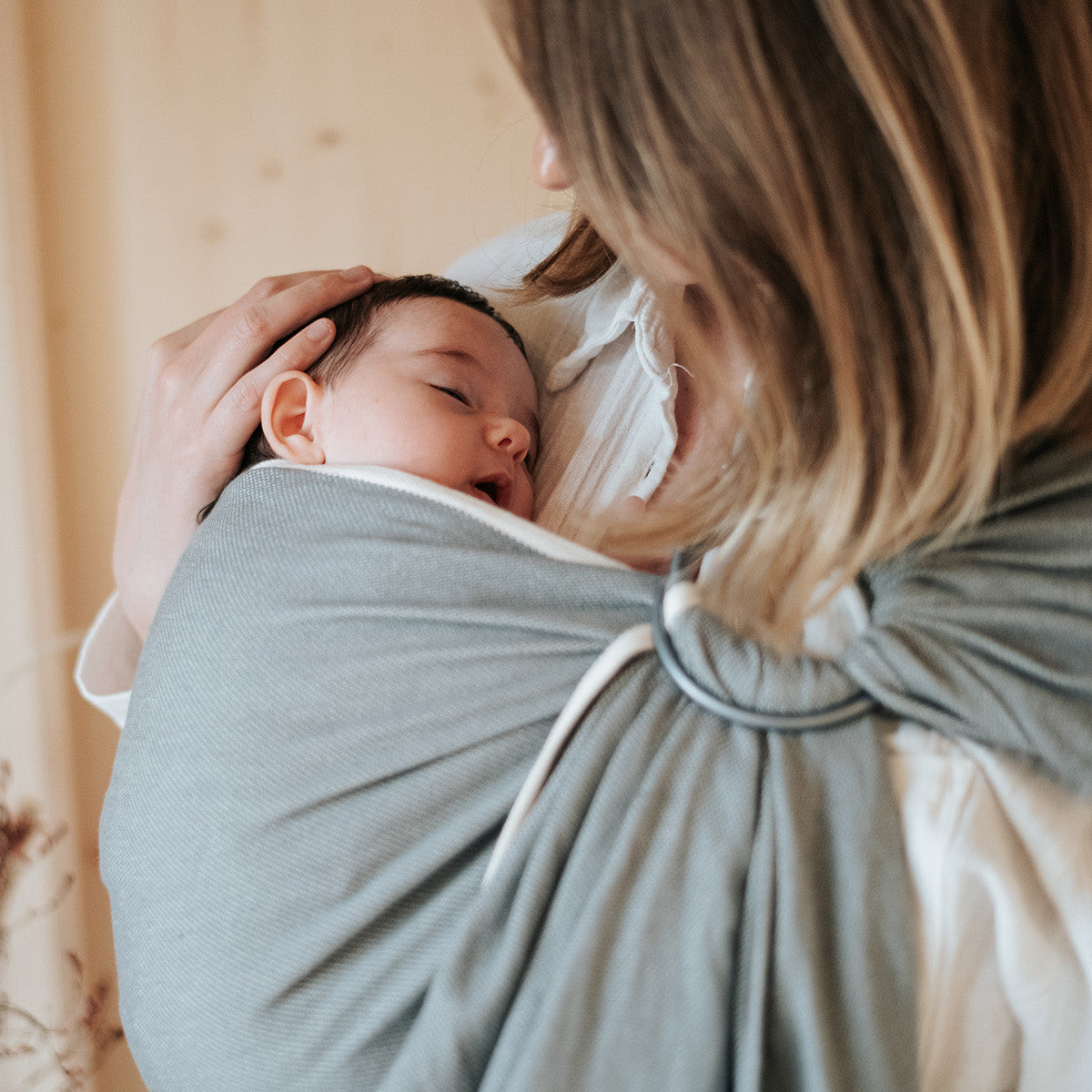
Ce besoin de contact rassurant, on le connaît bien chez Néobulle, puisqu'il est au cœur de notre philosophie du portage physiologique dès les premiers mois de vie. D'ailleurs, si un petit frère ou une petite sœur fait aussi sa rentrée en crèche ou reste à la maison pendant que l'aîné part à l'école, le portage peut devenir un formidable allié du matin : porter le plus jeune pendant que vous accompagnez le plus grand jusqu'au portail permet de garder les mains libres tout en offrant au bébé la proximité rassurante dont il a besoin, dans une position respectueuse de sa physiologie.

Selon votre rythme et votre aisance, un sling s'installe en quelques secondes pour les trajets courts et pressés du matin, tandis qu'un porte-bébé préformé de la gamme Néo conviendra davantage si vous avez plusieurs arrêts à enchaîner avant de rentrer. Pour les tout-petits : pour ceux qui alternent marche et portage, notre aide à bras Hop'la se glisse facilement dans le sac et permet un câlin porté express.

Anticiper concrètement le déroulé de la journée

L'inconnu nourrit l'angoisse. Expliquer à l'avance, avec des mots concrets et adaptés à son âge, ce qui va se passer (l'heure d'arrivée, la cantine, la sieste ou la récré, l'heure des retrouvailles) aide l'enfant à se projeter et à réduire l'incertitude.

Si l'école est nouvelle, une visite des lieux avant la rentrée, même rapide, change souvent la donne. Voir la cour, la classe, le porte-manteau avec son prénom dessus : autant de repères concrets qui rassurent bien plus que de longs discours. Vous pouvez aussi feuilleter ensemble des livres sur le thème de la rentrée, qui mettent des mots et des images sur ce que l'enfant va vivre.

Cette anticipation vaut aussi pour vous, parents. Préparer la veille les affaires, le sac, les vêtements du lendemain permet d'aborder le matin de la rentrée avec plus de sérénité, ce qui se ressent immédiatement chez l'enfant. Un parent détendu communique, sans un mot, un message de sécurité bien plus efficace que n'importe quelle explication. Et si vous-même avez besoin d'un petit sas de décompression, notre huile Dé-Stress, aux senteurs apaisantes, peut accompagner vos moments de pause tout au long de la journée, et pas seulement une fois les enfants couchés.

Le rituel du "au revoir", court et toujours identique

C'est souvent le moment le plus difficile, pour l'enfant comme pour le parent. Un rituel de séparation bref et répété chaque jour de la même façon (un bisou "pour la journée", une phrase toujours identique, un signe de la main à la fenêtre) crée un repère prévisible qui rassure.

Évitez de vous éterniser : plus l'au revoir est long et hésitant, plus il peut nourrir l'inquiétude de l'enfant. Un geste tendre, une phrase claire, et on tourne la page jusqu'aux retrouvailles. Si vous portez un plus jeune enfant au moment de cet au revoir, le fait de le sentir contre vous, calme et enveloppé dans son porte-bébé, peut d'ailleurs vous aider vous-même à garder ce moment court et apaisé, sans transmettre votre propre stress à l'aîné qui part.

Les essentiels Néobulle pour une rentrée sereine en famille

Au-delà des rituels du quotidien, nous avons rassemblé dans notre collection Soins détente & sommeil plusieurs soins naturels pensés pour accompagner bébés, enfants et toute la famille vers plus de calme pendant cette période de transition.

L'huile P'tits Câlins et l'huile Douce Nuit accompagnent le rituel du massage du soir évoqué plus haut, chacune adaptée à un âge différent : la première dès la naissance, la seconde pour le massage du soir des enfants un peu plus grands. Le spray d'ambiance Détente & dodo installe une atmosphère apaisante dans la chambre au moment du coucher, tandis que l'huile Dé-Stress accompagne les instants de pause des parents à tout moment de la journée, pas uniquement une fois les enfants endormis.

Pensée à l'origine pour le confort digestif des tout-petits, notre huile Calm'Bidou trouve aussi sa place à la rentrée : son geste de massage doux et circulaire sur le ventre apporte réconfort et apaisement aux bidous noués par l'appréhension, un joli rituel de câlin à partager avec les enfants un peu inquiets, quel que soit leur âge.

Pour aller plus loin, nous avons même préparé un kit de rentrée en famille, qui regroupe les essentiels pour aborder cette période sereinement, autant que possible. Une bonne façon de gagner du temps sur la préparation, pour se concentrer sur l'essentiel : le temps passé ensemble.

Côté portage, si votre famille s'agrandit ou si un petit dernier accompagne les trajets de rentrée, notre gamme de porte-bébés, écharpes et slings s'adapte à chaque étape et à chaque rythme de matinée. Tous nos porte-bébés sont conçus en coton biologique certifié, exempt de substances nocives, confectionnés dans nos ateliers de la Loire, et pensés avec des professionnels de santé pour respecter la physiologie de votre enfant.

En pratique : garder le cap sur la douceur

Ces 5 rituels n'ont pas besoin d'être parfaits pour fonctionner : c'est leur régularité qui construit la sécurité, pas leur sophistication. Certains jours seront plus faciles que d'autres, et c'est normal. L'essentiel est de garder un fil conducteur stable, sur lequel l'enfant peut s'appuyer même les jours où tout ne se passe pas exactement comme prévu.

Si l'angoisse persiste au-delà de quelques semaines ou s'accompagne de symptômes marqués (refus d'aller à l'école, troubles du sommeil importants, maux de ventre récurrents), n'hésitez pas à en parler à votre pédiatre ou votre médecin.

Et surtout, rappelez-vous que votre calme est le meilleur outil que vous ayez. Un enfant qui sent son parent serein a toutes les clés pour aborder sa propre rentrée avec confiance, même s'il reste un peu d'appréhension au fond de lui.

Questions fréquentes

À partir de quel âge un enfant peut-il exprimer son anxiété de rentrée ?

Dès 2-3 ans, un enfant peut manifester son appréhension par des pleurs, des maux de ventre ou un sommeil perturbé. Le pic d'anxiété de séparation se situe généralement entre 5 et 7 ans, période de l'entrée en cours préparatoire.

Comment savoir si l'angoisse de mon enfant est normale ou nécessite un accompagnement ?

Une appréhension qui s'atténue en quelques jours ou semaines est tout à fait normale. En revanche, un refus persistant d'aller à l'école, des symptômes physiques marqués ou une détresse qui ne s'améliore pas justifient d'en parler à un professionnel de santé.

Le rituel du soir doit-il être long pour être efficace ?

Non, c'est la régularité qui compte, pas la durée. Un rituel de 10-15 minutes, toujours identique et toujours au même moment, suffit à créer le repère de sécurité dont l'enfant a besoin avant de s'endormir.

Le portage peut-il vraiment aider pendant la période de rentrée ?

Oui, notamment quand un plus jeune enfant fait partie de la fratrie. Porter bébé pendant les trajets du matin garde les mains libres pour gérer l'aîné, tout en offrant au plus petit un contact rassurant, dans une position respectueuse de sa physiologie. Le contact physique reste rassurant à tout âge : il n'est pas rare qu'un enfant, même plus grand, ait besoin d'être porté en fin de première journée de rentrée. Dans ce cas, rien n'empêche de ressortir l'écharpe ou le sling du placard, ne serait-ce que pour quelques minutes, pour contenir, apaiser et tranquilliser naturellement, le temps que les émotions de la journée retombent.
Related articles
ParentalitéPremière rentrée scolaire : tous les tips Néobulle pour la vivre sereinement!

First day of school: how to experience it calmly?

The first day of school is a unique moment in a child's life… and in that of their parents! Between the excitement, anticipation, and sometimes a bit of worry, this step marks a big move towards independence. Why is the first day of school an important step? Starting school means discovering a new environment: a teacher (or a male teacher), an ATSEM, many classmates, a classroom with limited space, rules…Some children have previously been cared for by their parents, especially if they have taken a career break, for example with parental leave. Others have experienced a nanny or daycare. The first day of school marks a new milestone. This transition requires a period of adaptation, for both the child and the parents. The start of kindergarten also signals the beginning of new routines: a morning routine established by the teacher, discovering the leisure center, the cafeteria, the playground… Preparing your child for the first day of school Talking about school beforehand To reassure your child, talk to them about school several weeks before the first day.Explain what will happen: Who will be there to welcome them (their teacher and the ATSEM)What they will do during the day (activities, games, nap, meals)When they will go homeHow key moments will unfold (arrival, recess, departure)Children's books about kindergarten entry are an excellent way to put simple words to this new rhythm.💡Tip: during the summer, have fun creating a simple timeline to help your child gauge time. The timeline will serve as a visual aid throughout the summer to answer the question "how many sleeps before school?" Visiting the school before the first day of school If possible, organize a visit to your child's kindergarten before the first day of school.Seeing the classroom, the playground, and the toilets helps the child become familiar with the environment.This visual discovery reduces anxiety and facilitates adaptation. D-Day. Some schools even offer a small group meeting with future classmates, which is ideal for creating a first social connection before the big day.💡Tip: take photos of key places that you can show your child during the summer. Preparing school supplies as a family For the first day of school, the list of supplies is very short. However, there are a few essentials:A small backpack that is easy for the child to openSimple school supplies: tissue box, complete change of clothes, comforter if neededA leak-proof bottle labeled with their name💡 Tip: let your child choose their backpack so they can make it their own. This will surely boost their enthusiasm for the start of school, having a backpack "like the big kids"! Establishing a morning routine During the week before kindergarten begins, start establishing a morning routine similar to that of school: waking up at a fixed time, getting dressed, breakfast, brushing teeth. This will promote a smooth transition in anticipation ofthe first day of school.In the toddler section, 3-year-olds do not yet have the ability to understand time. Yesterday, tomorrow, next week, in an hour... these are concepts that are unfamiliar to them at this stage. Setting up time cues will be very helpful in learning these spatio-temporal references. For example:A very simple weekly planner, which distinguishes with two different colors the time spent at school from that spent at home,A morning routine chart, to reassure the child and help them grasp the departure time for school,A wake-up clock that distinguishes day and night, to facilitate bedtime and wake-up moments Managing separation moments Morning tears: a common phenomenon during the first day of school Let's be honest: tears are common during the weeks following the first day of school. We sincerely hope you can avoid this, but... entering kindergarten comes with a flood of emotions.Experiencing this separation, discovering this new environment, meeting classmates who were previously unknown, is a huge hurdle to overcome. Especially since group dynamics also play a role. Even if your child is enthusiastic, on the eve of their first day, if surrounded by other children crying, they will probably have difficulty holding back their tears. This does not mean they dislike school, nor does it reflect poorly on your preparation, so don’t worry. Often, children calm down quickly after the parent leaves.Rest assured: teachers and ATSEM staff are accustomed to guiding children through this adaptation phase. Say goodbye without lingering The metaphor of the bandage illustrates this delicate morning separation time quite well. Sometimes, saying goodbye without lingering makes the transition easier.Be attentive to your child's emotions and feelings, of course. But do not hesitate to create a short and recognizable ritual that you and your child can adopt to feel secure:Take them to the door or to the classroomFree activities are often set up by the teacher; invite your child to choose the one they like the most,A small comforting cuddleA reassuring phrase ("I love you, have a great day, I will come back after the nap")For some children, seeing their parents stay too long indeed makes separation more difficult. Supporting your child's emotions The first day back at school (and the following ones) is very often filled with emotion. It’s the end of one chapter, the beginning of another. A new environment, new people to talk to. Just as a lighthouse guides ships lost in a storm, do not hesitate to support your child in verbalizing their emotions. Here are several resources that can be helpful to ease separation anxiety:Drawing a heart on your child's hand: a well-known trick among young parents, tell your child that this heart is filled with kisses, and if they feel the need, they can look at it. It’s proof that you are thinking of them all day long, and that you love them with all your heart.The practice of carrying: some parents fear "carrying" their child too much, risking creating bad habits and making separation more difficult. But quite the opposite: carrying helps create a secure attachment bond. A child with a secure attachment bond thus feels confident to explore the world around them. Their instinct tells them that in times of distress, a parent will always be there to soothe them.The practice of massage: massages offer many benefits for babies, just like adults. Oxytocin secretion, relaxation, strengthening of the attachment bond... Do not hesitate to include it in your evening routine, for example using the organic P'tits Câlins oil, which soothes, nourishes, and hydrates the skin.Essential oils: they have many virtues. To soothe children from 3 years old, the D-Stress organic oil, made in France, can become your best ally before going to school!   The issue of continence: don't panic! Many parents fear that their child may not be fully toilet-trained before the first day of school. It is a legitimate concern. But, in reality: every child develops at their own pace, and it is common for the acquisition of continence to continue at the beginning of preschool.Teachers and ATSEM (early childhood staff) are there to:Help children in case of accidentsOffer (very) regular bathroom breaksEncourage and praiseThe group effect also promotes this learning! Trust your child. Once again, some children's books gently address this topic.💡 Slip into the backpack a complete change of clothes and a small pouch for wet clothes. There are training pants padded for a smooth transition. The 3 mistakes to avoid for a peaceful first day of school! During the first day of school, the desire to do well is natural... but some habits can, without realizing it, increase the child's stress. Remembering that this step is primarily a period of adaptation, it is easier to adopt good habits beforehand :There's no need to pressure yourself about continence: promise, daytime continence will come with time, let go of the subject.Focus your questions in the evening: some parents would like to turn into little mice to observe what their child does during the day. Don't expect a detailed report from the teacher. Keep in mind that your child cannot remember everything and is tired after a day at school. For example, simply ask: "What did you enjoy the most today?".Avoid changing the entire family routine at the same time : maintaining certain familiar references to avoid further disrupting their favorite days will promote a smooth transition. FAQ – First day of school, the most frequently asked questions by parents My child cries every morning, what should I do? Morning tears are common. Don't feel guilty. Reassure them that you will come back to pick them up and adopt a consistent separation ritual. Most children calm down quickly after the parent leaves. If the tears persist for several weeks after the start of school, do not hesitate to schedule a meeting with the teacher to discuss possible measures to facilitate separation. Should my child be able to dress themselves? Not necessarily! The teacher and the teaching assistant help children put on or take off their coats. The important thing is that they participate according to their abilities. It is through practice that they will develop fine motor skills and learn to dress independently. Choose clothes that are easy to handle and comfortable (Velcro sneakers, pull-over sweaters, etc.). My child is not toilet-trained, can I put a diaper on them at school? No, it is not allowed to send your child to school in a diaper. This applies to both traditional Velcro models and panty-style models. However, you can opt for training pants. They have a padded section that prevents your child from getting soaked in case of an accident. In conclusion The first day of school is a mixture of emotions for the whole family.It is possible to prepare your child beforehand (emotionally and materially), establish a reassuring morning routine, and communicate kindly to help them face this step with confidence.Whether it’s choosing the backpack, comforting during tears, or preparing for separation, every detail counts to facilitate the transition. There will surely be a gap between what you envisioned for that first day of school and... the reality at the moment. It is impossible to foresee everything in advance. But remember: you are doing your best, with the resources available to you.

traitement poux urgent

Poux dès la rentrée : les bons réflexes à adopter sans attendre

Poux détectés dès la première semaine d'école ? Pas de panique, mais pas d'attente non plus : chaque femelle pou pond jusqu'à 10 œufs par jour, et plus vous tardez, plus le risque de recontamination grimpe pour toute la fratrie. On vous explique le réflexe à avoir ce soir même : quoi utiliser, comment traiter étape par étape, et ce que dit vraiment la réglementation sur le retour en classe.

BébéQuel système de portage utiliser pour un court trajet ?

Which carrying system should be used for a short trip?

We often talk about the choice of carrying systems for hikes and walks... But less so when it comes to carrying over shorter distances. Yet, it is also a real issue! And yes... Quick trips, school/nanny/crèche runs, and other short errands punctuate the parents' daily life. So which baby carrier to choose? Can we use the same as for hikes? We tell you everything! What is my main need for carrying my baby? To choose the right carrying system, it’s a bit like when you want to buy a pair of shoes or clothes: you need to be clear about your main need, to avoid ending up stuck on the beach in flip-flops. Most often, when you want to carry over short distances, you will look at the following criteria: Practicality: the baby carrier must be easy and practical to put on in all circumstances (including in the middle of the street)Quick donning/doffing: the baby carrier should be put on (or taken off) very quickly, possibly in a waiting room or in a parking lotNo straps dragging on the ground: the baby carrier must be able to be installed in the middle of the street, for example after getting out of the carThese criteria are, of course, not exhaustive but already help to get a sense of the overall situation.In daily life, unlike during a walk where once properly adjusted and fitted you don’t touch anything for a long time, you need to imagine that the baby carrier will be frequently put on and taken off, sometimes a bit "on the fly" (not to say completely haphazard!), so it’s really important to choose a model that is not a headache and that truly makes your life easier! If it takes too long to put on (meaning more than the travel time itself), it can quickly become frustrating and discouraging.Then, you will find several configurations depending a bit on your lifestyle and whether you have other carrying systems to complement or not. I just want a model to carry my baby during my short urban trips If you only want a small carrier for short trips: the sling is your friend!This is THE portable baby carrier par excellence. Set up over the shoulder on one side, it pre-installs and can be kept on you, for example in the car while the baby is in the car seat, ready for easy installation as soon as you arrive at your destination. He adjusts easily and detaches with one hand: tensions are self-blocking in the rings and do not require any knot at the end.Since it is quite compact, it easily slips into the diaper bag to stay, for example, at the daycare in the baby bag during the day.By offering off-center carrying, the sling allows you to show your little one many things and to share many beautiful moments with them. Off-center carrying is also appreciated when you have a bigger one to manage because it frees up a bit more space in front! At the "expert" level: the sling is the only carrying system that does not require you to lay down your baby to be able to install it! Bonus? The most skillful among you will also be able to breastfeed their little one while walking (not too fast!).Disadvantage: carrying on one shoulder is not suitable for long-term carries, where it will become quickly uncomfortable. I also want to go hiking with it! Want to combine the needs inherent to both small and large movements? Why not opt for a preformed baby carrier? The Neo range is the ideal solution for parents who like to alternate between metro rides and café terraces, and open spaces. Installed in 2 clips, preformed carriers blend into daily life and provide both comfort and freedom.Like the sling, the preformed can simply stay clipped at the waist while waiting to welcome your child, and even then , it doesn’t drag on the ground and stays clean, which is all the more appreciable when it rains.At the "expert" level, the baby will do the shopping with you on your back and will show you all the vegetables and fruits they want to put in the basket!Disadvantage: when changing carriers, there are a few adjustments (quick ones!) to be redone. My toddler is walking When the child walks, the needs change and often carrying becomes less and less necessary… Especially since toddlers love exploring their environment on their own and playing superheroes as soon as they find a nice stick!Nevertheless, even the most enduring superheroes are entitled to be tired and need a super-parent to rescue and carry them during a more challenging journey than usual.This obviously happens when you no longer have a backup baby carrier with you. We recommend all parents to have a hip seat carrier support of the Hop-la type on hand in their bag! Ultra-compact, the hop-la fits in a handbag, designed to support your child's bottom and relieve your arms. It does not replace a real baby carrier but can save your day in many everyday situations and proves to be a wise choice for many small trips with a "small-big"! And the other carrying systems? What about other carrying systems? Indeed, we did not mention slings and mei-tai in this article. These tend to be a bit more time-consuming to set up (especially for the sling) and/or have significant fabric lengths, making them less suited for quick uses than a sling or a preformed carrier, and we would not recommend those for specific quick-use scenarios. However, if you already own them, do not hesitate to experiment with many different configurations to see for yourself and in your daily life whether they suit you, before considering other purchases!As always in carrying, there is no single truth and it is up to each individual to choose based on their feelings.You are now equipped for your small trips with babies! So, which baby carrier will you choose?