
Le portage hanche : une ouverture sur le monde en toute sécurité
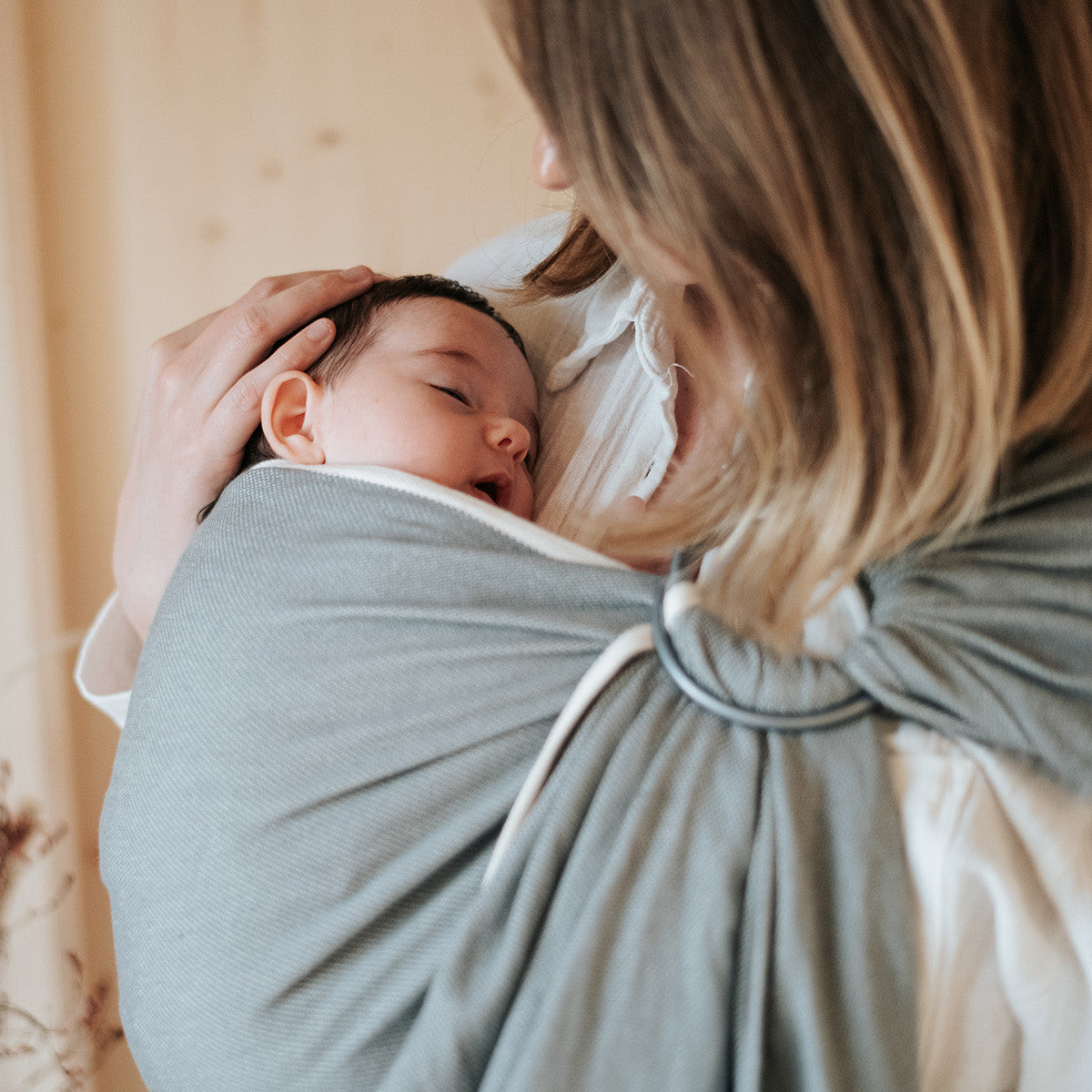
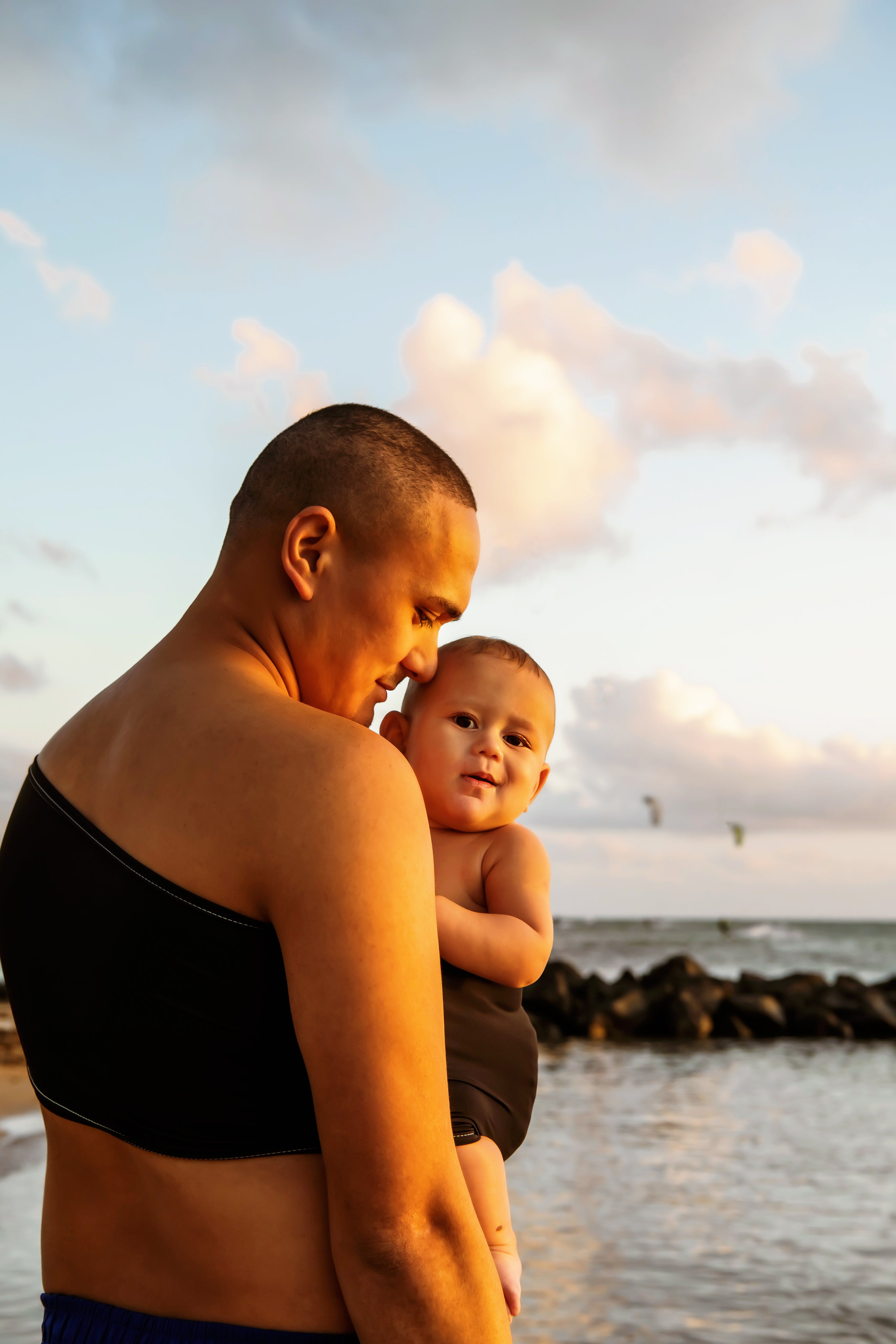
Le temps d’un câlin, d’une petite course ou d’une fin de promenade à gambader dans le parc… le portage sur la hanche est instinctif et accueille spontanément votre enfant.C’est une manière naturelle de porter à partir du moment où le bébé tient bien sa tête et son dos. Il est ainsi bien calé et peut voir tout ce qu’il se passe à hauteur d’adulte. C'est beaucoup plus amusant pour lui et favorise son éveil !Pourquoi privilégier le portage sur le côté ?Il y a plus facile et plus confortable que le portage à bras ! Il faut opter pour une solution simple et confortable pour répondre aux besoins de découverte de bébé, tout en assurant sa sécurité émotionnelle.On ne parle donc pas du « face au monde » qui est vraiment peu adapté pour les bébés (voir notre article sur les risques du portage face au monde). Le portage côté permet d'ouvrir le champ de vision sans pour autant mettre votre bébé en hyperstimulation. En portant sur la hanche, votre bébé conserve un contact visuel fort avec vous ET cela vous permet de libérer au moins un bras. Une nécessité lorsqu’on est parent, n’est-ce pas ?Sling ou Aide à bras : quel porte-bébé choisir pour le portage hanche ?Chez Néobulle, le Sling et le Hop’la sont deux solutions de portage parfaitement adaptées pour installer bébé sur la hanche. Mais lequel choisir ?Le Sling : le portage hanche mains-libres dès la naissanceLe Sling conviendra dès la naissance. Il permet autant le portage ventral que le portage sur le côté, au gré des besoins et de l’envie de « tout voir » de votre petit. Il permet de bien soutenir le dos du bébé grâce au tissu qui monte jusqu’à la nuque, surtout s’il a moins de 4 ou 5 mois et que son dos est peu musclé. Bien soutenu, il pourra profiter d’un paysage plus large, voir ce que vous voyez, ce qui conduit à une interaction plus fréquente.L'avantage pour le parent : Le Sling apporte un confort indéniable grâce au tissu déployé sur l'épaule et au serrage précis. Cela crée un contrepoids et limite la sensation de déséquilibre. C’est le moyen de portage idéal en dessous de 9/12 mois car il vous libère vos deux bras.Le Hop'la : l'aide à bras pour les plus grandsLe système de portage Hop’la est encore moins encombrant que le Sling ! C’est ce qu’on appelle une aide à bras ou un porte-bébé d'appoint. Convenant aux enfants de plus de 6 mois (qui tiennent bien leur dos), il soutient les fesses et les jambes de bébé en position physiologique (accroupi). Vous n’aurez plus qu’à garder une seule main sur son dos par sécurité.En tricot léger, il épouse votre épaule et la morphologie du bébé pour un portage agréable sans réglage. Il sera d’un grand secours jusqu’aux 3 ans de votre enfant, pour ces moments où la fatigue se fait sentir et où les bras sont réclamés ! Pratique, il se glisse dans votre sac à main.Résumé : Bien choisir son portage hanche chez NéobullePour résumer, nos deux systèmes garantissent une position physiologique et un confort ergonomique (tissu ajusté et épaule enveloppée) contrairement à d'autres systèmes du marché parfois douloureux.1- Le Sling (Porte-bébé) :Dès la naissance et jusqu’à 3 ans.Libère les 2 bras du porteur.Demande un réglage précis (petit apprentissage nécessaire)2- Le Hop’la (Aide à bras) :À partir de 6 mois (bébé tonique) et jusqu’à 3 ans.Libère 1 bras du porteur.Sans réglage, installation immédiate.Alors, quel est votre choix ?N’oubliez pas que notre monitrice de portage est disponible au service client pour répondre à vos questions. Nos tutos et visios sont également là pour vous aider.

Noël, mode d’emploi pour parents (presque) zen
Noël approche.Les lumières brillent, les chants résonnent, les listes s’allongent… et bizarrement, la charge mentale aussi.Car soyons honnêtes :Derrière les jolis pulls et les photos souriantes, Noël peut vite devenir un marathon émotionnel, surtout quand on est parent.Penser aux cadeaux (des enfants, mais pas que), aux repas, aux trajets, aux siestes à respecter, aux remarques à anticiper…Et très souvent, ce sont encore les femmes qui portent l’essentiel de cette organisation invisible.Alors oui, Noël peut être une fête joyeuse, chaleureuse, pleine de sens.Mais parfois aussi, c’est juste fatigant. Et ça aussi, ça mérite d’être dit.Noël avec un bébé (ou un jeune enfant) : spoiler alertNon, ce ne sera peut-être pas comme avant.Et non, ce n’est pas grave.Quand on devient parent, les grandes réunions familiales peuvent prendre une autre couleur :des horaires chamboulésdes bébés passés de bras en bras (astuce imparable : installer bébé en portage, personne n'osera vous demander de le défaire ! )des conseils non sollicités (toujours donnés avec les meilleures intentions, bien sûr 😅)👉 « Tu devrais le couvrir davantage »👉 « Laisse-le pleurer un peu »👉 « Nous on faisait comme ça, et ça allait très bien »Respirez.Vous n’avez rien à prouver.Et surtout, vous avez le droit de faire à votre façon.Nos petits conseils pour survivre à Noël (et y trouver du bon)🎄 Faire moins, mais mieuxVous n’êtes pas obligé·e de tout faire.Dire non à un repas, écourter une visite, simplifier un menu… ce n’est pas gâcher Noël, c’est prendre soin de vous.🎄 Baisser le niveau d’exigenceNoël Pinterest, ce sera pour une autre année.Un enfant a surtout besoin de parents disponibles, pas d’une table parfaite.🎄 Se protéger des injonctionsUn sourire, une phrase courte, et on passe à autre chose :« Merci, on a trouvé ce qui nous convient. »(Répéter si nécessaire.)🎄 Créer ses propres rituelsMême tout petits, les rituels comptent : une balade, une histoire, un moment calme.Ce sont souvent eux dont on se souvient le plus.Et si on se rappelait l’essentiel ?Noël n’a pas à être parfait pour être beau.Il peut être doux, imparfait, un peu chaotique… et profondément vivant.Alors cette année, si on essayait surtout de :💛 préserver notre énergie💛 écouter nos besoins💛 et faire de la place à ce qui nous fait vraiment du bienChez Néobulle, on vous souhaite un Noël à votre image :authentique, sensible… et le plus serein possible.Besoin d’un coup de pouce pour les cadeaux ?Pour alléger un peu la charge mentale de décembre, on a préparé un guide cadeau de Noël : des idées utiles, pleines de sens, pour faire plaisir sans se compliquer la vie.👉 À découvrir quand vous voulez.

Guide cadeaux noël Néobulle : des idées douces et utiles pour toute la famille
Trouver LE cadeau parfait pour toute la famille ? Mission quasi impossible.Heureusement, chez Néobulle, on a de quoi sauver Noël, les anniversaires, les baby-showers…Accrochez-vous, voici le guide cadeaux Néobulle, garanti sans stress et 100 % utile !

First day of school: how to experience it calmly?
The first day of school is a unique moment in a child's life… and in that of their parents! Between the excitement, anticipation, and sometimes a bit of worry, this step marks a big move towards independence. Why is the first day of school an important step? Starting school means discovering a new environment: a teacher (or a male teacher), an ATSEM, many classmates, a classroom with limited space, rules…Some children have previously been cared for by their parents, especially if they have taken a career break, for example with parental leave. Others have experienced a nanny or daycare. The first day of school marks a new milestone. This transition requires a period of adaptation, for both the child and the parents. The start of kindergarten also signals the beginning of new routines: a morning routine established by the teacher, discovering the leisure center, the cafeteria, the playground… Preparing your child for the first day of school Talking about school beforehand To reassure your child, talk to them about school several weeks before the first day.Explain what will happen: Who will be there to welcome them (their teacher and the ATSEM)What they will do during the day (activities, games, nap, meals)When they will go homeHow key moments will unfold (arrival, recess, departure)Children's books about kindergarten entry are an excellent way to put simple words to this new rhythm.💡Tip: during the summer, have fun creating a simple timeline to help your child gauge time. The timeline will serve as a visual aid throughout the summer to answer the question "how many sleeps before school?" Visiting the school before the first day of school If possible, organize a visit to your child's kindergarten before the first day of school.Seeing the classroom, the playground, and the toilets helps the child become familiar with the environment.This visual discovery reduces anxiety and facilitates adaptation. D-Day. Some schools even offer a small group meeting with future classmates, which is ideal for creating a first social connection before the big day.💡Tip: take photos of key places that you can show your child during the summer. Preparing school supplies as a family For the first day of school, the list of supplies is very short. However, there are a few essentials:A small backpack that is easy for the child to openSimple school supplies: tissue box, complete change of clothes, comforter if neededA leak-proof bottle labeled with their name💡 Tip: let your child choose their backpack so they can make it their own. This will surely boost their enthusiasm for the start of school, having a backpack "like the big kids"! Establishing a morning routine During the week before kindergarten begins, start establishing a morning routine similar to that of school: waking up at a fixed time, getting dressed, breakfast, brushing teeth. This will promote a smooth transition in anticipation ofthe first day of school.In the toddler section, 3-year-olds do not yet have the ability to understand time. Yesterday, tomorrow, next week, in an hour... these are concepts that are unfamiliar to them at this stage. Setting up time cues will be very helpful in learning these spatio-temporal references. For example:A very simple weekly planner, which distinguishes with two different colors the time spent at school from that spent at home,A morning routine chart, to reassure the child and help them grasp the departure time for school,A wake-up clock that distinguishes day and night, to facilitate bedtime and wake-up moments Managing separation moments Morning tears: a common phenomenon during the first day of school Let's be honest: tears are common during the weeks following the first day of school. We sincerely hope you can avoid this, but... entering kindergarten comes with a flood of emotions.Experiencing this separation, discovering this new environment, meeting classmates who were previously unknown, is a huge hurdle to overcome. Especially since group dynamics also play a role. Even if your child is enthusiastic, on the eve of their first day, if surrounded by other children crying, they will probably have difficulty holding back their tears. This does not mean they dislike school, nor does it reflect poorly on your preparation, so don’t worry. Often, children calm down quickly after the parent leaves.Rest assured: teachers and ATSEM staff are accustomed to guiding children through this adaptation phase. Say goodbye without lingering The metaphor of the bandage illustrates this delicate morning separation time quite well. Sometimes, saying goodbye without lingering makes the transition easier.Be attentive to your child's emotions and feelings, of course. But do not hesitate to create a short and recognizable ritual that you and your child can adopt to feel secure:Take them to the door or to the classroomFree activities are often set up by the teacher; invite your child to choose the one they like the most,A small comforting cuddleA reassuring phrase ("I love you, have a great day, I will come back after the nap")For some children, seeing their parents stay too long indeed makes separation more difficult. Supporting your child's emotions The first day back at school (and the following ones) is very often filled with emotion. It’s the end of one chapter, the beginning of another. A new environment, new people to talk to. Just as a lighthouse guides ships lost in a storm, do not hesitate to support your child in verbalizing their emotions. Here are several resources that can be helpful to ease separation anxiety:Drawing a heart on your child's hand: a well-known trick among young parents, tell your child that this heart is filled with kisses, and if they feel the need, they can look at it. It’s proof that you are thinking of them all day long, and that you love them with all your heart.The practice of carrying: some parents fear "carrying" their child too much, risking creating bad habits and making separation more difficult. But quite the opposite: carrying helps create a secure attachment bond. A child with a secure attachment bond thus feels confident to explore the world around them. Their instinct tells them that in times of distress, a parent will always be there to soothe them.The practice of massage: massages offer many benefits for babies, just like adults. Oxytocin secretion, relaxation, strengthening of the attachment bond... Do not hesitate to include it in your evening routine, for example using the organic P'tits Câlins oil, which soothes, nourishes, and hydrates the skin.Essential oils: they have many virtues. To soothe children from 3 years old, the D-Stress organic oil, made in France, can become your best ally before going to school! The issue of continence: don't panic! Many parents fear that their child may not be fully toilet-trained before the first day of school. It is a legitimate concern. But, in reality: every child develops at their own pace, and it is common for the acquisition of continence to continue at the beginning of preschool.Teachers and ATSEM (early childhood staff) are there to:Help children in case of accidentsOffer (very) regular bathroom breaksEncourage and praiseThe group effect also promotes this learning! Trust your child. Once again, some children's books gently address this topic.💡 Slip into the backpack a complete change of clothes and a small pouch for wet clothes. There are training pants padded for a smooth transition. The 3 mistakes to avoid for a peaceful first day of school! During the first day of school, the desire to do well is natural... but some habits can, without realizing it, increase the child's stress. Remembering that this step is primarily a period of adaptation, it is easier to adopt good habits beforehand :There's no need to pressure yourself about continence: promise, daytime continence will come with time, let go of the subject.Focus your questions in the evening: some parents would like to turn into little mice to observe what their child does during the day. Don't expect a detailed report from the teacher. Keep in mind that your child cannot remember everything and is tired after a day at school. For example, simply ask: "What did you enjoy the most today?".Avoid changing the entire family routine at the same time : maintaining certain familiar references to avoid further disrupting their favorite days will promote a smooth transition. FAQ – First day of school, the most frequently asked questions by parents My child cries every morning, what should I do? Morning tears are common. Don't feel guilty. Reassure them that you will come back to pick them up and adopt a consistent separation ritual. Most children calm down quickly after the parent leaves. If the tears persist for several weeks after the start of school, do not hesitate to schedule a meeting with the teacher to discuss possible measures to facilitate separation. Should my child be able to dress themselves? Not necessarily! The teacher and the teaching assistant help children put on or take off their coats. The important thing is that they participate according to their abilities. It is through practice that they will develop fine motor skills and learn to dress independently. Choose clothes that are easy to handle and comfortable (Velcro sneakers, pull-over sweaters, etc.). My child is not toilet-trained, can I put a diaper on them at school? No, it is not allowed to send your child to school in a diaper. This applies to both traditional Velcro models and panty-style models. However, you can opt for training pants. They have a padded section that prevents your child from getting soaked in case of an accident. In conclusion The first day of school is a mixture of emotions for the whole family.It is possible to prepare your child beforehand (emotionally and materially), establish a reassuring morning routine, and communicate kindly to help them face this step with confidence.Whether it’s choosing the backpack, comforting during tears, or preparing for separation, every detail counts to facilitate the transition. There will surely be a gap between what you envisioned for that first day of school and... the reality at the moment. It is impossible to foresee everything in advance. But remember: you are doing your best, with the resources available to you.

First minor injuries of baby: identify and soothe
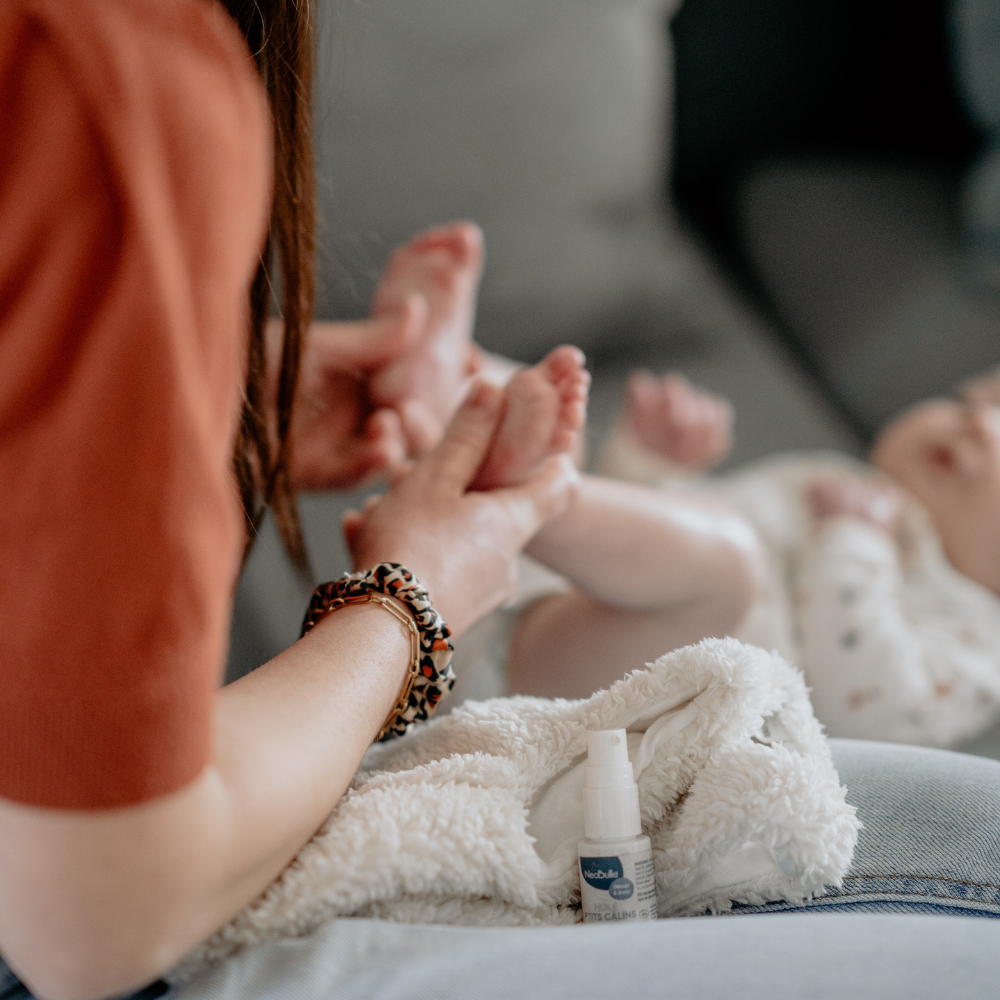
Even if a newborn is often in good health, they are not immune to minor discomforts as they grow. Learning to identify and quickly soothe these little ailments helps calm the entire family.Summary Baby ailments #1: stomach aches and digestive discomforts Baby ailments #2: first falls and small bumps Baby ailments #3: teething pains Baby ailments #4: scratches, scrapes, and other daily annoyances In summary: simple gestures to soothe baby's first ailments Baby ailments #1: stomach aches and digestive discomforts Recognize signs of colic and digestive discomfort Digestive pains are common during a baby's first year of life. Especially in the first few weeks, then during the introduction of solid foods. The immaturity of the newborn’s digestive system is largely responsible: things develop gradually. Baby twists, grimaces, pedals, and pushes with their legs? Your instinct tells you the answer: these are indeed signs of digestive discomfort! Simple gestures to soothe baby Here are some simple reflexes to incorporate into your daily routine to soothe your baby: Perform small circles clockwise with Calm'Bidou Organic Oil from birthApply it after diaper changes or during a calm wakeful phase (avoid crying spells)Gently bring baby's knees toward their belly to facilitate gas evacuationGive a warm bath at the end of the day to help them relax💡 Parent tip: If in doubt or if symptoms persist, always consult your doctor. Baby ailments #2: first falls and small bumps Secure the baby's environment Even very young children can sometimes topple over and become little aspiring stunt performers! For example, during the learning of crawling or walking. Secure your home’s areas (table corners, non-slip mats, etc.), but don’t forget: these small bumps are part of discovering the world. Relieve baby with appropriate care Keep the Bio Badaboum oil within reach. It’s the favorite of many parents: based on arnica and helichrysum, it soothes bumps and bruises from 3 months old. Thanks to its roll-on format, it can be applied directly to the skin, without massage. Baby bumps n°03: teething pains When do the first teeth appear? Teething usually begins between 3 and 6 months, but every baby develops at their own pace. Some are even born with a first tooth!These teething episodes are often accompanied by irritability, excessive salivation, redness on the cheeks, and can affect your little one's sleep (and... yours!). Relieving the first teething pains Although there is no miracle cure to completely soothe teething, here are some simple gestures to gently relieve your baby:Gently massage their gums with the Bio First Teeth Oil from 3 months, composed of a blend of calming vegetable oils and essential oils,Offer a cooled teething ring for a soothing effect.If your baby is eating solids, place some pieces of fruit or breast milk in a teether,Provide a reassuring presence and cuddles to help your baby through this phase (spoiler: carrying sessions can help and promote the secretion of oxytocin!)➡️ To learn more about teething, check out our dedicated article! Baby bumps n°04: scratches, scrapes, and other everyday ailments Don't panic: minor bumps without seriousness Baby’s nails grow quickly and can cause scratches, just like toys or everyday discoveries. If you are breastfeeding, you may have already noticed how formidable their tiny nails can be!In summer, the delicate skin of babies also tends to attract mosquitoes.As your baby develops motor skills, they start crawling and going on all fours. This is often a sensitive period for their knees, which can easily get scratched. A gentle and quick solution For small cuts, scratches, scraped knees, or injured elbows, the Bio P’tits Bobos Oil is ideal. Its roll-on format makes it so easy to apply, even for a moving baby from 3 months old!Formulated with essential oils of cistus, rose geranium, and fine lavender, this stick promotes skin healing and is suitable for the whole family! In summary: simple gestures to soothe baby's first bumps Minor bumps are an integral part of a baby's life and daily routine for parents. Whether it's digestive discomforts, small falls, teething episodes, or scratches, learning to identify and gently soothe them helps calm the whole family. By adopting simple gestures, using appropriate products, and providing a reassuring presence, you support your child in their discovery of the world around them.

What are the essential care for the newborn? All our advice and products
The arrival of a newborn is a unique and moving moment. To welcome baby in the best conditions, it is essential to know the care gestures to adopt and to equip oneself with suitable products. In this article, we guide you step by step through the essential care of the newborn, while offering gentle, natural, and effective solutions signed Nébulle.SummaryWhy are newborn cares so important?What are the essential cares for the newborn?Fostering the creation of bonds and emotional securityFAQ: Essential cares for the newbornIn summary: cares that rhyme with gentleness and simplicity Why are newborn cares so important? The first days and weeks of life are marked by an adaptation period for the baby. After 9 months, they leave the intrauterine environment and discover the outside world. Until then, they were sheltered in their amniotic sac. The placenta served as a real filter. At birth, the newborn comes into contact with microorganisms present in our environment. Gradually, they will develop their immunity.On a daily basis, it is the adults around them who take care of them. We speak of "caregivers" (or "caregiver") according to John Bowlby’s attachment theory. During these cares, adults interact with the child, who is entirely dependent on them during their early years. Donald Winnicott, a major figure in child psychoanalysis, wrote "a baby alone, that does not exist".Taking care of a newborn fulfills their need for social connection and strengthens emotional bonds. These gestures, often taken for granted, have an impact far beyond hygiene. Through them, parents become true attachment figures. They help reinforce the child's sense of security. If they are exposed to a stressful situation, if they feel distressed, they will know they can turn to their attachment figures, like a boat seeking the light of a lighthouse in a storm. What are the essential cares for the newborn? Daily cares: bathing and changing For daily bathing (face, skin folds of the groin and neck, diaper area), prefer washable wipes. Practical and economical, they are often easier to use than cotton squares that fray. About ten are enough, washed with the rest of the family’s laundry! Prefer wipes with one soft side and one absorbent side. Regarding exchange products, it is essential to use suitable products. The liniment, for example, protects the baby's sensitive skin from moisture, diaper friction, and weather aggressions. A true magic potion that can be used without rinsing, the liniment from Néobulle soothes and repairs from the first redness, starting from birth. An essential item to keep within reach! Bath time: gentleness and bonding Although not necessarily daily, bath time is part, in some families, of a significant moment in the weekly routine. We can distinguish:hygiene bath, aimed at cleaning the delicate skin,relaxation bath, during which it is not necessary to use soap. During the first weeks, and up to around 2 months, do not hesitate to prefer the technique of the wrapped bath. Simply swaddle the baby with a cloth before immersing them in water, which you will have previously checked the temperature of (between 37.5°C and 38°C). The bedtime ritual: establishing a calming routine Sleep is a major concern for young parents. And for good reason, a baby's sleep is very different from that of adults. Over a long process, which spans several years, their cycles will evolve, they will learn to differentiate day and night, and to fall asleep peacefully. But initially, night awakenings are frequent, and they still need their parents' presence to fall back asleep feeling secure.Implementing a gentle routine can facilitate falling asleep. This routine acts as a "time giver" that helps the baby to orient themselves and anticipate what is coming next. A massage with an appropriate oil, such as the Bio Gentle Night oil, from 3 months old, helps relax the baby before bedtime. Here is a simple sequence to reproduce:Position your hand in a C shape and smooth the baby's leg, from the groin to the toesUsing the pads of your thumbs, smooth the underside of their foot, from the heel to the toesWith your thumbs, smooth the top of the foot, from the toes to the ankleUsing a C-shaped hand, envelop the entire baby's leg and smooth the leg up to the groinRepeat each movement 5 to 6 times. The massage is a wonderful way to build a bond with your baby and allow the whole family to secrete oxytocin!It is also possible to massage the belly, arms, back, or even the face (the only area where oil use is not recommended). Calming assured, to prepare for sleep. 👉 Discover how to create a sleep-friendly environment thanks to our article on essential oils to diffuse to promote sleep in young children. Promoting the creation of bonds and emotional security Skin-to-skin contact: a comprehensive care From the very first hours, skin-to-skin contact plays a fundamental role. It helps your little one regulate their temperature, stabilizes the heartbeat, promotes the secretion of oxytocin, and thus facilitates breastfeeding. This proximity also meets a fundamental need of the newborn, who is unaware of their existence as an individual in full consciousness. It is a small mammal, programmed to feel secure when against its parents. After birth, but also upon returning from maternity, do not hesitate to include skin-to-skin sessions in your daily routine.The skin-to-skin wrap is an excellent tool for practicing comfortably, whether in maternity or at home. Designed with neonatal professionals, its soft and stretchable fabric wraps the baby against the parent's chest, creating a soothing cocoon. This shared moment helps to build the foundations of a strong and secure relationship. Therapeutic virtues of physiological carrying Are you looking for a solution to soothe your baby daily? The practice of carrying can undoubtedly meet your needs. In addition to freeing tired arms of new parents, carrying your baby allows you to: Reduce the frequency of acid reflux episodes in case of gastroesophageal reflux,Limit the risk of plagiocephaly,Promote the evacuation of gases and thus limit digestive discomfort,Reduce your baby's crying,Help regulate their temperature and vital functions (breathing, heartbeat)Meet their need for containment and proximity FAQ: Essential newborn care What are the first cares for a baby in the maternity ward? At birth, the initial cares vary according to the protocol and location (maternity ward, birth center, home, etc.). But, in most cases, the baby is dried, covered with a blanket, and quickly placed skin-to-skin. The cares generally include clamping the umbilical cord, checking reflexes, assessing the APGAR score, and taking measurements (weight and length). Depending on the gestational age at birth, your baby's skin may be more or less covered with a whitish substance . Don't worry, it is about the vernix caseosa. Increasingly, families are choosing to preserve this vernix by delaying the first bath so that the baby's skin can absorb it and benefit from its nourishing and protective properties. How do I know if I am doing the right things for my baby's daily care? We are not born parents; we become one. By groping, trying, and doing our best daily. Few adults have had the opportunity to truly handle a newborn for just a few hours! We all go through the "first time". Often, handling a baby during care can make them cry a little. For them too, it’s all new. The professionals present at birth and during the postpartum period will teach you each step, and it is by practicing them that you will become more and more comfortable and confident. My baby cries during bath time, how can I soothe him? Birth involves many upheavals for the baby. They go from an aquatic environment heated to 37°C to a terrestrial environment with many temperature variations. Their skin is also sensitive to touch (so avoid stroking and tickling in the first few months). Make sure the bath water is between 37.5°C and 38°C. To meet your little one's need for containment, don’t hesitate to swaddle them before the bath. They will feel the boundaries of the swaddle, which will remind them of the uterine walls, and will calm down. Finally, it is not necessary to wash your baby every day; you already clean them frequently during diaper changes. Which products should I favor for essential baby care? Choose products without synthetic fragrances, alcohol, or harsh preservatives. Neobulle offers a full range of natural-origin care products, made from ingredients from Organic Farming, formulated in France specifically to respect the sensitive skin of newborns. In summary: care that embodies softness and simplicity Essential care for newborns is not just about technique: it is an invitation to slow down and marvel at every moment shared with your baby. Through them, you also strengthen the emotional bond that unites you with your child. It’s not just about "cleaning" your little one (even if sometimes, you face a diaper overflowing on all sides!); these are also precious moments of interaction, communication, and complicity.If you are interested in the topic, Céline Alvarez explains simply how, from birth, the child's brain is shaped by sensory, emotional, and relational experiences: this is what is called brain plasticity. A concept that helps us realize how much daily care contributes to the overall development of the child.

Which baby door to choose when traveling? Plane, train, car: all our tips!
Traveling with a baby is possible! It requires a bit of planning in advance. Using a baby carrier while traveling is a compact, practical, and reassuring solution. Carrying your baby accompanies you through airports, train stations, or rough paths, so you can explore with your family!But then, what type of carrying method is most suitable depending on the child's age, the destination, or the weather? We help you make the right choice for trips that combine serenity and comfort!SummaryWhy use a baby carrier when traveling? Baby carrier while traveling: which model to choose based on your destination? What reflexes to adopt in hot countries? Which baby carrier depending on the mode of transport? Focus: the hiking baby carrier, not so suitable for travel Travel-specific checklist: what to take with your baby carrier? FAQ: Baby carrier while traveling: essential questions! In summary: the baby carrier while traveling, a real ally Why use a baby carrier when traveling? Planning a family trip soon? Whether your stay lasts a weekend or several weeks, planning your local trips by packing a carrying device in your luggage can be essential! Indeed, using a baby carrier while traveling allows you to:Facilitate your movements in places inaccessible to strollers like the beach or certain hiking trails,Comfort the baby in public transport (train, plane, bus...) by meeting their proximity needsKeep your hands free to carry suitcases or passportsTravel light, by leaving your stroller at home (about 7kg for a travel stroller compared to 500 grams for a My Neo baby carrier!)Promote your baby's sleep, wherever you are, they can sleep against you!Introduce the world at adult height, and offer a 360° field of view, broader than when your baby is lying down or sitting in a stroller Baby carrier while traveling: which model to choose based on your destination? Preformed baby carrier: intuitive and quick to install The preformed baby carrier, which simply clips on, is perfect for long trips or extended walks. However, ensure you choose a model that respects the physiological position (rounded back, pelvis tilted forward, knees raised). It should therefore be flexible and adjustable in width and height.Ideal for:Public transport (airport, train station...)Visiting towns and villages Hiking, for example on the back if your baby is at least 3/4 months old💡Avoid overly rigid and inflexible models, which tend to lack comfort. At Néobulle, we offer three preformed baby carrier models: the My Néo (from birth to 12 months), the Néo (from birth to 24 months), and the Néo+ (from 3 months to 3 years)! The mei-tai: the perfect compromise between a wrap and a baby carrier! On a daily basis, the carrier wrap proves to be extremely comfortable and versatile. However, on vacation, it sometimes takes a little practice to tie it outside or in transit. If you are looking for a carrying method that combines the comfort of a wrap and the quick setup of a baby carrier, the mei-tai will undoubtedly meet your needs! For example, the Pti-Evo from Néobulle is a very flexible mei-tai, made of tie straps and a clip-on belt. Suitable from birth to 2 years, it is compact and easily fits into a bag. Light and adjustable, it suits all sizes. Its adjustment is intuitive, no need to tighten multiple straps!Ideal for:Parents seeking the comfort of a wrap with the quick setup of a baby carrierAn intuitive setup, without the need for precise adjustments beforehandGoing for walks with the baby from birth, whether hiking or visitingInstalling the baby in different ways, for example in front, on the hip, or on the back The sling: the hands-free kit for holidays Choosing a baby carrier for travel often involves a specific constraint: bulkiness. If you are looking for a solution to carry your baby as an emergency option, other than in your arms, the sling can be the perfect solution. Ultra-light and flexible, you can pre-install it on yourself and put the baby in when necessary in just 10 seconds! Once folded, it barely takes up the size of a rolled-up T-shirt!It is also a particularly breastfeeding-friendly carrying method. With a sling, the carry is asymmetrical, so you will only have fabric on one shoulder. If you have scoliosis or back problems, favor a symmetrical carrying method (baby carrier, mei-tai...).Ideal for:Having a backup solution both in town and at the beachShort trips The connections between train / planeBreastfeeding discreetlyParents looking for an ultra-compact solution⚡️At Neobulle, there are two types of slings: the MySling stretchable (recommended from birth to 8/9 kilos) and the woven slings (adapted from birth to 3/4 years as an extra). What reflexes to adopt in hot countries? In summer or in the tropics, opt for a baby carrier for travel that combines the following two criteria: lightweight and breathable! So choose:Natural materials like organic cotton or seacellModels that are used in a single layerInstallations that promote air circulation 👉 To go further, discover our full article: Summer baby carriers or wrap carriers: all our tips ! Which baby carrier depending on the mode of transport? Baby carrier for travel and plane: A carrying method will prove very useful upon your arrival at the airport. Between security checks, waiting at boarding, managing luggage, and long lines, having the baby close to you frees your hands and keeps the child secure in often stressful environments. It also helps soothe a tired or restless baby. This is particularly useful during delayed flights or layovers.If your baby is active, you can also walk the aisles of the plane during the flight to help them fall asleep.Good to know: many airlines allow carrying during the flight, provided the child is in their seat or bassinet at takeoff and landing. Baby carrier for travel and train: In train stations and train cars, your baby carrier becomes your best ally. Platforms are sometimes narrow and crowded, stairs numerous, and elevators often out of service or occupied. Instead of having to carry a stroller up the stairs or feeling like you're invading the aisle in a crowded car, carrying allows you to move freely, even between train cars.Bonus: baby feels reassured by your proximity, which can help them fall asleep more easily during the journey. You also gain a space for a carry-on bag, as your carrying method is considered an accessory. Baby carrier while traveling and in the car: In the car, baby must be installed in an approved car seat for the trip. The Securange website is a treasure trove of information on the subject! However, during rest stops at a highway rest area, carrying is very practical for getting some fresh air, breastfeeding, or changing the baby without having to take the stroller out of the trunk. For example, if you need to enter a busy service station or go to the bathroom with the baby, the baby carrier allows you to keep your child close while having your hands free. A real time-saver and efficiency boost in sometimes stressful moments. Focus: hiking baby carriers, not so suitable for travel While browsing a sporting goods store, you may have discovered hiking baby carriers. It’s legitimate to question a potential purchase. However, these are very heavy baby carriers, made of a very rigid metal structure weighing about 3kg, to which the weight of your child is added. Once folded, they remain bulky: impossible to slide into a tote bag or carry-on suitcase. Additionally, the weight distribution is not ideal, and if your baby falls asleep, their head will sway to the side, and they cannot rest it on your chest, which may cause discomfort at the cervical level. As you have understood, opting for a traditional baby carrier provides a more suitable solution, usable daily as well as during travel. Travel checklist: what to take with your baby carrier? Travel checklist: what to take with your baby carrier?✅ 1 ergonomic, lightweight, and compact carrying method✅ A cloth to prevent sweating✅ Clothing suitable for the climate✅ A mist sprayer / fan if it's hot✅ The changing bag Nursing cover to slide the essentials for baby (nipple, teddy bear, papers...) FAQ: Baby carrier for travel: the essential questions! What baby carrier for a newborn when traveling? With an infant, opt for a sling or an adjustable baby carrier in width and height. The My Neo, for example, is the smallest model available on the market in France! The Neo version, suitable up to 2 years old, is also suitable from birth. Can I carry a baby on the plane? Yes, it is perfectly possible. First, before boarding. Then when boarding. And also once in the air, if flight conditions allow you to stand up from your seat. Once you arrive at your destination, your carrying method will once again be valuable to fully enjoy! What to do if my baby cries in public transportation and I am worried about disturbing others? We all have different sensitivities to babies' cries. It’s not easy, as a young parent, to manage the sometimes oppressive gaze of people around us. These people are adults: they can listen to music, wear headphones, change train cars, or move away if your baby’s crying becomes too difficult for them. You are doing your best to support your child. Which model to prefer so that carrying is accessible to both parents? To avoid too many adjustments between two carriers, many parents opt for the sling or the mei-tai. Indeed, these two options are directly adjustable to the carrier's size. Their adjustments are minimalistic and intuitive! How to prevent the baby from overheating? If you want to practice carrying in a hot country, adapt the way your baby is dressed to favor breathable fabrics. Slip a damp cloth between your chest and theirs, and choose the coolest hours and shaded areas. Opt for a lightweight and less enveloping carrier like a baby carrier or sling. And finally, for the comfort of the whole family, carry a fan or a mist sprayer in your bag. In summary: the baby carrier for travel, a real ally Carrying a baby when traveling makes life easier, reassures the baby, and allows you to enjoy your vacation with more freedom. In the city, at the beach or in the mountains, by plane, train or car: the baby carrier remains essential for young parents.No need to buy a model specifically designed for hiking: choosing a solution suitable for both daily life and travel ensures savings and a sustainable choice.

How to get rid of lice in babies? All our tips and products
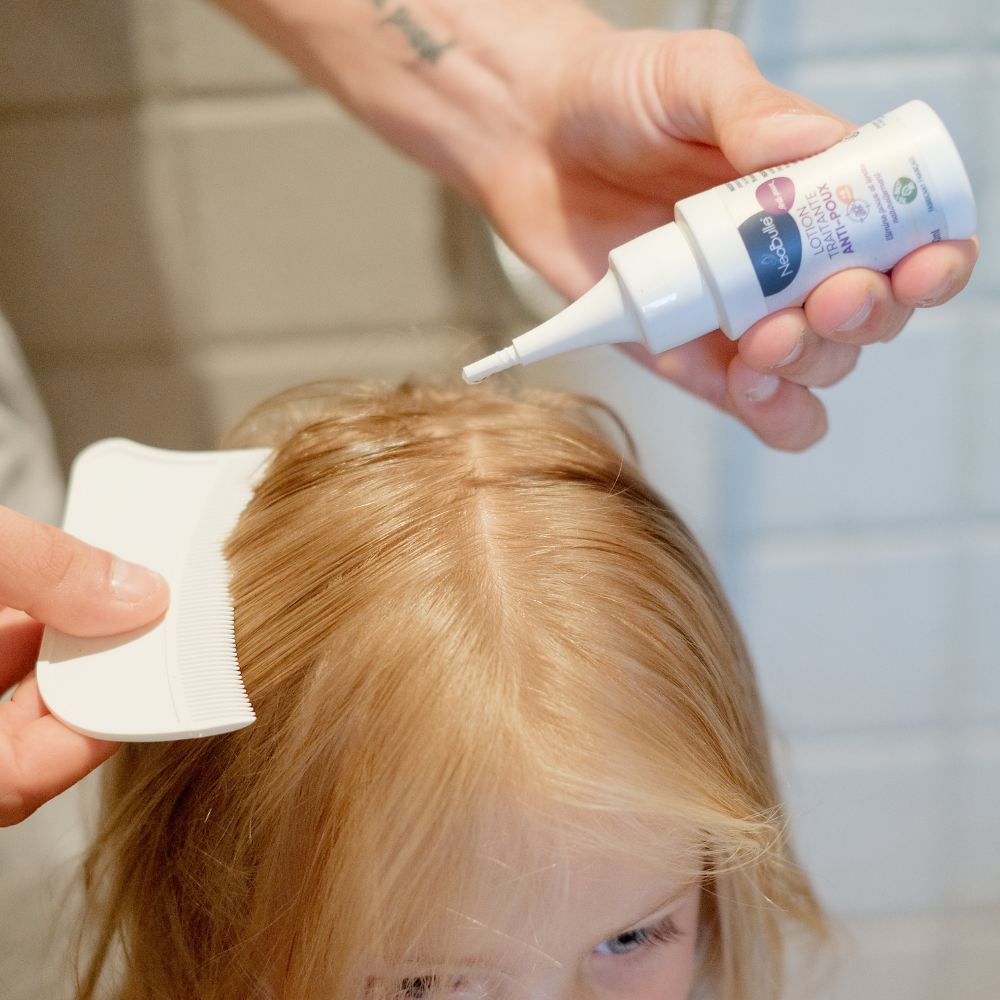
When thinking about lice, they are generally associated with school life, children at school or in community settings. However, lice do not spare young children! Yes, lice in babies are possible, and it can quickly become a source of stress for parents. Their delicate skin, fine hair, and difficulty expressing discomfort make managing lice in infants particularly delicate.In this article, we give you all the keys to understand how lice appear in babies, whether they are dangerous, how to treat them safely, and which natural products to use to soothe and protect your child's scalp. Summary Can a baby have lice? Can lice harm a baby? What products to use against lice in babies? How to treat lice in babies safely? Preventing lice in babies: good habits to adopt In conclusion: say goodbye to lice in babies in a gentle and natural way Can a baby have lice? The answer is yes. Even if infants are less exposed than children in community settings, it is indeed quite possible for a baby to catch lice. For example, this can happen if a brother or sister brings them home, if the child is cared for by a babysitter, or if they come into contact with contaminated textiles or objects.However, lice do not fly or jump. They are transmitted through direct contact or shared objects (combs, cushions, blankets...). Moreover, their presence is not always suspected in a baby with short or sparse hair, which can delay diagnosis. Can lice harm a baby? Fortunately, lice are not dangerous to the health of infants. They do not transmit serious diseases, for example. However, they can cause intense itching, scalp irritation, or even lesions if the baby scratches. This can disturb their sleep, mood, comfort, and lead to significant nervousness. Not to mention the mental burden for the rest of the family.Therefore, it is essential to act quickly, ideally with products respectful of their sensitive skin and young age. What products to use against lice in babies? Baby's skin is delicate: We therefore recommend prioritizing care products whose ingredients are derived from organic farming. At Néobulle, we offer a specific and natural range of anti-lice products, formulated in France, suitable for very young children from 3 months old while respecting their scalp. From 3 months: Anti-Lice Shampoo Formulated for babies from 3 months, the Soothing Anti-Lice Shampoo by Néobulle is a gentle, natural, organic cleansing care product. Thanks to organic lavender essential oil, known for its repellent properties, it soothes and repels lice while respecting their delicate skin. It can be used preventively or as a supplement to treatment.Advantages:Possible frequent useOnly a small amount of shampoo is neededGentle on sensitive baby scalps from 3 monthsCompatible with breastfeedingSuitable for pregnant women from 3 monthsMade in France, in Haute-Loire From 6 months: Anti-Lice Treatment Lotion Have you spotted lice on your baby? For a more targeted treatment, the Anti-Lice Treatment Lotion by Néobulle is an effective solution from 6 months old. It works by suffocating lice and nits. Composed 100% of natural ingredients thanks to coconut oil, it is formidable against unwanted visitors but obviously respects the skin of the whole family. Free from insecticides, perfumes, or essential oils, it is THE natural solution from the first application. This treatment is applied to dry hair and can be used in conjunction with an Anti-Lice shampoo.Advantages:Without harsh ingredientsEliminates lice and nits naturallyEffective in 5 minutes for lice, and after 1 hour for nitsMade of 100% natural ingredientsCompatible with pregnancy, breastfeeding, and babies from 6 monthsMade in France, in Loir-et-Cher From 18 months: Protective Anti-Lice Oil The Protective Anti-Lice Oil is ideal for prevention in children from 18 months old. Easy to apply thanks to its roll-on format, this stick is used daily during high-risk periods to create a barrier against lice. Simply apply behind the ears and on the nape of your child's neck. Composed of a clever blend of 3 essential oils (lavandin, fine lavender, and rose geranium), it emits a subtle floral scent that repels unwanted visitors while respecting the sensitive skin of children.Advantages :Quick, practical, and targeted applicationFun roll-on for easy useRecommended use in a 7-day treatmentVery convenient portable format for daily use and on the go100% of ingredients from Organic FarmingMade in France, in the Loire How to safely treat lice in babies? 1. Recognize the signs of lice presence in babies Detecting infestation signs in a child is not always easy... so identifying lice in a baby is a real challenge for young parents. We therefore invite you to pay attention to the following signs :Baby often scratches their headSmall red bumps or sores on the scalpPresence of nits (small white dots) attached to the hair 2. Use a gentle and respectful routine Using natural products with ingredients from Organic Farming is preferable for children under 2 years old. Indeed, their skin and scalp are fragile and therefore require gentle, suitable care.Recommended routine (in 3 steps!):Apply the Anti-Lice Treatment Lotion on dry hair and dry with a hairdryer or air dry. Leave on for one hourRinse thoroughly then wash with the Soothing Anti-Lice ShampooMeticulously comb with a lice combIt is not necessary to repeat the operation; one application is enough. If you detect lice in your baby, do not hesitate to take proactive measures by treating all members of your household. Parents, siblings, and relatives... Certainly, it’s not the most pleasant task, but it greatly increases your chances of getting rid of lice.💡 Tip: To make the application fun, suggest they listen to their favorite music so that this moment remains friendly despite everything. 3. Disinfect the environment To prevent re-infestation, here are four essential steps:Soak brushes, combs, and hair accessories in very hot water (at least 60°C) for at least 10 minutesWash all textiles that have been in contact with your child's head at 60°C: bedding, clothing, hats, plush toys, bed bumpers, etc.Vacuum carpets, sofas, and car seatsSeal non-washable objects in a sealed bag for 48 hours Prevent lice from appearing in babies: good habits to adopt Even if prevention is difficult, it remains your best ally, especially if you have older children at home or if the baby is in a group setting. Here are a few simple gestures to adopt daily" to limit the risks of infestation. 💡 And to keep a record of our tips, download our anti-lice memo! Routine n°1: Adopt a preventive routine Use regularly a shampoo with natural repellent active ingredients such as the Anti-Lice Shampoo (from 3 months). During epidemic periods (back to school, community settings...), it can be used 2 to 3 times a week to repel unwanted visitors. For older children, the protective anti-lice oil roll-on Routine n°2: Regularly inspect your children’s hair A weekly visual check allows for quick detection of early infestation. On damp hair, use a fine comb to hunt for lice and nits. The earlier you catch it, the easier it is to treat. Routine n°3: Favor clever hairstyles (for those with more hair) Does your baby have enough hair to tie back? Take advantage of it! Gathering hair into a bun, braid, or ponytail helps limit contact with other children’s hair. Lice are transmitted by direct contact: the less free hair, the lower the risk. Routine n°4: Fight against spread within the family If an older sibling is infested, treat the whole family quickly, and apply the same preventive measures to the baby. Remember that lice can move very quickly from one head to another! Routine n°5: Wash everyday objects in contact with hair During epidemic periods, thoroughly wash accessories or clothing in contact with the scalp:Soak brushes, combs, and hair accessories in very hot water (at least 60°C) for at least 10 minutesWash hats, caps, hoods, beanies, scarves... at 60°C In conclusion: say goodbye to lice on your baby in a gentle and natural way Lice on babies may seem intimidating, but effective and safe solutions exist. At Néobulle, we have designed a specific range for infants, to act gently: The Soothing anti-lice shampoo suitable from 3 months The Anti-lice treatment lotion, effective from 6 months The Protective anti-lice oil, preventive from 18 months By adopting a natural and gentle routine, you protect your child's delicate skin while helping them regain comfort and serenity. That said, don’t panic: lice are neither a hygiene issue nor an inevitability. With the right products and a few simple gestures, everything quickly gets back to normal.

Baby carrier or baby sling: which to choose?
When you become a parent, carrying your baby quickly appears as a practical and gentle solution to keep your baby close to you and soothe them. Indeed, it allows parents to stay close to the baby while having their hands free. But before enjoying these carrying sessions, parents face an unavoidable question: cloth sling or baby carrier, which to choose? What are the differences between these two carrying methods? By reading this article, you will have all the information you need to make the right choice, according to your needs and those of your baby.Summary Why opt for physiological carrying? What is the best solution between cloth sling or baby carrier? What are the differences between cloth sling and baby carrier? What if you combined both? The mei-tai: halfway between the cloth sling and the baby carrier FAQ – Cloth sling or baby carrier? In conclusion: cloth sling or baby carrier, the choice is yours Why opt for physiological carrying? Before comparing the cloth sling and the baby carrier, let's recall the many benefits of physiological carrying:Respond to the baby's natural need for proximityPromote the parent-child bondCalm cries and facilitate digestionSupport breastfeeding, thanks to the secretion of oxytocin and prolactinFree the parents' arms to manage daily chores or hold older children Whether you choose a sling or a baby carrier, make sure the carrying method respects the physiological position, the one in which the baby naturally adopts: rounded back, knees raised higher than the hips (called the "M" position), pelvis tilted forward, airways free. What is the best solution between cloth sling or baby carrier? The answer to this question mainly depends on your lifestyle, the level of comfort sought, the context, and your child's age. The cloth sling: ideal from birth The cloth sling is often favored for very young children because it is soft and enveloping. It allows for a very precise adjustment , adapts to all morphologies and provides excellent support.Advantages of the carrying scarf:Suitable from birthOptimal back and head support thanks to layered tighteningMultiple positions possible (ventral, hip, back)Ideal for long carrying sessionsPossible disadvantages:Learning curve required to master tying techniquesLess quick to put on than a baby carrierExtendable carrying scarfWoven carrying scarf💡 Important to know: At Neobulle, we offer two types of carrying scarves: extendable (guaranteed cocoon effect, to be used in double layer at minimum, from birth to 9kg) and woven (high versatility, suitable in single layer from birth to 4/5 years).The baby carrier: an ultra-fast setupThe preformed baby carrier appeals to many parents due to its ease of use. It is quickly installed thanks to clips and straps, like a backpack. However, it is not always easy to find a model that respects the baby's physiology.Advantages of the baby carrier:Quick to put onEasy adjustments thanks to strapsPerfect for daily use, outings, or travelEvolving models that adapt to the baby's sizePossible disadvantages:Less precise adjustmentMany models are too rigid or not adjustable on the market💡 Important to know: Models like the MyNéo, le Néo or le Néo+ by Neobulle are adjustable. You can adjust their height and width. They therefore adapt to your baby's age and ensure a respectful carry that aligns with their physiology. What are the differences between a carrying sling and a baby carrier? Although their goals are the same — to carry the baby comfortably and safely — these two carrying methods have notable differences. CriteriaCarrying slingBaby carrierAge of useFrom birthFrom 3.5 to 6 kg (or from birth with specific models)AdjustmentVery precise (thanks to fold-by-fold tightening)Adjustable with strapsInstallation timeRequires some practiceVery quickComfortExcellent, very enveloping, even over long periodsVery good once adjustments are madeBulkinessLess bulky when foldedVaries depending on the modelType of carryVery versatile, in front, on the back, or on the hip.Ventral or dorsal positioning possibleRecommended ageExtensible sling: from birth to 8kg.Woven sling: from birth to 4/5 years.Variable depending on models:MyNéo: 0-12 monthsNéo: 0-18 months.Néo +: 3-36 months💡 À remember : if you love the enveloping feeling, precise adjustment, and are not afraid of knots, the sling is made for you. However, if you seek simplicity and speed, the baby carrier is probably your best ally. Compared to the sling, this carrying method indeed requires fewer manipulations. What if you combined both? Écharpe de portage or baby carrier: choose based on your child's age Many parents start with a écharpe de portage in the first few weeks, then opt for a preformed baby carrier as their child grows. This transition can, for example, occur:Around 3 to 4 months, when the baby holds their head betterÀ partir de 6-7 kg, for more comfort and practicality during outingsDepending on your daily routine: the sling is perfect for home, the baby carrier for outsideHowever, this is not mandatory ! Some parents remain fans of the sling until 2-3 years old, especially for back carrying. Others opt for a preformed, adjustable baby carrier in width and height, which adapts to the size of a newborn from the first few weeks. 💡 Tip : contact a Carrying Coach in your region to try different carrying methods and identify the one that suits you best. Carrying sling or baby carrier: sometimes complementary Good news: you are not required to choose exclusively between a carrying sling or a baby carrier. Many parents use:A sling at home for naps or long carrying sessionsA baby carrier for outings for quick setupAn Hop’la sling or an emergency baby carrier for short trips (errands, markets, public transport...)Ultimately, what matters is respecting your needs and those of your baby, while having a comfortable solution. At Néobulle, we are committed to offering a full range to support every stage of your baby’s growth. Want to discuss it in person? To help you choose, we offer discovery workshops via video call. The mei-tai: halfway between a carrying sling and a baby carrier Are you looking for a solution that combines the comfort of a carrying sling and the quick setup of a baby carrier? The mei-tai will meet your needs! Inspired by Asian designs, this carrying method is the perfect middle ground. Easy to handle, the Pti-Evo is a mei-tai made of tie straps and a clip-on belt. You can thus position your child in a front or back carry. The fabric, very flexible, precisely adapts to the size of the wearer and the baby, for optimal comfort.➡️ If you are hesitating between a sling, a preformed baby carrier, or a hybrid model, discover our dedicated article on the mei-tai, to be sure you make a choice that meets your needs. FAQ – Carrying sling or baby carrier? Can a newborn be carried in a baby carrier? Yes, provided you choose an appropriate model from birth, such as the MyNéo by Néobulle, which respects the infant's physiological posture. Which solution is most suitable for breastfeeding? The scarf and the sling are very practical for discreet breastfeeding. Some baby carrier models also allow breastfeeding once properly adjusted. Babywearing scarf or baby carrier: which is more practical for walks? The preformed baby carrier, lightweight and quick to put on, is ideal for walks, hikes, or holidays. Can I carry my baby for a long time with a scarf? Yes, woven scarves offer optimal support even for larger babies, up to 15-18 kg. In conclusion: babywearing scarf or baby carrier, the choice is yours In summary, there is no right or wrong choice, but a choice that suits you, based on:Your baby's ageYour comfort with tying or clipsYour lifestyleThe seasonYour personal preferencesThe important thing is to ensure physiological, comfortable, and secure carrying. At Néobulle, we support you in this beautiful adventure with products made in France, tested, certified, and designed by parents to meet the real needs of parents.