



Tutorial: Babywearing Scarf - The Classic
Download the manual
Video

Tuto écharpe de portage : Hanche à boucle
Vous vous demandez comment mettre une écharpe de portage ? Suivez ces étapes simples pour installer votre écharpe en toute sécurité.
1. Prendre l'écharpe en son milieu comme en bustier.
2. Croiser les pans à l'arrière sans les vriller.
3. Les deux pans forment une croix large, gage d’un très bon confort.
4. Le bustier devant est ramené en ceinture, y installer le bébé accroupi, écharpe sous les genoux, les fesses dans la main.
5. Remonter la lisière jusqu’aux oreilles.
6. Ajustage : serrer rayure par rayure, en commençant par la lisière près du cou du porteur, donc celle de la nuque du bébé et en 6 à 8 fois sur toute la largeur de l’écharpe.
7. Faire de même de l’autre côté en changeant de main, garder la tension dans la main.
8. Passer de chaque côté du bébé, puis sous les fesses. Croiser les pans et repasser les sur ou sous les pieds du bébé.
Variante : effectuer un «twist» (croiser deux fois les pans) avant de passer en dessous des pieds du bébé.
9. Faire un nœud plat dans le dos. Vérifier la position accroupie du bébé, veiller à ce qu’il n’écarte pas trop les genoux.
Astuce : Pour protéger le bébé, on peut développer une lisière du tissu du côté de la tête du bébé donc en laissant son visage dégagé. La majeure partie doit rester sous le bébé, en soutien.
L’écharpe de portage tissée : l'excellence du portage physiologique durable
Véritable référence pour les parents en quête de soutien et de polyvalence, l'écharpe de portage tissée est le cœur de métier de Néobulle. Fabriquée avec soin dans notre atelier de la Loire en coton bio, elle offre un maintien inégalé pour un portage écharpe haute couture, de la naissance jusqu'à la petite enfance.
Apprendre le portage écharpe en toute sérénité
Nous savons que l'installation d'une écharpe de portage tissée peut impressionner au début. Nos tutoriels vidéos sont là pour vous guider, mais rien ne remplace le contact humain.
En cas de difficulté ou pour gagner en confiance, nous vous recommandons vivement de suivre un cours de portage avec une monitrice certifiée. C'est l'occasion idéale pour apprendre à ajuster votre écharpe de portage avec précision, découvrir de nouveaux nœuds (ventre, hanche ou dos) et être parfaitement à l'aise avec votre matériel.
Le portage dos en écharpe : une nouvelle liberté quand bébé grandit
Dès que votre enfant prend du poids et gagne en curiosité, le portage dos devient une solution très pratique au quotidien. Passer votre écharpe de portage derrière vous permet de libérer totalement votre champ de vision et vos mouvements, tout en offrant à votre enfant une vue imprenable sur le monde, à hauteur d'épaule. C'est l'évolution naturelle du portage en écharpe pour continuer à répondre aux besoins de proximité de votre grand bébé sans fatiguer votre dos.
⚠️ Note sur la sécurité : L'installation au dos avec une écharpe tissée est un geste technique qui demande de l'assurance. Pour que cette pratique soit parfaitement sécuritaire et confortable, tant pour vous que pour votre enfant, nous recommandons vivement de suivre un cours de portage avec une monitrice certifiée. Cet accompagnement est essentiel pour apprendre à basculer bébé au dos sereinement et maîtriser les nœuds spécifiques à cette position.
Sécurité et physiologie : les clés d'un portage en écharpe réussi
Pratiquer le portage bébé demande de respecter quelques règles fondamentales pour garantir le bien-être de votre enfant et votre propre confort. Une écharpe de portage bien installée est le gage d'une expérience de proximité sereine.
La physiologie : respecter le développement de bébé
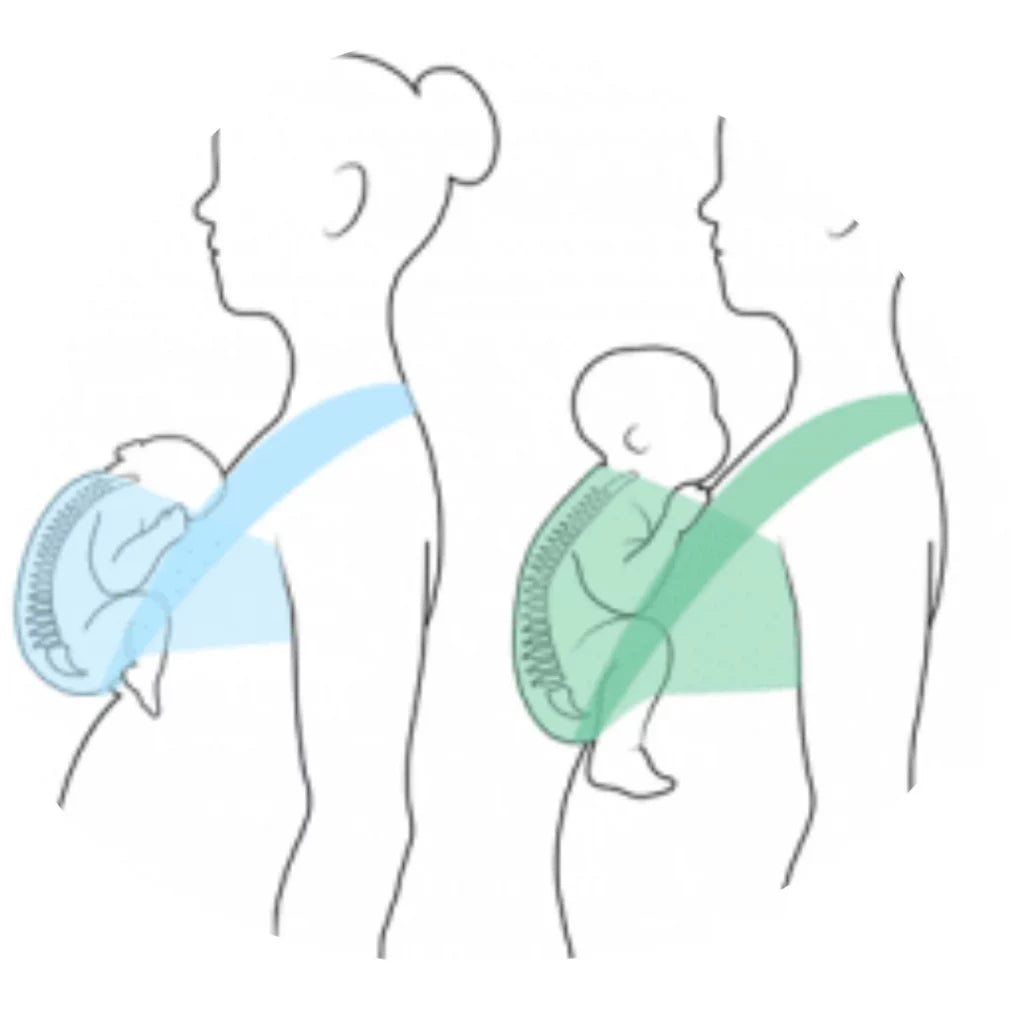
Pour que votre portage écharpe soit parfaitement physiologique, votre enfant doit retrouver une position naturelle, dite "en grenouille" :
- Les genoux doivent être plus hauts que les hanches.
- Le dos doit être bien arrondi en "C" (sans être plaqué contre vous).
- Le bassin doit être basculé vers l'avant.
Les règles d'or du portage physiologique
La sécurité est la priorité absolue du portage en écharpe. Gardez toujours en tête ces points de vigilance :
Les règles de sécurité en portage sont assez basiques :
- Bébé vertical et face à vous : allongé dans un système il risque de se tasser et la matière de venir limiter la bonne circulation de l’air, ce sont des positions à réserver exclusivement au portage à bras. Le face au monde est également à éviter (risque de chute accru).
- Voies respiratoires dégagées : la tête de votre bébé doit toujours être libre, le porte-bébé et les couvertures remontant au plus haut derrière la nuque. Il fait froid ? Mettez-lui un bonnet ! Il vaut au pire toujours mieux un petit courant d’air qu’un bébé ne pouvant plus respirer. Les voies respiratoires dégagées c’est aussi vérifier que bébé n’est pas affaissé dans la matière : vous pouvez passer un doigt entre son menton et son thorax.
- Portage haut sur le buste : une installation trop basse aura tendance à être trop lâche, votre bébé risquerait d’être tassé.
- Porte-bébé bien ajusté : la matière enveloppe votre tout petit, les réglages le soutiennent, il ne peut pas glisser dessous ni tomber.
- Pas de pratique sportive : pas de course à pied, vélo, ski et autre trampoline avec bébé porté !
Quelques conseils supplémentaires :
- Des vêtements souples qui ne gênent pas bébé. Que ce soit en portage ou au sol, privilégiez des habits amples et non contraignant, personne n’irait faire de sieste ou de cours de yoga en jean slim ou robe de mariée, votre bébé non plus !
- Pas de manteau ni combi-pilote : il vaut mieux garder votre bout de chou le plus prêt de vous que possible pour favoriser la thermorégulation. Les matières épaisses gênent les bons réglages, et tendent à obstruer les voies respiratoires et appuyer sur l’artère fémorale, altérant la circulation sanguine dans les jambes. Couvrez-le plutôt par l’extérieur avec une couverture de portage ou un manteau de portage par exemple.
- Des petites pauses régulières pour que bébé puisse bouger un peu, toutes les 2-3h idéalement (ça tombe bien, en général il va réclamer à téter ou avoir besoin que sa couche soit changée à peu près au même rythme !). En été pensez également à bien l’hydrater !
D’une manière générale, vérifiez régulièrement que tout est OK en cours de portage.
Jusqu'à quel poids peut-on pratiquer le portage en écharpe tissée ?
L'un des plus grands atouts de l'écharpe de portage tissée (sergé-croisé) est sa robustesse. Contrairement à une écharpe extensible qui finit par s'affaisser sous le poids de l'enfant, l'écharpe portage tissée offre un soutien indéfectible de la naissance jusqu'à 18 kg et plus selon les capacités du porteur. Elle permet un portage bébé sécurisé sur la durée, car le tissu ne se déforme pas, garantissant que le bassin de votre enfant reste parfaitement positionné même lorsqu'il grandit.
Comment entretenir mon écharpe de portage pour garantir sa longévité ?
L’entretien de votre écharpe portage commence dès réception : un lavage avant la première utilisation est indispensable.
Nos écharpes ne sont pas prélavées ; ce premier bain permet aux fibres de gonfler et au tissage de se caler. Notez que l'écharpe réduit d'environ 10 % au premier lavage (ce retrait est prévu dans nos longueurs). Pour la suite, lavez votre écharpe uniquement quand c'est nécessaire, à 30°C ou 40°C avec une lessive douce.
Attention : le séchage en machine est à proscrire pour préserver la qualité du coton bio et la souplesse du de l'écharpe de portage.
Pourquoi ne peut-on pas utiliser les mêmes nœuds qu'avec une écharpe extensible ?
Il est impératif de distinguer les deux techniques pour garantir la sécurité de votre portage bébé :
Avec une écharpe extensible (tricotée), il est obligatoire de passer 3 couches de tissu sur le dos du bébé pour assurer un maintien suffisant.
À l'inverse, l'écharpe de portage tissée offre une telle stabilité qu'elle permet des nouages à une seule couche de tissu, avec un serrage "pli par pli" beaucoup plus précis.
Utiliser un nœud d'extensible avec une tissée ne permettrait pas d'ajuster correctement le soutien nécessaire à la colonne vertébrale.
Que faire si je n'arrive pas à finaliser mon nœud correctement ?
Apprendre à maîtriser son écharpe de portage demande un peu de pratique. Si vous ressentez une difficulté ou une gêne, nous vous recommandons vivement de suivre un cours de portage avec un(e) professionnel(le). Un atelier vous permettra d'acquérir les bons gestes de serrage, de vérifier la position physiologique de votre enfant et d'être parfaitement à l'aise pour profiter pleinement des bienfaits du bébé portage au quotidien.
Comment savoir si mon écharpe est bien installée ?
C'est le doute principal des parents : l'écharpe porte-bébé est-elle assez serrée ? Voici un test simple : penchez-vous légèrement en avant (en tenant bébé par sécurité). Si le corps de votre enfant se décolle du vôtre ou si vous sentez que vous devez compenser avec votre dos, le serrage est insuffisant. Une installation parfaite ne doit provoquer aucune douleur et le poids de bébé doit être idéalement réparti sur vos épaules et votre bassin.
