Baby

Le portage hanche : une ouverture sur le monde en toute sécurité

Le portage hanche : une ouverture sur le monde en toute sécurité

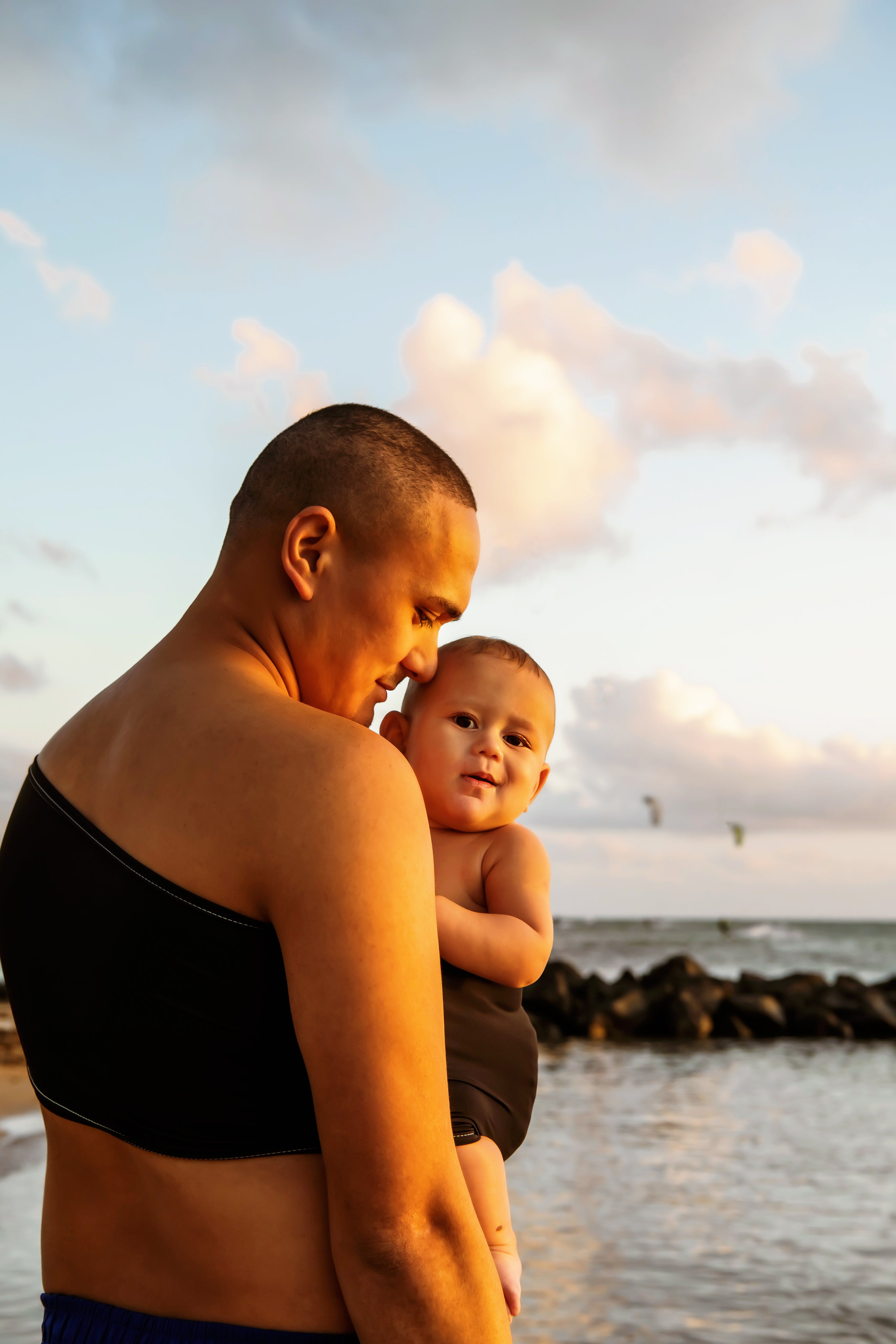
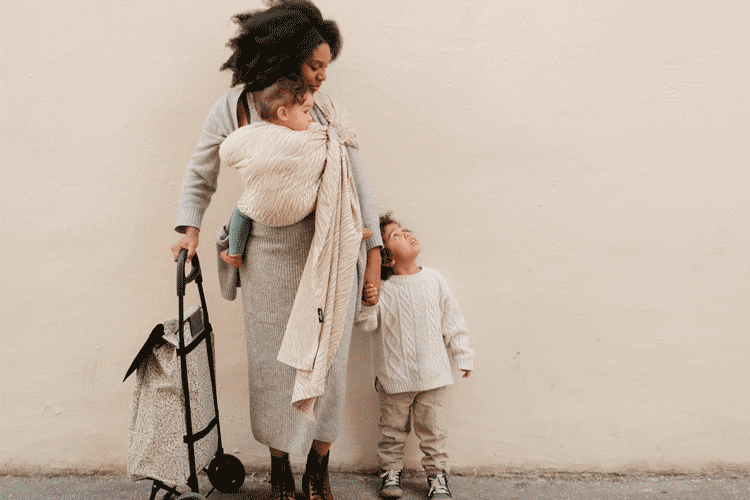
Le temps d’un câlin, d’une petite course ou d’une fin de promenade à gambader dans le parc… le portage sur la hanche est instinctif et accueille spontanément votre enfant.

C’est une manière naturelle de porter à partir du moment où le bébé tient bien sa tête et son dos. Il est ainsi bien calé et peut voir tout ce qu’il se passe à hauteur d’adulte. C'est beaucoup plus amusant pour lui et favorise son éveil !

Pourquoi privilégier le portage sur le côté ?

Il y a plus facile et plus confortable que le portage à bras ! Il faut opter pour une solution simple et confortable pour répondre aux besoins de découverte de bébé, tout en assurant sa sécurité émotionnelle.

On ne parle donc pas du « face au monde » qui est vraiment peu adapté pour les bébés (voir notre article sur les risques du portage face au monde). Le portage côté permet d'ouvrir le champ de vision sans pour autant mettre votre bébé en hyperstimulation. En portant sur la hanche, votre bébé conserve un contact visuel fort avec vous ET cela vous permet de libérer au moins un bras. Une nécessité lorsqu’on est parent, n’est-ce pas ?

Sling ou Aide à bras : quel porte-bébé choisir pour le portage hanche ?

Chez Néobulle, le Sling et le Hop’la sont deux solutions de portage parfaitement adaptées pour installer bébé sur la hanche. Mais lequel choisir ?

Le Sling : le portage hanche mains-libres dès la naissance

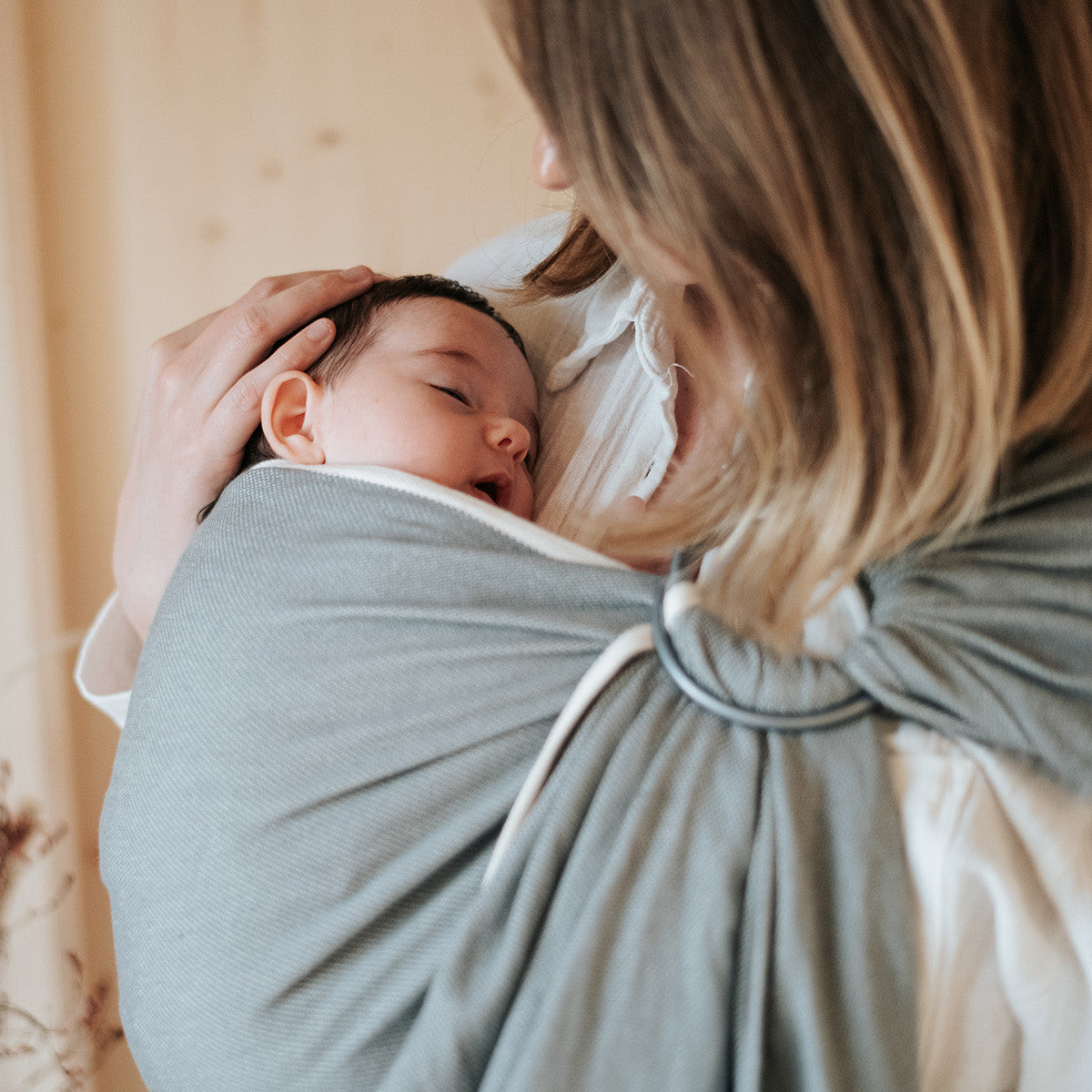
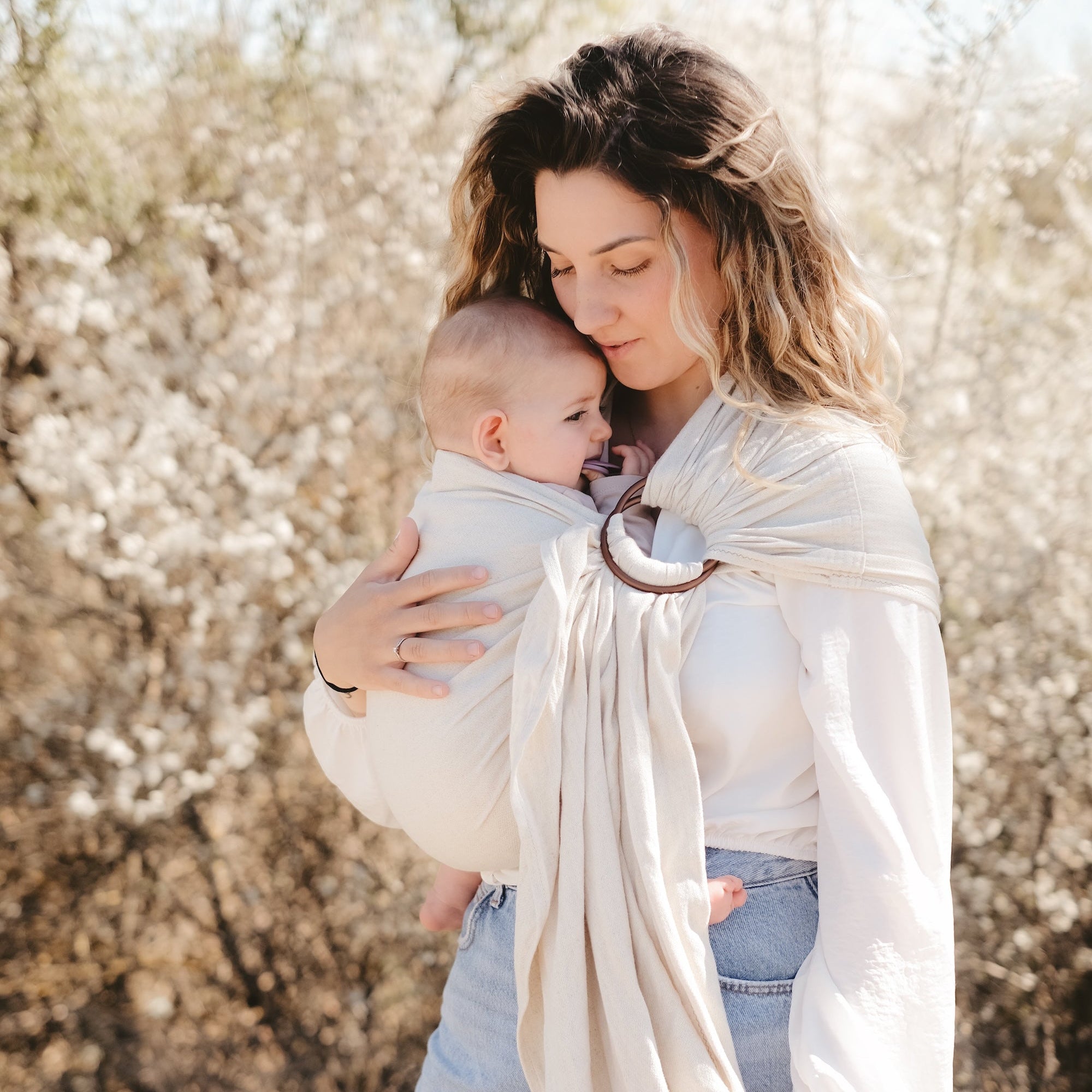
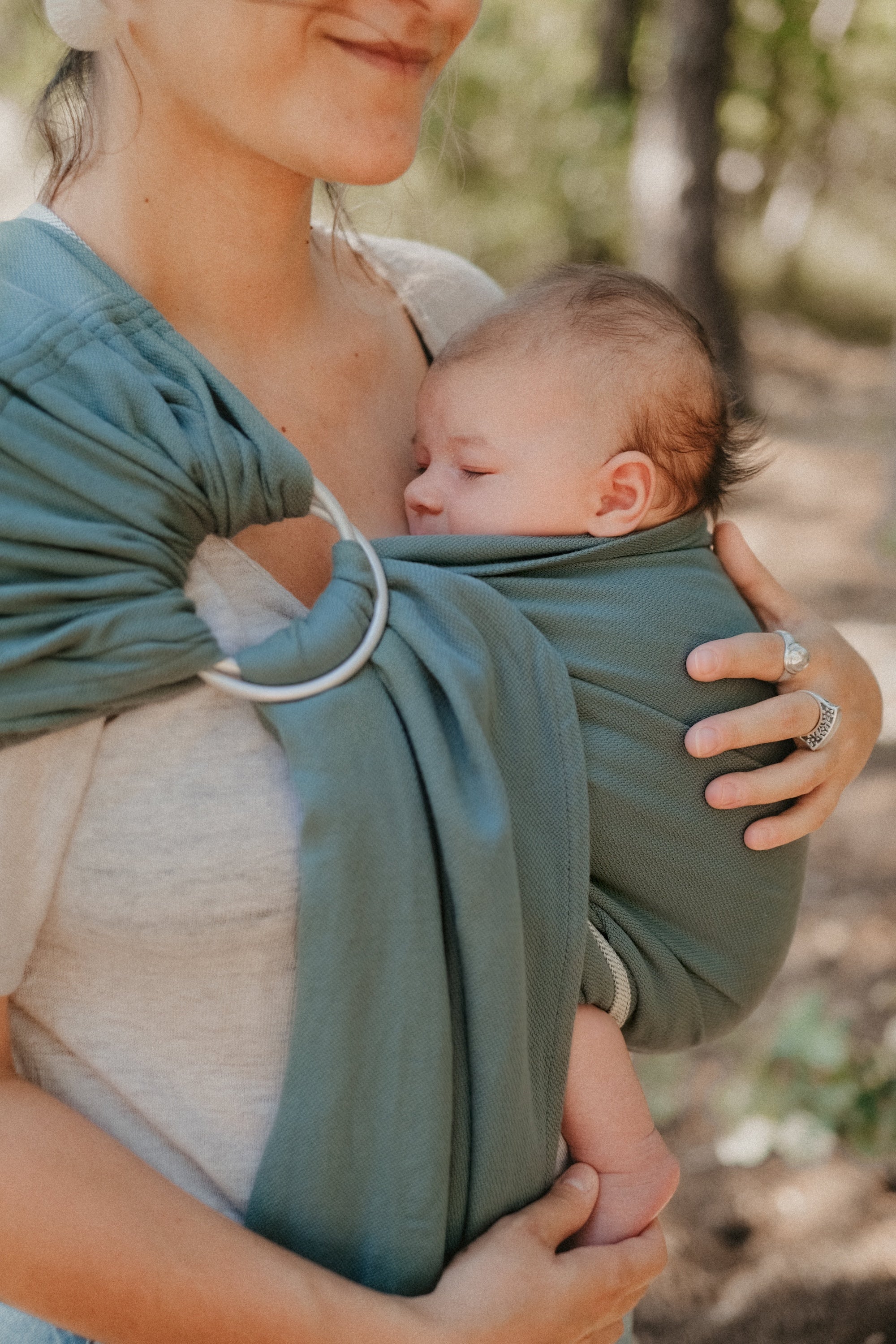
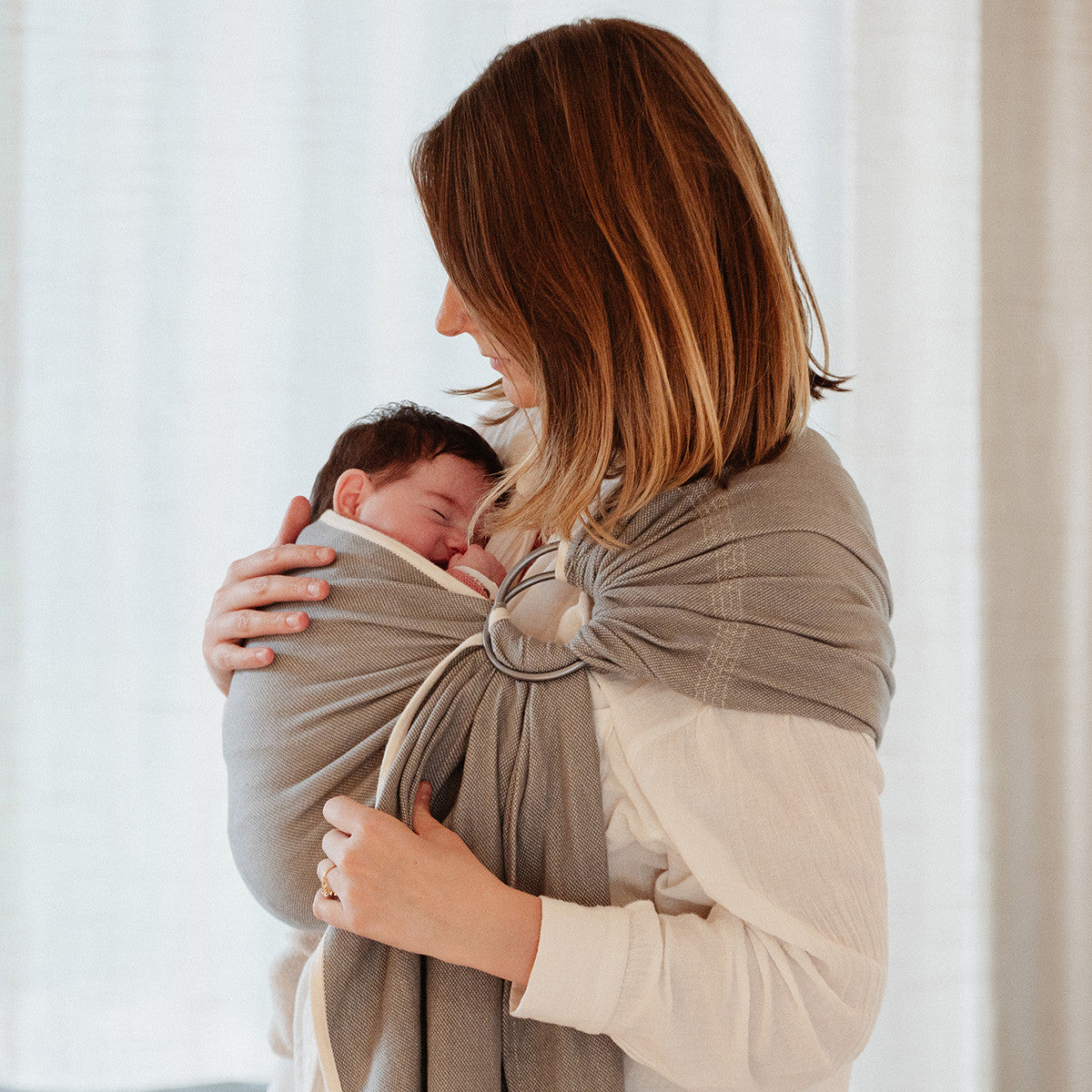
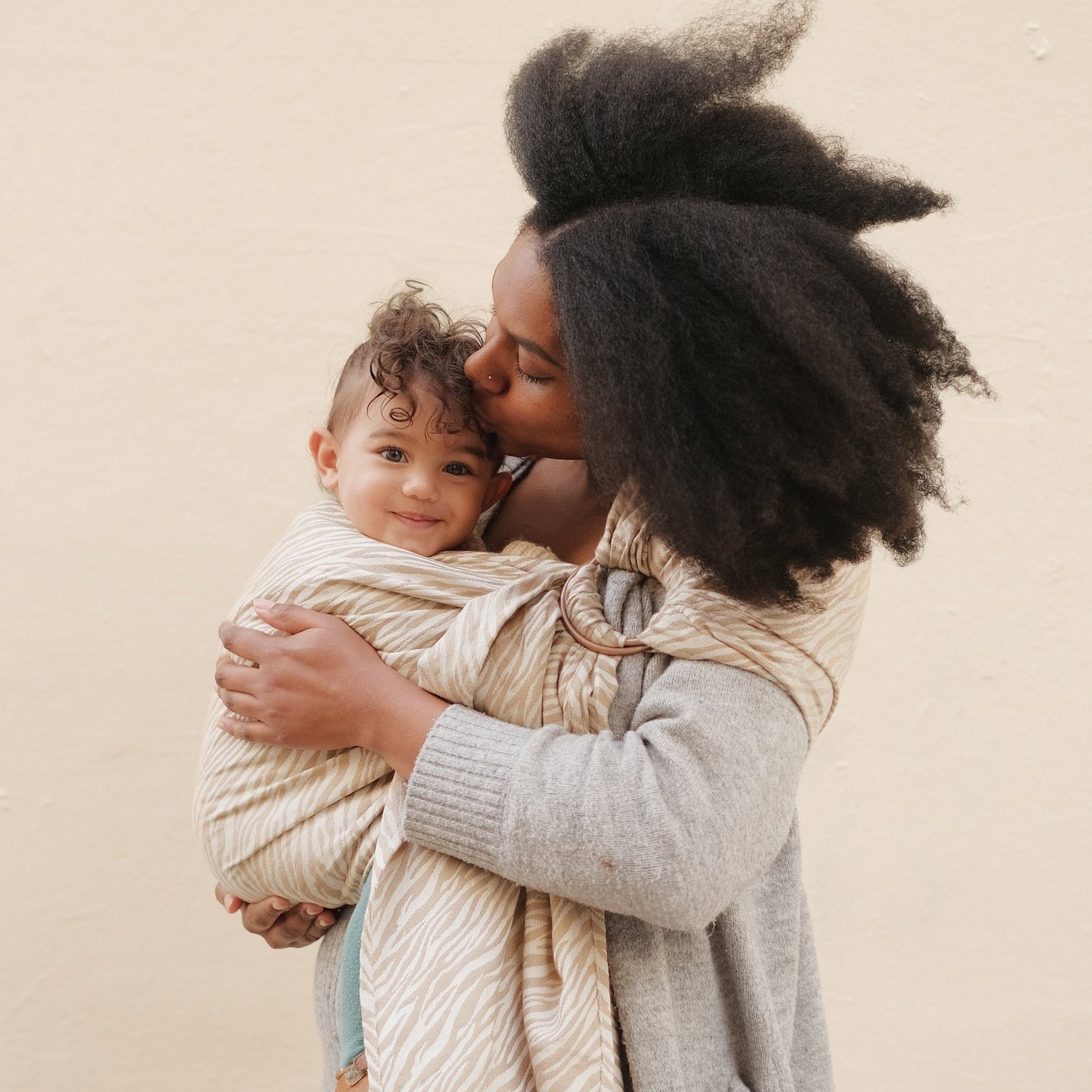
Le Sling conviendra dès la naissance. Il permet autant le portage ventral que le portage sur le côté, au gré des besoins et de l’envie de « tout voir » de votre petit. Il permet de bien soutenir le dos du bébé grâce au tissu qui monte jusqu’à la nuque, surtout s’il a moins de 4 ou 5 mois et que son dos est peu musclé. Bien soutenu, il pourra profiter d’un paysage plus large, voir ce que vous voyez, ce qui conduit à une interaction plus fréquente.

L'avantage pour le parent : Le Sling apporte un confort indéniable grâce au tissu déployé sur l'épaule et au serrage précis. Cela crée un contrepoids et limite la sensation de déséquilibre. C’est le moyen de portage idéal en dessous de 9/12 mois car il vous libère vos deux bras.

Le Hop'la : l'aide à bras pour les plus grands

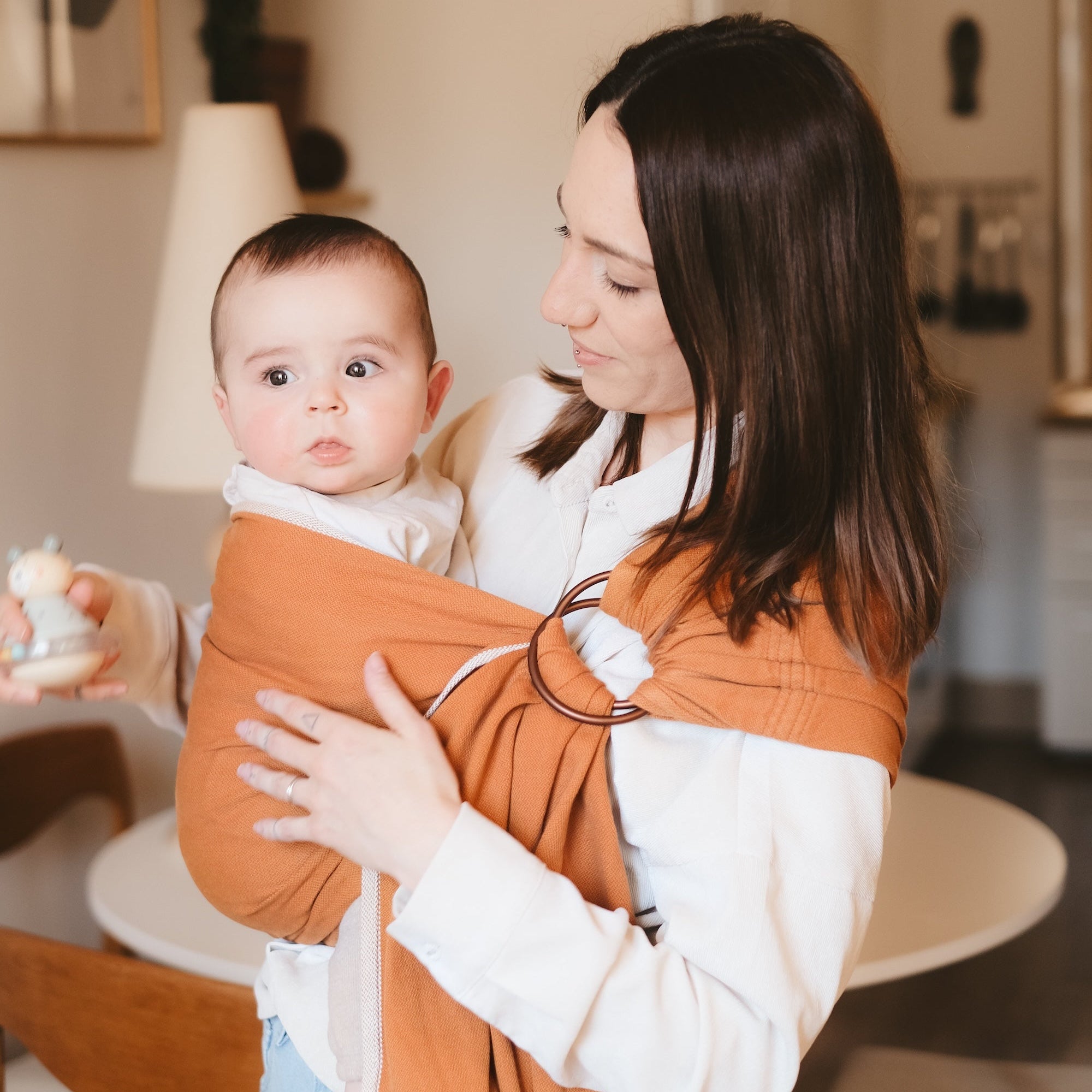
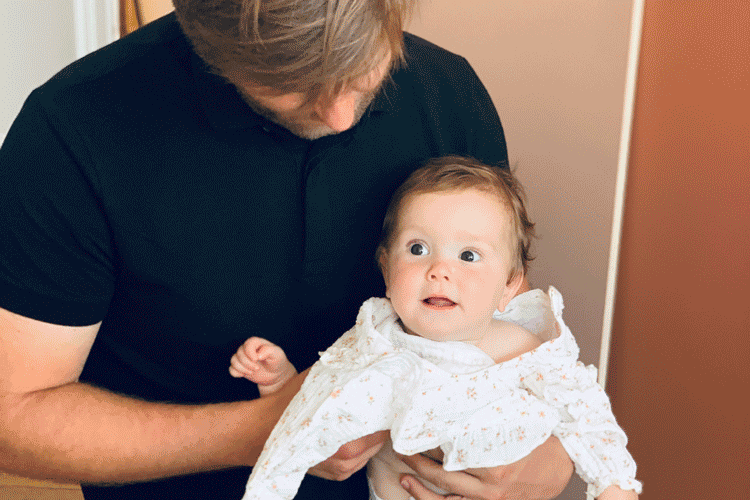
Le système de portage Hop’la est encore moins encombrant que le Sling ! C’est ce qu’on appelle une aide à bras ou un porte-bébé d'appoint. Convenant aux enfants de plus de 6 mois (qui tiennent bien leur dos), il soutient les fesses et les jambes de bébé en position physiologique (accroupi). Vous n’aurez plus qu’à garder une seule main sur son dos par sécurité.

En tricot léger, il épouse votre épaule et la morphologie du bébé pour un portage agréable sans réglage. Il sera d’un grand secours jusqu’aux 3 ans de votre enfant, pour ces moments où la fatigue se fait sentir et où les bras sont réclamés ! Pratique, il se glisse dans votre sac à main.

Résumé : Bien choisir son portage hanche chez Néobulle

Pour résumer, nos deux systèmes garantissent une position physiologique et un confort ergonomique (tissu ajusté et épaule enveloppée) contrairement à d'autres systèmes du marché parfois douloureux.

1- Le Sling (Porte-bébé) :

  • Dès la naissance et jusqu’à 3 ans.
  • Libère les 2 bras du porteur.
  • Demande un réglage précis (petit apprentissage nécessaire)

2- Le Hop’la (Aide à bras) :

  • À partir de 6 mois (bébé tonique) et jusqu’à 3 ans.
  • Libère 1 bras du porteur.
  • Sans réglage, installation immédiate.

Alors, quel est votre choix ?

N’oubliez pas que notre monitrice de portage est disponible au service client pour répondre à vos questions. Nos tutos et visios sont également là pour vous aider.

Related articles
lecture_8minPorter bébé face au monde 

Carrying baby facing the world

The question of carrying your baby facing the outside comes up very regularly as your baby grows and becomes more interested in what's around him. Logically, when he starts to unscrew his neck to observe everything, we can be tempted to turn your baby outwards to satisfy his curiosity. We are then often asked at what age this is possible, or if our baby carriers allow it. In reality, this is a practice that is rather discouraged and in fact our baby carriers do not allow it. We explain why! 1 – respect for physiology When we discuss the physiology of the toddler, the generic benchmarks given are to check that his base (= his pelvis) is well supported with a wide material base which extends to the hollows of the knees , that the knees come up a little higher than the axis of the hips , and that the natural roundness of his back is preserved. When you turn your baby outwards, there are several concerns: It is difficult to maintain the "sitting" posture and in particular to keep the knees raised. The material gathers between the legs and we find ourselves carrying in suspension with the legs hanging down. While the baby carrier may be able to maintain the correct leg posture, the padding used for stabilization quickly ends up sagging and/or being too short and no longer fulfilling its role. The baby's back is pushed by the contours of the wearer's torso (breasts, pectorals, etc.) against which it is resting, preventing natural rounding in favor of an arch . It's a shame to use a carrying system that claims to be respectful of the physiology of the little one only to end up with a posture that isn't! 2 – stimulations Faced with the world, babies find themselves overwhelmed by an incredible quantity of stimuli , which their developing brain will have difficulty processing. First of all, EVERYTHING is new and unknown to him. Lights, sounds, colors, passers-by, trees, cars, buildings, etc. Being naturally curious , he will try to observe everything in detail, which you will agree is exhausting ! It is also transported at the speed of its carrier, which being much larger than it will also go much faster , and will therefore attempt to carry out its observation work but at an accelerated pace . Certain things are likely to frighten him , like the dog barking as you pass, or the granny rushing towards him to go "gouzi-gouzi" by touching him... In this case he will be "stuck" in front of what frightens him , without being able to avoid it, nor curl up against you, nor seek the support of your gaze. It's a bit like landing on another planet and instead of giving you time to take everything in smoothly, you're being offered a fast-track tour! Even if you're very, very curious and really, really want to see everything really quickly, the experience wouldn't be the most pleasant or ultimately very enriching. An overstimulated child may become nervous, tense, cry more, and have increased difficulty falling asleep . NB: the same problem arises in a stroller and it is not recommended to put the child facing forward until he is able to move on his own. 3 – security If the two previous points were more suggestive and subject to your personal sensitivity, this last one is on the other hand much more notable because it concerns the basic security of your carrying. Facing the world, your child is no longer one with you, his weight is felt much more, he pulls you forward , his movements can unbalance you, and he obstructs your field of vision. This drastically increases the risk of falling forward , and that you find yourself crashing face down on the ground with your baby (himself face down). We won't draw you a picture: the consequences could be serious! Obviously, even when carried in front of you, it is possible to fall, however the risk of this occurring is much lower because the child is less in your way and throws you off balance, and above all you will more easily succeed in protecting your little one a little or tipping to the side, and the parts that will absorb the shock will be less fragile (back of the skull and back versus face, rib cage and abdomen). It is the same principle that applies when in judo we learn not to fall forward. “Yes, but my baby is crying out!” Children are naturally very curious , so it's only natural that they want to see as many things as possible! Put yourself in their shoes, lying on your stomach, and in the end they can only see the underside of your neck or your shoulders (the bust line is convex and "closes" the visual field), nothing exciting, you'll agree... First of all, let's remember that safety takes precedence over everything else, and that when your child asks for something, sometimes you unfortunately have to say no because you know it won't be good for him . For example, he would certainly be delighted to taste chocolate at 2 months, but you won't give him any. Later, he will certainly also want to cross the road alone, and again you will stop him, even if he cries. In this case, it's not about completely restricting your little one, but rather about adapting the carrying to reconcile their desires with the comfort and safety of everyone. We can suggest several adjustments depending on the context: Carrying on the back: this carrying is possible very early (from birth with a sling), and allows the baby to be carried in the direction of travel, and to see over the shoulder of the carrier or to the sides (the posture of the back offers a convex curvature which opens the field of vision). When there are too many stimuli, he can take refuge against his carrier. Side carry : Off-center carrying allows the baby to better see their surroundings while maintaining eye contact with the wearer. A sling is very practical in this configuration. And by arm? The above points are especially relevant when carrying with a tool. The analysis is slightly different when carrying with a hand: We generally carry by arm indoors , in an environment that is less stimulating than the outdoors and that the child is familiar with. Carrying is intended to last a short time (these little creatures quickly get heavy!) which also reduces fatigue and agitation. The carrier constantly interacts with their baby: either through their gaze and speech, or through their gestures, as they continuously change the position and way of carrying depending on their child's movements. In the event of a fall, it is easier to protect your baby. Carrying the child facing the world in the arms is in fact much less problematic than in a baby carrier. We can recommend positions more on the side to encourage exchanges, and with a child supported in a sitting position by the outside of the knee and not with the hand between the legs (promotes extended positions and wrist pain). Special cases : The advice given above applies to the general case, but there are several situations where it will be necessary to qualify it! Non-exhaustively, we can mention: The carrier's disability : a parent in a wheelchair, for example, might have difficulty placing their child facing them A child with a device (club feet for example): some devices can injure the wearer and/or the baby and require installations facing the world Babies with reflux : Some children with gastroesophageal reflux completely refuse to be positioned facing the carrier, and it may be helpful to find adjustments to face the world. So, apart from special cases, as you will have understood, carrying the baby facing the world using a carrying system is not recommended. The fact that it is offered by several brands and baby carriers unfortunately does not guarantee that it is wise and suitable. Is your baby moaning in front of you? Don't hesitate to get help from a babywearing instructor to adjust your setup and find solutions that work for you!

BébéComment bien porter son bébé ?

How to properly carry your baby?

You're expecting a baby or have just given birth, and you'd like to try babywearing, but you're not quite sure where to start (with the sling) or how to go about it. And the more links you read on the internet, the more lost you feel! This article is here to help you sort things out and start babywearing calmly. 1 – What is physiological babywearing? You have probably read this term at least 52 times, but what exactly does it refer to? We talk about physiological babywearing when it respects the natural posture of the little one. The main criteria to keep in mind are as follows: Rounded lower back: the spine of the newborn is naturally rounded, unlike that of an adult which forms a kind of S, it tends to form a slightly stretched C (like a comma). An upright back position corresponds, in terms of comfort, to an arched position in an adult, which can quickly become uncomfortable Knees higher than hips: raising the knees allows the baby to sit well into the hip socket and provides better comfort. To illustrate a posture that does not allow for grouping, you can think of sitting on a tall barstool with legs hanging down. These two criteria are of course to be considered in a very overall way. When the child grows, for example, their spine will gradually evolve to reach, around 18 months / 2 years, the shape we see in adults. From a newborn often very curled up, you will observe less and less pronounced rounding over the months, especially as the child wakes up and moves around. Some children are also more tonic than others and will not let you raise their knees higher than their hips, especially common in babies suffering from gastroesophageal reflux (GERD). This should not become a barrier or a source of stress; your baby does not face any risk of injury or poor development if they are not carried in a perfectly physiological way, the main thing is that they are carried and that it helps you in daily life. 2 – Your first babywearing system: your arms It is often overlooked, but your first babywearing tool is your arms! Before even considering using any baby carrier, it seems quite logical to start with the basics: being comfortable with handling your little one. It is recommended to handle your baby respecting their natural wrapping (see point number 1), we will ensure to limit traction and hyperextension postures. This involves avoiding especially lifting the baby by the armpits, preferring for example to first sit him down and then support him by the hips. Supporting your baby's pelvis provides comfort and stability; its base acts as a center of gravity. This reassures and calms him, and also makes handling him easier for you. For your comfort, you can prefer using your forearm as support instead of your hand: when carrying with your hand, you tense up enormously, which promotes tension even in the neck and can lead to wrist tendinitis. Moreover, the hand that carries between the baby's legs invites him to lean backward, which is the opposite of the desired effect. Generally speaking, don't hesitate to use your entire arm and torso to provide a good anchor for your little one without overloading your joints. Remember that when the child reaches 6kg (around 3-4 months), it’s equivalent to carrying a milk pack for several hours a day! Protect your body daily as it is essential from the start. Take the time to find areas on your torso where your baby fits perfectly (body fitting), then adjust the carrier at these points to prevent the head from tilting backward. 3 – Choosing the baby carrier Choosing your system is often the most difficult step! Wrap, sling, mei-tai, preformed carrier, do these words seem like Chinese to you? Don't panic, that's normal. It is true that the market has developed much faster than the usage instructions, and it’s easy to get lost! We invite you first to read our article on the 10 mistakes to avoid when buying a baby carrier, which can give you some useful tips on the subject. To simplify things a bit, we suggest you first evaluate your main need: are you considering practical carrying for home, quick errands or school runs, or rather longer duration carrying for baby naps or walks? The most practical systems are generally slings and preformed carriers . They settle in very quickly, don't drag on the ground, and allow you to immediately carry the baby. The most durable systems are generally the carrying wraps and the mei-tai. They require a bit more time to set up and adjust properly, but they allow for long-term carrying in the best conditions. Practicality and comfort unfortunately tend to oppose each other : the more we want a practical system, the fewer adjustments and settings it will have, and the less comfortable it will be (at least it will remain comfortable but less than others). Being comfortable will instead require a bit more manipulation, which doesn't really match ultra-fast setups. We could compare the wrap to a pair of hiking shoes and the sling to a pair of flip-flops : both are useful but not at the same time ! And just as we wouldn't walk long in flip-flops, we wouldn't wear hiking shoes to go pick up the mail. Do you want to carry both in daily life and during walks ? Rely on 2 different systems to get the best benefits ! 4 – Safety You have your arms, your baby carrier, your baby, and are well prepared for carrying, bravo ! Now let's talk about safety. The safety rules for carrying are quite basic : Baby vertical and facing you : lying in a system, it risks sinking and the fabric can limit good air circulation, these positions should be reserved exclusively for carrying in the arms. Facing outward is also to be avoided (increased risk of falling). Clear airways : your baby's head must always be free, with the carrier and covers pulled up high behind the neck. Is it cold ? Put a hat on! At worst, it's always better to have a small draft than a baby who can't breathe anymore. Clear airways also mean checking that the baby isn't sagging into the fabric: you can pass a finger between their chin and their chest. High carry on the chest : a too-low setup will tend to be too loose, and your baby might get squished. Well-adjusted baby carrier : the fabric wraps around your little one, the adjustments support them, and they can't slip underneath or fall. No sports activities : no running, cycling, skiing, or trampoline with the baby carried! Other important rules can also be added, even if less essential : Flexible clothing that doesn't hinder the baby. Whether in carrying or on the ground, favor loose and non-restrictive clothes; no one would nap or do yoga in slim jeans or a wedding dress, and neither would your baby ! No coat or snowsuit  : it is better to keep your little one as close to you as possible to promote thermoregulation. Thick materials hinder proper adjustments, tend to obstruct the airways, and press on the femoral artery, impairing blood circulation in the legs. Cover him from the outside with a carrying blanket or a coat, for example. Regular short breaks so that baby can move a little, ideally every 2-3 hours (which is convenient, as he will generally demand to suck or need his diaper changed around the same rhythm!). In summer, also remember to keep him well hydrated! Generally, regularly check that everything is OK during carrying. 5 – Choose the right moment Classic beginner mistake: "Baby is crying! Hmm, what if I put him in the sling I’ve never used in my life?" Equivalent: "Hey, shall we go take the first driving lesson at Place de l’Étoile in Paris?" You see, it’s a very bad idea! Even for an experienced carrier, installing a newborn in a remake of The Exorcist in a baby carrier is a delicate exercise. Aim for a moment when everything is OK: baby is calm and fed, you yourself are calm and unconstrained (appointment or other). The first setups are not meant to satisfy a need for carrying but a need to LEARN how to carry. In practice, it’s quite common for baby to cry during installations; this doesn’t mean he doesn’t like carrying but rather that he doesn’t like the setup in the carrier, which, let’s admit, is not the most pleasant step for him. Don’t hesitate to go all the way as you can (this is not the time to aim for perfect adjustment), walk to calm him down, and then revisit the adjustments afterward. 6 – Enjoy! That’s it, you’re finally ready! The main thing now is to enjoy these sweet moments with your little heart! Take your time to learn calmly and without pressure, aiming for reasonable goals at first: a baby who breathes and doesn’t fall. Ease and comfort will come gradually over time. Don’t hesitate to also get support from a carrying instructor! Happy carrying!

lecture_8minFocus sur le sling

Focus on the sling

Today's article is about the sling, otherwise known as "the scarf with rings" or even more commonly "the thing that's simpler than the scarf but yes, you can see it on the shoulder there." So, who is the sling for, what is it used for, what are the advantages and disadvantages? We'll give you all the details! What is a sling? The sling is a carrying system made up of a strip of fabric (the same as our baby slings) approximately 1.90m long by 0.70m wide , at one end of which 2 aluminum rings are sewn. To use the sling, you must first "assemble" it, as they say in the jargon, by passing the other end of the material through the two rings, then again in the other direction between the two rings (a bit like the double-buckle belts found in some sportswear). The main features of the sling The sling is put on a bit like a Miss France (or Mister Universe) sash, slung over the shoulder of the wearer , with the excess material hanging from the rings like a tie . The baby is placed vertically in the pocket thus created (like in a sling), and the adjustment is easily done with one hand by applying tension around the baby via the tie which comes out of the rings. Due to its configuration, the sling requires off-center carrying . In fact, on the wearer's torso, two elements must be positioned: the baby and the rings. If the baby is positioned in the center of the torso, there is no more room for the rings and this can lead to problems with the stability of the installation (the material near the rings is quite grouped and cannot encompass the baby's entire seat, stopping instead at mid-thigh instead of the hollow of the knee) and discomfort (it cannot be adjusted correctly because the baby ends up stuck to the rings). The choice of side depends on our laterality: the rings are most often installed on the predominant side because on the one hand it is the arm which will then be the freest (for eating, for example), and on the other hand we are generally more precise in adjusting with our dominant hand. For 95% of right-handers, the rings will be on the right. The situation for left-handers is more ambiguous and depends on how much we upset them when they were younger! The sling is a carrying system that has stood the test of time ; it can be used with a newborn as well as an older baby (in addition to a system that distributes the load better). It is particularly ideal when you need to carry a toddler who is tired of walking for a few minutes. What are the advantages of the sling? The sling is THE practical system par excellence! It does not drag on the ground during installation, can be easily adjusted and de-adjusted with one hand, can be set up in record speed , and requires very little handling . At the expert level (understand: not in the learning phase!), it is the only carrying system that can be installed directly with a baby in your arms without the need to put them down first (useful when they have FINALLY fallen asleep on you, weigh a dead donkey in your arms, but will wake up instantly as soon as they are in their bed). It also allows you to breastfeed while carrying without difficulty. This is the system that you put on in 2-2 for all the little daily carrying tasks , to go and get the mail, throw out the garbage, buy bread, do a quick little errand after getting out of the car, or even to take an older child to school or nursery (NB: at the expert level the sling can be perfectly installed while running after the older child who does not want to put their shoes where often for the others, you have to stay stopped while making the adjustments) but also when the baby is grumpy, wants to be held then no longer wants them... It's both a cocoon for baby and space-saving for the wearer. Taking up little space, it slips easily into the trunk, diaper bag, stroller tray, or around your neck as a scarf. Its off-center use makes it a great ally in everyday life: when baby is on his stomach, he takes up all your space and hinders your mobility, making it more difficult, for example, to pick up an object from the floor, empty the dishwasher, or just, more prosaically, to eat. Your little one is a little more open to the outside world and will more easily observe his environment, or what you show him. Bonus: the space freed up on your chest also allows older children to come and cuddle without their little brother or sister blocking the way. The disadvantages of the sling Since perfection is not of this world, carrying in a sling also has some disadvantages! Off-center carrying on one shoulder also means that the sling is not intended to be used for long periods of time. It is a model primarily designed for backup ! If you plan to go on long walks while carrying a baby, it is better to plan for another system as a complement, otherwise your back and neck may painfully remind you to be careful. We could compare baby carriers to pairs of shoes. The baby sling would be the equivalent of a pair of hiking boots, which you take the time to adjust properly and then walk for a long time without pain. The sling is the pair of flip-flops for babywearing , the shoes you put on "on the fly" to go out quickly without hurting your feet but in which you won't cover a long distance. The subtlety lies in the fact that most of the daily carrying times are ultimately short . No one puts on a scarf for 5 minutes, a sling yes. The estimated 5 minutes often turn into 1 hour (we always get caught!), it is better to have installed your baby in a sling than to keep him in your arms without any other support. The comparison of comfort is thus made not between the scarf and the sling but rather between the sling and the arms . We do at least worse in a way. Someone whispers in my earpiece that it would be enough to change shoulders each time you carry them to balance them: this would be like saying to write with your left hand to relieve your right wrist when you are right-handed, unless you are perfectly ambidextrous, no one does that (and even then, even ambidextrous people ultimately have a preferred side!). In a very hectic daily life with a toddler, we tend towards the easy option, namely always carrying on the usual side . Another small warning: its simplicity of use also paradoxically makes it a system that is sometimes complicated to understand. As with all other baby carriers, it is advisable to take the time to understand the mechanism of use and to take the time to learn how to use it . The main technicality consists of keeping the rings high on the shoulder during installation, the problems of rings "which descend" are often listed in the problems of use. This is entirely linked to the off-center configuration of the carrying: as soon as we start to position the baby in the center at the beginning of installation, this mechanically makes the rings descend when we try to shift the baby a little since we pull the sling with it. To overcome this, simply remember that we cannot work in front , we will make sure to pick up the baby as if we wanted to install him on the hip and move him as far away from the rings as possible when we sit him in the material. The adjustments then bring baby and rings closer together, so you must anticipate by being at the beginning a little further on the hip than what you want at the end. At the end of installation, the rings should be roughly at the height of your child's head . Don't hesitate to get help from an instructor to learn! In short, you will have understood, the sling is an everyday essential . If it generally needs to be supplemented by another baby carrier which distributes the load better in case of a walk, it is the hands-free kit par excellence which will delight you with its practicality and its relative simplicity of use.