

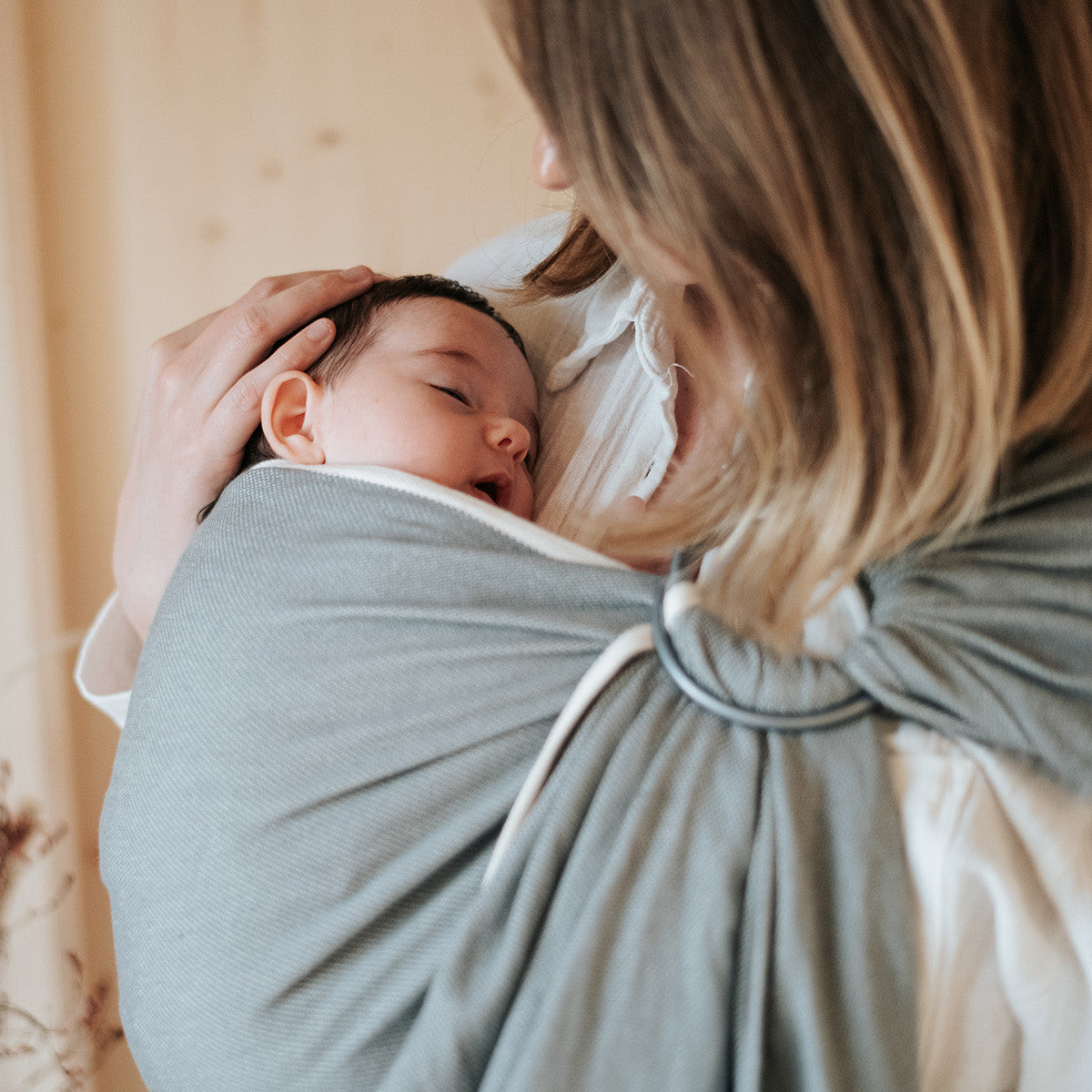


What to do with a baby carrier blanket?
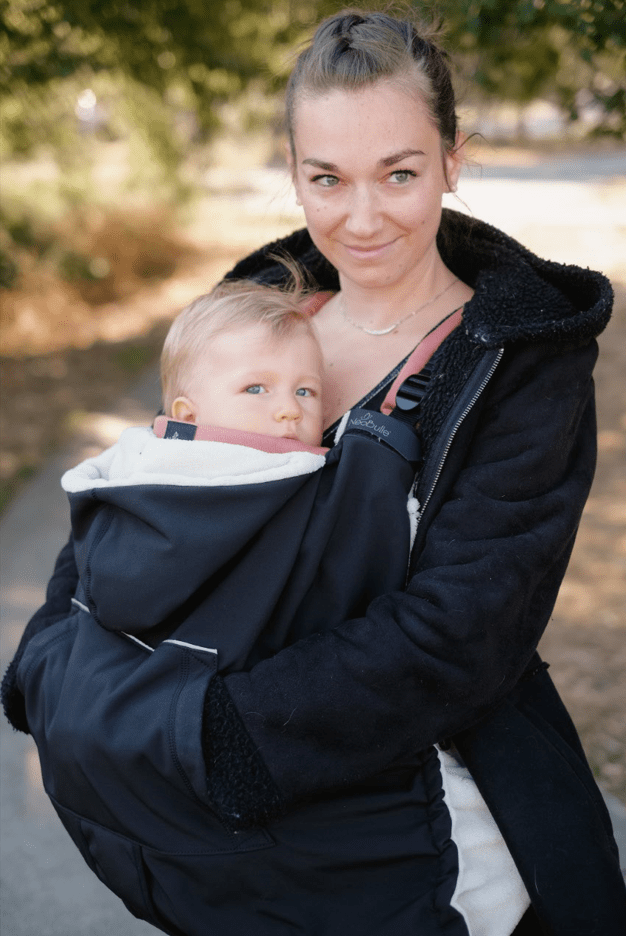
Congratulations! You are now the proud owner of a 3-in-1 carrying cover !Did you know? Even if you bought it to use with your baby carrier, it can be used in many other configurations… some of which are quite unexpected!Here are some ideas? 1 – On a baby carrier Classic, effective… The standard use of a carrying cover is still being able to use it while carrying your baby! We’re not teaching you anything.Universal, it can be used on all types of carriers, regardless of the brand or system! It has adjustable cords that allow you to fit it to your baby’s size so that cold air doesn’t rush inside. Details that matter: polar fleece flaps to slide your little one’s feet inside, and a lined pocket for the parent’s hands, to be able to stroke their back protected from the icy wind.Isn’t it nice to be warm and cozy with your little one cuddled against you, while temperatures drop outside? 2 – In a car seat Quick, keep the warmth chain going by placing your little one and their cover directly in the car seat. A designed opening allows you to pass the strap between their legs, attach it, fold the sides over them, and go! 3 – In a stroller In a 3-point stroller, you can use it like in the car seat, or when they’ve grown enough and their little legs are the size of the cover, you can simply lay it over the child and secure it to the frame with Velcro. They will stay warm and protected from the wind throughout the walk. 4 – A picnic blanket A little picnic or snack outdoors… but the ground is a bit too damp? The cover can help protect you! Its outer layer in water-resistant softshell is an excellent insulator, and even if it gets a bit dirty during use, it’s easy to wash in a 30°C machine.Escape is saved! 5 – A makeshift umbrella Oops, it starts to rain a little and you haven’t planned for an umbrella… Luckily, the cover is large enough to shelter two underneath and serve as a makeshift umbrella!Saved, you won’t arrive at work completely soaked! 6 – A makeshift coat for the toddler A somewhat hasty departure where everyone thought the other had taken miss deuzans's coat, and here you are arriving on the scene... without the famous coat, which stayed at home! It happens even to the best.The blanket as a DIY poncho and off you go for the family outing! 7 – A bag for collecting chestnuts What luck to find all these chestnuts during this little walk in the forest! Pity that you don't have a bag to gather them... Unless you use the blanket?Quick, pull the adjustment cords here and there, and that will do the trick...Yum, the tasty snack! 8 – A superhero costume You probably didn't know, but it's not just a simple carrying blanket... It's primarily a superhero cape allowing your toddler to take on their secret superhero role of masked super-justice warrior!But shhhht!!!! It's a super-secret!!!! Of course, this list is not exhaustive! And you, how did you use your carrying blanket?
Properly cover the baby in a carrier during winter
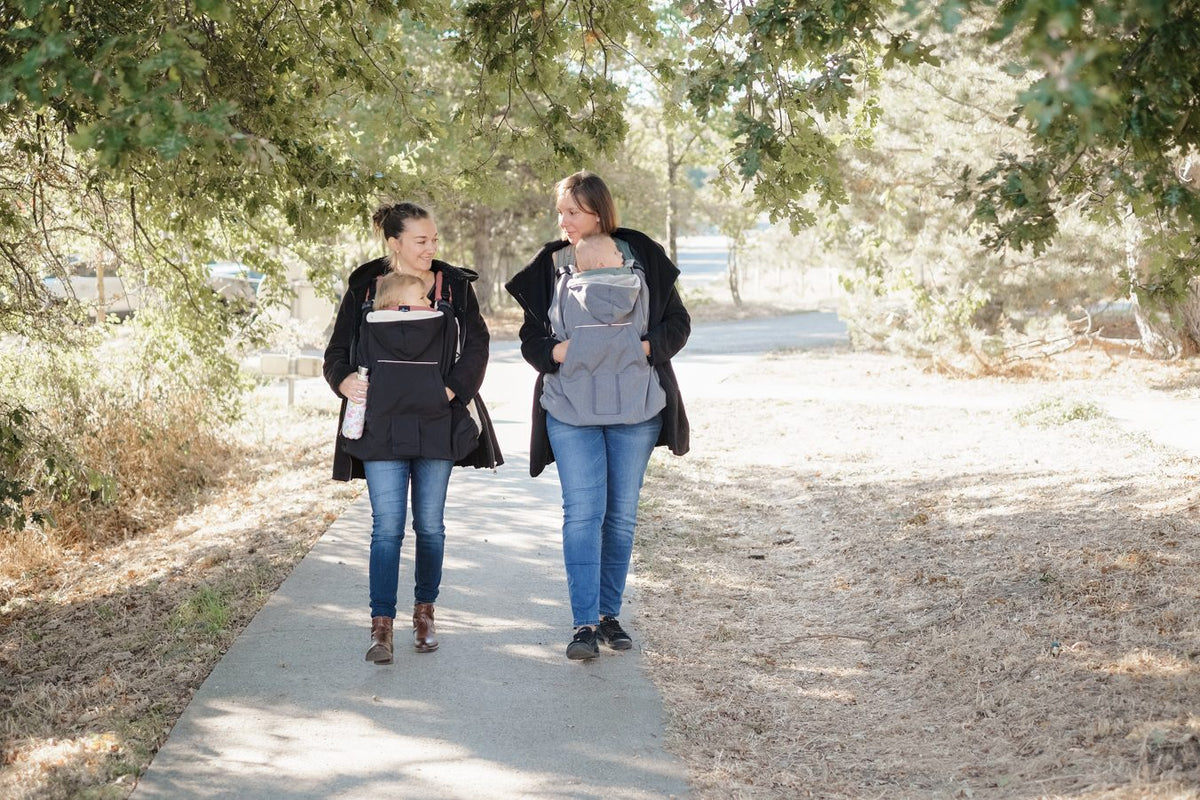
Winter is coming… Even though you've explained in the article on "How to protect your baby from winter viruses" that a poor outfit won't make your little one sick, you still fear that he might be cold.Is he sufficiently dressed? Or on the contrary not enough? How to ensure that your baby has enough warmth in his stroller during winter? Shall we take stock together? Why wear warm clothing in winter? Generally speaking, wearing turns out to be more practical on a daily basis, and this is even more true when winter is beginning. Winter means cold and bad weather… Ah the joys of the stroller and its rain cover with obscure installation, which leaves us completely perplexed (and soaked!): we never know which way this thing goes! And anyway, except for some models, the stroller requiring 2 hands to maneuver, it rules out using an umbrella to shelter yourself. Does that sound familiar?More generally, the farther away your baby is from you, the harder it is to assess his comfort. When you carry him, he is in your contact and it’s easier to make sure he has adequate warmth regularly and to know how to dress him.Finally, some activities are simply incompatible with using a stroller. Going away for the weekend to the mountains? Wheels and snow don’t mix well, for example. Covering baby in his carrier system… To keep his baby warm enough, one might be tempted to wrap him up in a snowsuit or thick clothing and a big coat. In fact, this is the first reflex most people will have to protect their little one from the cold.Totally counter-intuitive, it is actually the opposite of what is recommended.Why?The thickness of clothing affects the proper fit of the baby carriers, making carrying uncomfortable and potentially less safe.It can also compress the joints and hinder proper blood circulation in the legs, as well as obstruct breathing.It keeps your baby away from your body, which prevents the thermoregulation mechanisms from working properly and modulating heat according to his needs: he will suffer more easily from the cold.We also add that if you place your baby over your coat , in addition to being very uncomfortable and feeling particularly constricted in your jacket, the buttons or decorations on it could hurt your little one. For a baby carrier, it is therefore recommended to dress your baby normally, as if indoors. The carrying system counts as an extra layer of clothing (if outside of carrying your baby was wearing a small jacket, for example, the carrying scarf will replace the jacket). Your little one thus benefits from the thermoregulation of your own body, which helps him stay warm against you.It is also advised to cover what extends from the baby carrier and is more likely to get cold: a hat for the head, leggings and booties for the legs. Hands are generally tucked between him and you and your baby would hardly appreciate not being able to put them back in his mouth at will, so let’s leave them alone! … and wrap yourself in a cozy blanket Once your little one is dressed (normally, then) and settled in his baby carrier, the wearer can put on their usual coat and wrap their baby in a soft carrying blanket! The carrying blanket allows you to naturally retain the warmth generated by your body and that of your baby, like inside a bubble. No risk of suffering from the cold! Our blanket also features a windproof and water-repellent softshell layer, preventing icy air from seeping into the clothing and causing an unpleasant sensation.Essential for winter, it adapts to your daily needs. You go into a store? Just detach it to reveal your little one and avoid him getting too hot during shopping.Universal, it attaches to all baby carriers and can be used just as well by mom or dad.Is it REALLY cold? If the temperatures become very very low, around -10°C, -15°C or even less, don’t hesitate to opt for woolen clothing, or a blend of wool and silk. Very thin and flexible, they thermoregulate and can pleasantly complement your little ones’ winter outfits. Rest assured, merino wool has nothing to do with the wool of our childhood: it is soft and doesn’t itch! What to watch for when carrying your baby in winter? Despite these little tips do you have some concerns? Don't panic! We provide you with a small checklist of points to watch during the walk:Clear respiratory pathways: even if it's cold, breathing well is always a priority! Resist the temptation to pull up coats and blankets behind the little ones’ heads, not higher than the neck, and their face should remain visible.If the walk lasts longer, regularly move the extremities and possibly massage them a bit, to properly activate blood circulation.Is it freezing cold? Maybe it's better to shorten the hike! Remember that if you warm up when walking because you are active, your baby is passive in their carrying system and may get cold if external conditions are too harsh. And outside of carrying, how to cover the baby? Did you know? It’s not just in carrying that thick clothing is prohibited, it’s also in car seats!To stay well protected in case of shock, your baby needs to be securely held in the seat, so the straps should be relatively tight on them (they shouldn’t be pinched). If they are wearing a coat or a suit, the straps will be adjusted not on their body but on the padding. In case of an accident, this padding will flatten, and since the straps can no longer do their job, the baby risks being ejected.By the way, in a car there is heating, after the first few minutes after departure, it generally feels good and the suit is no longer really necessary!Again, the 3-in-1 blanket is a good asset: placed at the bottom of the seat, it has an opening designed to pass the straps, which will allow you to attach your little one, then if necessary, fold it over them until the temperature rises enough in the cabin to uncover them.In a stroller, it’s up to you to choose between blanket/footmuff and suit! The suit has the disadvantage of considerably restricting your child's movements, while the footmuff is less covering. If you have both, don’t hesitate to test to see what your little one prefers. The cold can arrive, are you ready to face it?
Taking transportation with your baby
Whether living in the city or in the countryside, there inevitably comes a time when the question arises of taking transportation with your baby. This could be a daily bus or metro, but also a more occasional train or plane trip!What are small tips to know so that everything goes smoothly? We tell you everything! Carrying your baby in public transport If you are required to take the bus, metro, or tram, we invite you to store your stroller and prefer the baby carrier!Between stairs, sometimes tricky access, and the reduced interior space, you will appreciate traveling lightly!Transport can be quite demanding for very young children who are sometimes quickly overwhelmed by noise and crowds. Being against you reassures them and allows them to observe this new environment at their own pace while enjoying lots of cuddles.The small bonus, especially during winter season: if you are reluctant to let strangers touch your baby without your prior permission (especially without washing their hands AND in public transport), it is likely that the situation feels less with your baby carried in a carrier than in a stroller! Your little heart being nestled against you, they need to penetrate your personal space to reach it, which acts as a barrier for most people. Carrying your baby on the train On the train too, we strongly encourage you to prefer the carrier system over the stroller! It is much easier to move around the station while pulling your suitcases, allows for easy climbing into the carriage, and avoids the hassle of storing the stroller in already full spaces (not to mention the risk of theft).Sometimes, if the journey is a bit long, your little one may have trouble finding sleep, and carrying them can help you "walk around" a bit between the different cars and help them fall asleep. In the baby carrier, your toddler can also enjoy snuggling and feeling "protected" from all the stimuli around them and may sometimes get a bit annoyed. Carrying your baby at the airport Traveling by plane with your baby, is quite an expedition! The adventurous parents know that light traveling is so much more practical, and for that, nothing beats a good baby carrier that will faithfully accompany all your adventures, even the wildest ones!And the very first of these is passing through the airport security gates… Removing shoes, the coat, the belt, and everything in your pockets, while holding your baby who himself shouldn’t carry anything delicate… A real Koh-Lanta challenge!Equipped with your baby carrier, the operation will be less acrobatic. We recommend a system that can be easily removed, such as a sling or a preformed carrier, which will allow you to put your little one in or take them out as needed. It will also be very useful for peacefully managing boarding and disembarking, which can be quite sensitive with little ones but also sometimes difficult to control with older children! Occupying baby during transportation To ensure that the trip with baby goes smoothly, it is highly recommended to prepare something to keep them occupied!For a short daily trip, a basic toy usually suffices:RattleBook to read if you manage to get a seat on the busSmall sensory bottle that’s easy to carry A hungry child, being by nature a grumpy child, having a packet of biscuits and a bottle of water in their bag is generally a good idea when you feel the trip becomes complicated. It also helps to cover unexpected situations such as a subway breakdown or other incident causing significant delays, which can alter the usual mealtime!For longer trips, by train or plane, you can opt for new entertainment options to distract your little one! Pack a special bag filled with small toys bought specifically for the occasion, which you will take out gradually during the trip (not all at once!).Whether for short or long journeys, for everyone’s comfort (yours, of course, but also that of other passengers), we strongly recommend avoiding battery-powered sound games and other musical instruments ! Adjusting the outfit in transportation When we move around, we like to be comfortable in our clothes : it’s the same for our babies!In the city during winter, outdoors, we protect ourselves from the cold and humidity by bundling up in our coats. Then we get on the bus where there are people and where the heating is on, and naturally we take off a little.Think about doing the same with your little one! Remove their hat and lightly uncover them so they don’t get too hot.Now you are ready to take transportation with your baby, what will be your next trip?

The urban carrier's checklist
Here you are setting out to attack the city, your baby snuggled in its stroller and your bag slung over your shoulder! Is there something to consider to ensure the adventure goes well? We have prepared a little checklist so that you can just enjoy! A baby carrier in good condition and well adjusted Because comfort is fundamental! In the city, carrying needs are very varied, and you may need to carry both for short periods and for longer trips, and these are often very recurring needs.The right adjustments of the carrying system are the guarantee of your future consistency: no matter how practical it is, no one uses long-term a tool that causes pain. Neobulle Tip: We recommend checking once a week roughly that the settings of your baby carrier are still adjusted to your child's growth (and yes, they grow quickly!). Don’t hesitate to check the good condition of your equipment. Comfortable outfits for carrying In the comfort category, you’ll also find clothing! Whether for your little heart or for yourself, plan an outfit in which you feel comfortable to move… Soft clothing, the right size, that does not constrict the body, does not pinch and does not ride up with movement should be prioritized when you plan a carrying trip with your baby. Between stairs, sidewalks, and construction sites, the terrain is not always stable for walking, so we invite you to wear practical shoes: no heels or high shoes, prefer sneakers, trainers, and other sneakers! We also think of seasonal classics: A hat and slippers for winter A hat and sunglasses for summer Neobulle Tip: Be careful with decorations on some adult clothing (pearls, zippers…), which can sometimes irritate or hurt your little one. Baby essentials! What ranks 3rd on this list and not 1st? A moment of distraction, perhaps… We are obviously talking about the comforter and the little head! NEVER forget! Never! Like if it happens to you, turn back, even if you risk being very late for work afterwards. We invite you to take them first, check during preparations that you have packed them properly, then before leaving the house, and again before exiting the building (you never know!). Neobulle Tip: Plan a backup set in the diaper bag. Be prepared for all emergencies, even outside carrying Parenting Murphy's Law is just like that: no matter the duration of a trip, the diaper will always leak RIGHT on the day where you haven't planned for something to change your baby.Ward off bad luck by always having on you a diaper, some cotton, a small lotion bottle and a clean onesie in your diaper bag. Yes, even for a short outing!Neobulle Tip: Remember to regularly check that the spare onesie is still the right size! Food and Drink! As long as your little one is breastfeeding, managing outings is quite simple since the breasts are always ready to provide meals and drinks as desired.When this is not or no longer the case, we advise you to always bring a bottle in advance in the bag (or for older children, a packet of biscuits and a small water bottle), to prevent the small hunger pangs that are sure to occur during the metro ride. Neobulle Tip: Having food ready is always useful in case of an incident during travels (like a stuck train), even later with older children! You can also use this little "emergency bag" in the car and supplement it with a survival blanket in winter. A diaper attached to the baby carrier Not all trends are good to follow, the "milk stone" perfume popular among new parents is actually one of them. Especially once your work routine resumes!The morning rush, a quick snack or bottle in haste, and suddenly your little one takes advantage of the 10-minute walk between your house and the daycare to give you a nice vomit of some of their milk… on your clean shirt? No! Because being prepared, you had attached a diaper to your baby carrier, and sensing the "wet" burp, you had time to protect your clothes!Hats off to super parents!Neobulle Tip: We never have enough diapers… Don’t hesitate to leave some everywhere — in the diaper bag, the car, on the baby carrier, etc. An activity suited for carrying your baby Whether in the city or in the countryside, it remains essential to adapt your daily life and your leisure activities to your child's presence, especially when carrying himIf you can definitely resume a bit of walking or other gentle physical activities with your baby in a baby carrier, more intense practices such as jogging should obviously be avoided! Neobulle Tip: There are now dancing classes in carriers! Don't hesitate to look around if this activity is offered near you? Getting around in the city: when baby carriers are prohibited! Sometimes you see baby carriers in the city in places where they shouldn't be found!A quick reminder about safety AND legislation: on the road, during transport in a vehicle, the highway code states that babies must be secured in approved seats, which baby carriers are not.Subject to the highway code: cars, but also bicycles!Therefore, it is not only highly discouraged, but also illegal to use a carrying system to transport a child in a car, or on a bicycle (or an electric scooter by the way…).Neobulle Tip: If you need to get around by bicycle with your child, we recommend choosing a suitable seat and getting advice on this subject at a specialized store… Or walking on foot alongside your bicycle while dropping off baby at their childcare!
10 Good reasons to wear in town
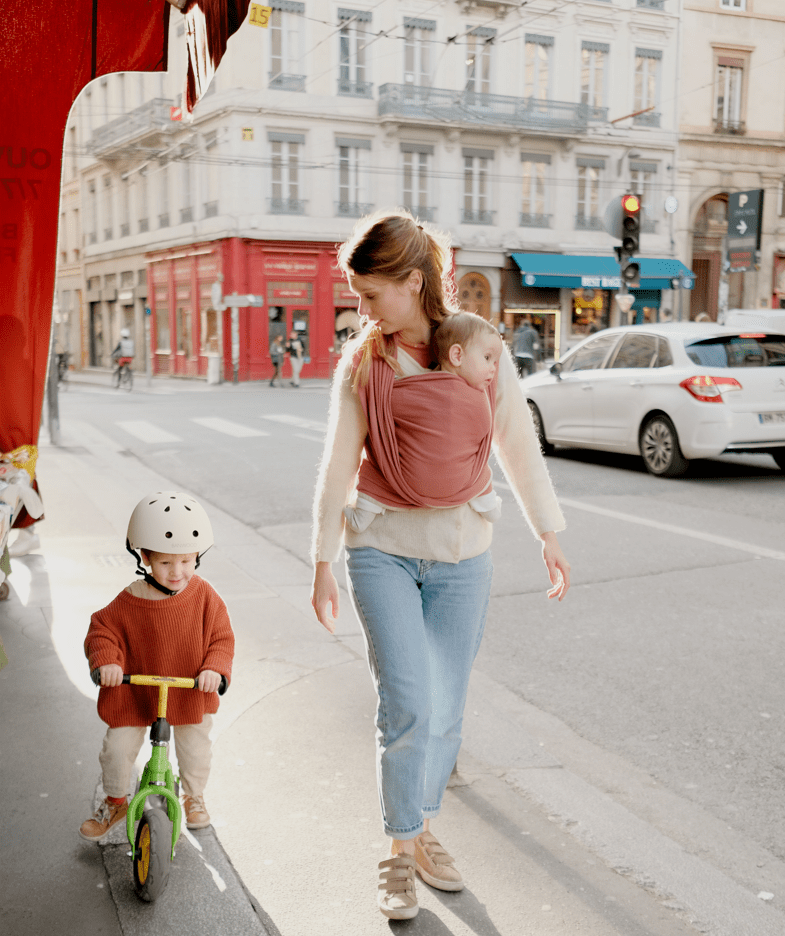
Are you expecting a child (or have you just had one), you live in the city, and you still don't quite know how to organize your outings with your little one? Between the Stroller Team and the Babywearing Team, your heart is torn? Even if, fortunately, nothing prevents you from having both, we give you 10 good reasons to choose a baby carrier to walk the streets of your city! Reason to Wear No. 1 – Sidewalks Too Narrow Some sidewalks are narrower than others, sometimes even for pedestrians the passage is a bit tight so if you need to add a stroller, it can sometimes become a bit acrobatic!Your little one cuddled against you, you are free as the air and you can sneak everywhere without risking ending up on the road. Reason to Wear No. 2 – Stairs and Paved Streets Floor coverings are not always very smooth, especially when you get closer to city centers: cobbled alleys, stairs, all of which are not particularly suitable for strollers!Carried on you, your baby won't risk being shaken by uneven terrain and you will be able to cross stairs without any worries.Bonus: if you go on a visit to an unknown city, carrying ensures you can go everywhere without difficulty! Reason #3 for carrying – Public transportation Taking the metro with a stroller already means managing to REACH the metro platform… Hoping there is an elevator, hoping it works, passing through the turnstile (which is still too narrow), all among other users who are often a bit too many and rarely happy to see the device that will take up precious space in the train.On buses or trams, there are no turnstiles, but the aisles are also narrow and interior space limited.In a baby carrier, no constraints!Bonus: sometimes public transport can be a bit intimidating for little ones with the noise of the crowd and beeps and announcements in vehicles. Wearing your child helps them feel secure and not be too disturbed by the environment. Reason #4 for carrying – Walks in green spaces What a joy to go discover the trees and flowers in the park near your home with your baby against you!At their height, they can observe everything, so you can share many things with them, showing them a leaf or marveling together at a bird flying away... Reason #5 for carrying – Commutes to school If you have a child to take to school, it’s likely that strollers are forbidden there! Corridors leading to classrooms are already quite crowded, so many schools have decided to ask parents to leave strollers at the entrance.Using a carrying system will allow you to accompany your older child to their class peacefully without having to hold the little one in the bulky (and heavy) car seat, or simply your arms (which is clearly not very practical when your toddler needs help putting on their shoes or taking off their coat). Reason #6 for carrying – Trips to the playground When it comes to seniors, it also means outings to the square to let off steam and have fun! Slides, swings, and other roundabouts and games of hide-and-seek and Mölkky!What could be nicer than involving your youngest in these good moments by having them against you in a baby carrier? It's also the best way to be available for all your children at the same time, secure the climb up the ladder of one while enjoying the peaceful nap on your chest of the other. Reason to wear No. 7 – Construction work An area under construction, a freshly broken asphalt sidewalk still in the form of gravel, and not always the possibility to easily bypass the zone?Hop baby secured in a carrier and off you go! No other precautions needed than avoiding high heels and paying attention to where you put your feet. Reason to wear No. 8 – Going to the market Slaloming through the market with a stroller is a skill and agility exercise! Crowds, sometimes tight stalls, not always a lot of space to move around... and noise that can impress your baby a bit. Moreover, in a cane stroller, he will only see people's knees, which is not the most pleasant for him.Seated in his carrier system, your child can also help you choose fruits and vegetables, and give his best smile to the grocer to get a strawberry to enjoy right there (fortunately, all our baby carriers are machine washable and easy to clean!).Tip: easily carry your shopping using a shopping cart! Reason to wear No. 9 – Bad weather Walking in an urban area with a stroller is one thing. Walking in an urban area IN THE RAIN in a stroller, takes it to another level, because it involves 2 things:Using rain gear, which, once you get home, drips everywhere in your entranceDepending on the stroller model, having to choose between pushing it (with both hands) OR taking shelter yourself under an umbrellaWith babywearing, it’s easier: everyone under the same umbrella! Reason to wear No. 10 – Enjoying baby! The last reason and probably the best: wearing your baby in town is mainly enjoying their contact, rocking them with your movements, and sharing many tender moments and beautiful adventures. in daily life with him ! And you, what is your good reason for carrying a baby in town ?
Which carrying system should be used for a short trip?
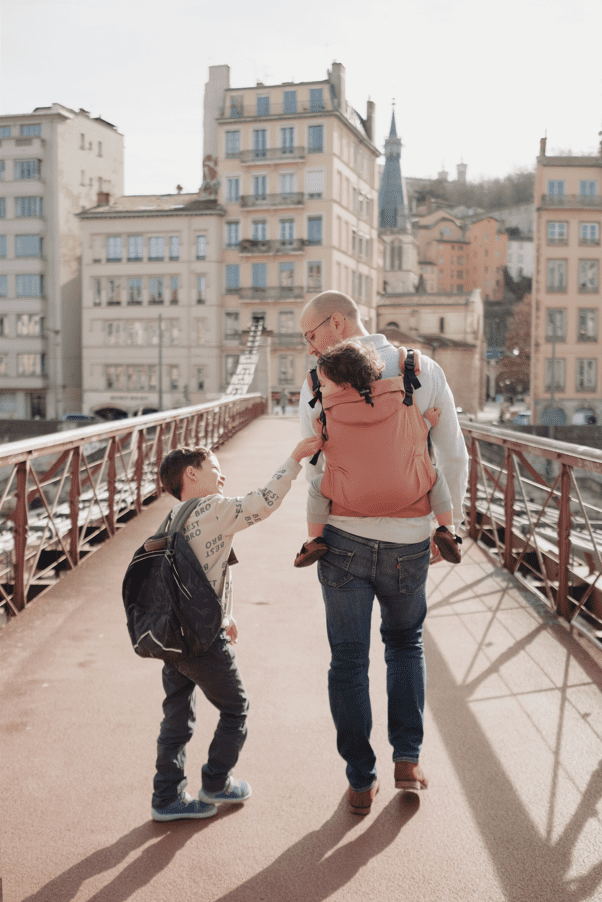
We often talk about the choice of carrying systems for hikes and walks... But less so when it comes to carrying over shorter distances. Yet, it is also a real issue! And yes... Quick trips, school/nanny/crèche runs, and other short errands punctuate the parents' daily life. So which baby carrier to choose? Can we use the same as for hikes? We tell you everything! What is my main need for carrying my baby? To choose the right carrying system, it’s a bit like when you want to buy a pair of shoes or clothes: you need to be clear about your main need, to avoid ending up stuck on the beach in flip-flops. Most often, when you want to carry over short distances, you will look at the following criteria: Practicality: the baby carrier must be easy and practical to put on in all circumstances (including in the middle of the street)Quick donning/doffing: the baby carrier should be put on (or taken off) very quickly, possibly in a waiting room or in a parking lotNo straps dragging on the ground: the baby carrier must be able to be installed in the middle of the street, for example after getting out of the carThese criteria are, of course, not exhaustive but already help to get a sense of the overall situation.In daily life, unlike during a walk where once properly adjusted and fitted you don’t touch anything for a long time, you need to imagine that the baby carrier will be frequently put on and taken off, sometimes a bit "on the fly" (not to say completely haphazard!), so it’s really important to choose a model that is not a headache and that truly makes your life easier! If it takes too long to put on (meaning more than the travel time itself), it can quickly become frustrating and discouraging.Then, you will find several configurations depending a bit on your lifestyle and whether you have other carrying systems to complement or not. I just want a model to carry my baby during my short urban trips If you only want a small carrier for short trips: the sling is your friend!This is THE portable baby carrier par excellence. Set up over the shoulder on one side, it pre-installs and can be kept on you, for example in the car while the baby is in the car seat, ready for easy installation as soon as you arrive at your destination. He adjusts easily and detaches with one hand: tensions are self-blocking in the rings and do not require any knot at the end.Since it is quite compact, it easily slips into the diaper bag to stay, for example, at the daycare in the baby bag during the day.By offering off-center carrying, the sling allows you to show your little one many things and to share many beautiful moments with them. Off-center carrying is also appreciated when you have a bigger one to manage because it frees up a bit more space in front! At the "expert" level: the sling is the only carrying system that does not require you to lay down your baby to be able to install it! Bonus? The most skillful among you will also be able to breastfeed their little one while walking (not too fast!).Disadvantage: carrying on one shoulder is not suitable for long-term carries, where it will become quickly uncomfortable. I also want to go hiking with it! Want to combine the needs inherent to both small and large movements? Why not opt for a preformed baby carrier? The Neo range is the ideal solution for parents who like to alternate between metro rides and café terraces, and open spaces. Installed in 2 clips, preformed carriers blend into daily life and provide both comfort and freedom.Like the sling, the preformed can simply stay clipped at the waist while waiting to welcome your child, and even then , it doesn’t drag on the ground and stays clean, which is all the more appreciable when it rains.At the "expert" level, the baby will do the shopping with you on your back and will show you all the vegetables and fruits they want to put in the basket!Disadvantage: when changing carriers, there are a few adjustments (quick ones!) to be redone. My toddler is walking When the child walks, the needs change and often carrying becomes less and less necessary… Especially since toddlers love exploring their environment on their own and playing superheroes as soon as they find a nice stick!Nevertheless, even the most enduring superheroes are entitled to be tired and need a super-parent to rescue and carry them during a more challenging journey than usual.This obviously happens when you no longer have a backup baby carrier with you. We recommend all parents to have a hip seat carrier support of the Hop-la type on hand in their bag! Ultra-compact, the hop-la fits in a handbag, designed to support your child's bottom and relieve your arms. It does not replace a real baby carrier but can save your day in many everyday situations and proves to be a wise choice for many small trips with a "small-big"! And the other carrying systems? What about other carrying systems? Indeed, we did not mention slings and mei-tai in this article. These tend to be a bit more time-consuming to set up (especially for the sling) and/or have significant fabric lengths, making them less suited for quick uses than a sling or a preformed carrier, and we would not recommend those for specific quick-use scenarios. However, if you already own them, do not hesitate to experiment with many different configurations to see for yourself and in your daily life whether they suit you, before considering other purchases!As always in carrying, there is no single truth and it is up to each individual to choose based on their feelings.You are now equipped for your small trips with babies! So, which baby carrier will you choose?
Neobulle, a company committed to nature: the carrying (article 2/3)
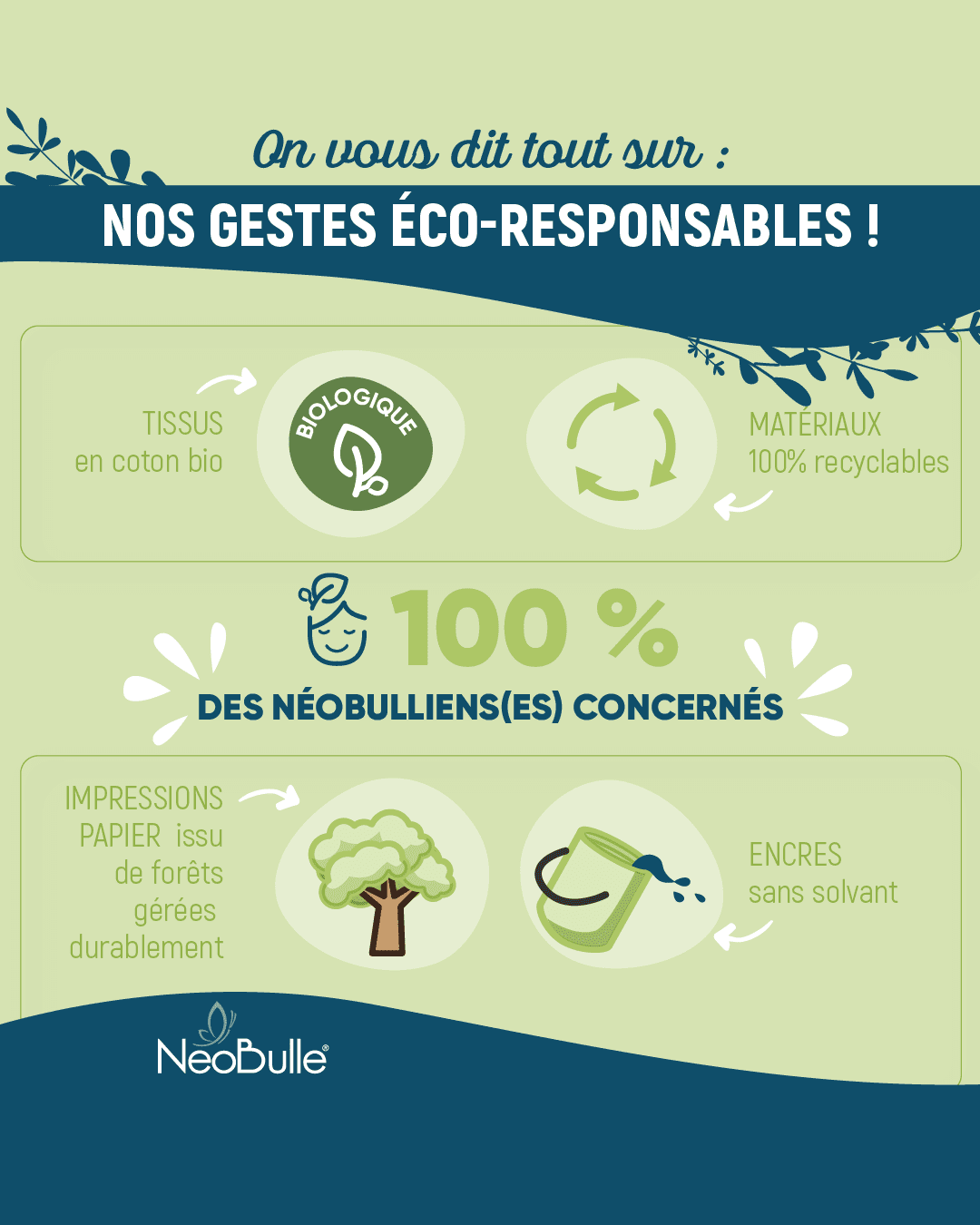
After discussing in our previous article the eco-friendly gestures of our company regarding care products, we continue here with our carrying solutions! 1 – Still local! Like for skincare, it is essential for us that our carrying ranges are made locally! The weaver to whom we entrust the weaving of the textiles we use to manufacture our baby carriers is located 20km from Neobulle. These textiles are specifically and exclusively made for us. Everything is then directly cut and sewn in the workshop integrated into our building. The dyers responsible for dyeing the threads and textiles are also close to the company. The absence of multiple, geographically distant intermediaries allows us to significantly reduce the carbon footprint of our carrying systems. 2 – Respectful products It is essential for us that the carrying systems intended to hold your little ones preserve their health and the environment. All our fabrics are thus made from certified organic cotton threads, guaranteeing the most environmentally respectful cotton cultivation possible. The dyes used are also free from toxic products, which is not a detail when you know that babies love to chew on their carriers! Our dyed thread supplier is very committed to ecology and uses unique dyeing processes that use little water, coupled with a water treatment station. Generally, the companies we work with are very controlled! 3 – Nothing is wasted!!!! The manufacturing of our baby carriers is designed to maximize textile efficiency. We especially aim to limit unnecessary waste by carefully considering every detail of the cut. We also recently acquired a cutting machine that allows us to go even further in this approach. Fabric scraps, although unavoidable, are not discarded but repurposed: The company's employees can reclaim them for their personal projects We also donate them, for example, to design schools The leftovers are recycled into building insulation 4 – Choosing Packaging The packaging of our baby carriers also meets strict criteria: The boxes are made from PEFC-certified sustainable forest cardboard The inks used are vegetable-based We do not add plastic bags to package the carrying systems The instructions accompanying our carrying systems are designed to provide you with all necessary information for proper use and maintenance of your equipment, without superfluous details. Besides the ecological aspect of this choice, it is also a way to help you during your first installations and thus avoid overwhelming you with too many technical details that may not be necessary! Need more info? Feel free to visit our website and our YouTube channel. Note that the physical presence of a manual is part of the legal obligations and it is therefore not possible to simply digitalize it. In addition, choosing NéoBulle means supporting several small French businesses (our team of about forty employees, but also indirectly all our subcontractors, who are also small structures), and it also guarantees providing your baby with healthy textiles for him and for the planet. Stay tuned for the next article to take a closer look at all the actions implemented in parallel by the "Néobulliens"!
The essentials of family hiking
Long live holidays! The fresh air of the countryside, the little paths lined with flowers and wild strawberries, the beautiful panoramas… You're eager to share your passion for hiking with baby, and we understand you! But planning baby’s gear can sometimes be a real headache, so how about we help you not forget anything before departure? 1 – A baby carrier Have you already imagined taking a stroller on a steep trail? Forget right away this ridiculous idea! Some have tested it (yes, we’ve already seen it at Néobulle!), and frankly, it’s a no-go. The baby carrier is by far the ESSENTIAL accessory for all hiking parents, whether their child walks or not (because even good walkers, little ones tire quickly, and carrying them by the arms along with the bags is not very practical). Want to know more about how to choose your ideal baby carrier? Here it is! Otherwise, know that our new version of the Néo+ has been specially designed to support family adventures, with lots of little details (thumb rests, loops for attaching accessories…) that make a difference! 2 – Things to protect It’s difficult (impossible) to ensure you’ll stay in the shade throughout the trip… So it’s essential to plan how to protect baby from the sun: A hat, ideally that covers the neck Sunglasses suitable for their size and with a good protection (at least category 3) Comfortable and lightweight clothing but covering (which also protects against insects) Depending on your child's age, also consider sunscreen (SPF 50 and apply every 2 to 3 hours). And because the weather can sometimes turn bad and/or cool down unexpectedly, a light jacket and waterproof clothing can complete the equipment! 3 – How to stay hydrated This is obvious, but we still remind you! Always carry plenty of water, for both adults and children. Plan for an ultra-large amount, and add another 1 or 2 liters for safety to these generous estimates, so you will have the right quantity! Children do not always realize If they are thirsty too, don't hesitate to take frequent breaks to offer them a few sips of water. Note that a child is perhaps simply slightly dehydrated! If your baby is still exclusively breastfeeding, no need for water (which is less hydrating than your milk!), but small snacks. 4 – Things to treat minor injuries Even if it’s not necessary to carry the entire house, it is always recommended to have the basic essentials on hand to treat the most common minor inconveniences: An antiseptic and some gauze, to clean scratches Our 2 emergency sticks badaboum and p’tits bobos, to help absorb small wounds and bruises Bandages An analgesic suitable for all family members and easy to administer (99% chance it will be unnecessary but it takes up little space and we’re glad to have it when needed!) A tick remover Our Adoupik stick to relieve insect bites and falls into nettles! 5 – Time to eat! Hiking with an empty stomach, by default, is already a bad idea… With kids, it becomes more than critical! If usually the little one nibbles on their plate with difficulty, be assured that fresh air will open their appetite and it’s highly likely they will turn into a bottomless pit. So now is not the time to forget snacks or to worry about quantities! Focus on everything that provides energy but remains digestible: dried fruits, cereal bars… off? A little convoi struggling to move due to fatigue? Now is the perfect time to boost the troops with a small snack! 6 – How to change the baby A few diapers, some wipes, and a spare onesie… The basics of all outings with a baby! We also recommend adding a small bag that will serve as a trash bag, which you can throw away upon your return. Nothing worse than ending up with a messy diaper overflowing in your hands and nothing to store it in until the end of the walk! 6 – And how do we carry all this? Once the child is strapped into their baby carrier, how do you easily carry all that without turning into a Sherpa? Thanks to our 2 new accessories! From changing to clothing to pharmacy items, the wandering swaddle will allow you to store everything related to baby. Attached directly to the neo+ V2 baby carrier, its load distributes perfectly and it takes up very little space for the carrier, while avoiding accumulating XXX bags and straps that get tangled. On the meal side, the wandering bib as its name suggests can keep the bottle water warm… but not only! It can just as well be used to keep a small water bottle or the baby's meal at the right temperature. It too attaches directly to the neo+ V2, or if not, to your shorts' loop… You're ready to go on an adventure with baby!

Accompanying a baby suffering from reflux (2/2)
Article 2 : Carrying a Baby Suffering from Reflux After discussing daily life with a child suffering from GERD in the first article of this topic, the following article will be dedicated to the specificities of carrying that reflux induces. Between theory and practice… In the frequent advice regarding supporting a baby with reflux, it is recommended to keep the baby vertical as much as possible, and to carry. On paper, carrying is ideal because it calms stressed babies, promotes falling asleep, offers a vertical posture, liberates the parent's arms, and so on... That’s the theory. In practice, it’s another story! Babies suffering from reflux have an instinctive NEED to be carried, but very often CAN’T STAND IT! They want to be held, cuddled and reassured... But they don’t tolerate contact. Moreover, being extremely stiff, the setups are more complex (not to say sometimes downright acrobatic). You’ve understood from these few lines, practical life is not straightforward! The vicious circle of hyperextension The first difficulty in carrying is hyperextension, and the manipulation challenges it causes! Be careful, GERD does not have a monopoly on hyperextension; many other factors can promote this (such as torticollis, for example). We discuss this here in the context of supporting a baby suffering from reflux because it is one of the major difficulties that can be encountered, but the following advice applies regardless of the initial cause. Babies who suffer from reflux are generally described as very tonic babies... This is often related to hyperextension, and it has nothing to do with a possible “advance” in psychomotor development. The normal (by standard) posture of a little one is a flexible and curled-up posture, with the back more rounded (see physiological position). When hyperextension occurs, the baby becomes very stiff, adopting straight postures (or even arched), in the jargon of carrying sometimes called a “stilted baby”. One might think that these "thrown back" postures are pain-relieving for the very young, that they help relieve some of their pain by relaxing the stomach and reducing the occurrence of reflux, but in fact no, it's quite the opposite! They are actually reflex positions in response to pain. To put it simply, we confuse cause and effect, the baby does not arch to hurt less, it arches BECAUSE it is in pain. Since we mistakenly believe (incorrectly) that keeping the body straight will make our little one hurt less, we naturally allow them to settle into this position, or even encourage it. This leads to 2 things: 1/ more complicated digestion (if you remained yourself in an arched position after a meal, you would see that it’s not very helpful for digesting properly), which itself is a vector for acid reflux if you followed along... 2/ a postural habit combined with excessive contraction of the dorsal muscles, which will prevent your little one from returning to more upright postures (kind of like having a too tight elastic pulled in their back). And thus the vicious circle. The hyperextended posture is also problematic on other levels that we will not detail here. But you might say, that’s all very nice, but what do we do to address this and correct it? Supporting rolling over daily The first thing to do is treat the pain (see the first article in the reflux series). Then, daily, we will ensure to gently work on the "good" postures, while limiting as much as possible all movements likely to re-induce hyperextensions (and you will see that they are numerous!). Thus, we will avoid anything that stimulates your little one to "arch" backward, such as for example: A mobile above their head (preferably an installation closer to their feet) Toys behind their head In the arms, we will also be careful to avoid anything that could encourage them to arch, especially by using the forearm instead of the hand to carry them. Indeed, when using the hand, or if the forearm is placed too far behind the hips, it creates a pressure that pushes their pelvis forward instead of inviting them to sit. In short, it’s as if someone told him "throw yourself backwards," and at that age, well, they listen to what we say! This can be seen as a true re-education, both in terms of the parent’s gestures and the overall posture of the child. NB: In a physiological position, the stomach is not supposed to be compressed. If the baby is not "tucked" or "faced down," his stomach remains free. And what about carrying in all this? Carrying is coming into play. We saw that it can be more delicate to implement due to the stiff postures of the very young child. The other complex aspect is the tolerance of the baby, especially when the pain is not yet relieved. As with anything that touches on somewhat specific needs, it is difficult to draw generalities, and you will need to do several tests to find the tool that best suits your little one, and arm yourself with a bit of patience! The following tips are those that seem appropriate for the majority of babies suffering from reflux, but unfortunately do not constitute a magic wand that works every time! Choosing and adjusting your system The choice of system should take into account both the needs of the baby and the ease of the carrier. For the baby, generally, we prefer very stable and not too constraining systems. For the carrier, we will prefer systems that can be easily installed even with a crying and stiff baby (we understand…) You understand, the babywearing sling (especially stretchable) is clearly not the number 1 choice! It can be poorly tolerated by your little one (too tight, wrapping), and requires a great mastery to be properly installed when he is in crisis. Systems like mei-tai or preformed are often better tolerated because they are less constraining, and they have the huge advantage of having material between the legs. To understand: when the little one is stiff as a board, crying and flailing, it is still possible to install him in the baby carrier even for a novice… The installation will be completely missed according to usual physiological criteria, but he will be safe!!!! And this will allow you to quickly walk and soothe him without overloading your body. Once calmer, it will always be possible to adjust the settings. ... The sling is also a system that, in some cases, works well, especially because it allows for a very gradual installation that is better tolerated by children. If you are using a sling or a wrap, a good tip is to start adjusting from the bottom edge, rather than from the top as is usually done. You will probably notice but often it is the adjustments and transitions of fabric around the neck and shoulders that trigger tears: by starting to tighten around the pelvis, it will help your little one get used to it gently. Do not hesitate to take breaks after each adjustment, and to walk and rock your baby so that he can relax before moving on to the next adjustment. Accept imperfection Last but not least: despite everything discussed in these 2 articles, it is very likely that your little one will not adopt very “conventional” positions in their carrying system. Forget about the baby bump, with knees well up and back nicely rounded… Sometimes when you manage to get a 90° angle (or nearly) between the thigh and the back, you are super happy and know that it will be difficult to do better! And honestly, it’s not a big deal! What matters most is that your baby’s needs are respected, and that you can breathe a little too and/or attend to some tasks with your hands free… Are the airways clear? Is there a risk of falling? Then everything is perfect. All that’s left is to put all this into practice! Don’t hesitate to also get support from a carrying coach to help you and adjust the carries to your specific situation. Courage and stay the course! You are the best parents you can be for your baby, reflux is fortunately not eternal and with your good care and his growth, things will eventually become easier.


