
Diary

Le P'tit Evo: Birth of a baby carrier

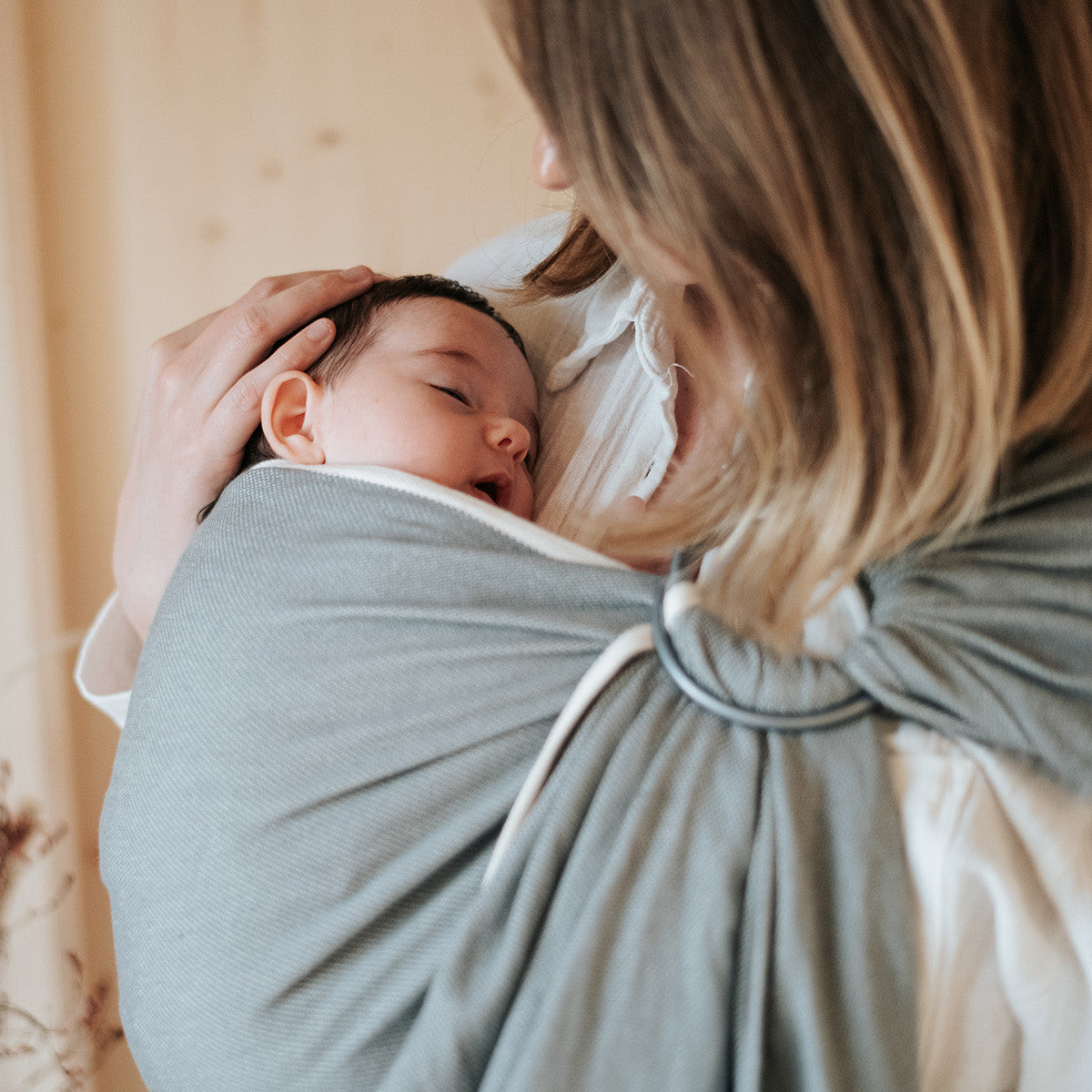
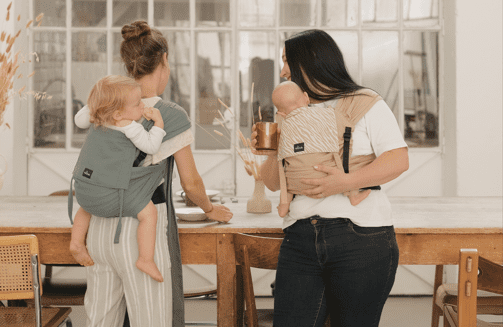
2 enfants portés en porte-bébé

On the occasion of the arrival of the P'tit Evo in our ranges, we invite you to dive with us behind the scenes of creating a baby carrier.
From the initial idea to carrying your little one, the journey is long and full of obstacles! Shall we tell you about it?

1 - The origins: the idea

It seems simple written like that, but finding new product development ideas, it's sometimes a real headache! Especially since it’s not just about designing an item, but first ensuring that it will be aligned with parents' needs that we support.

At Néobulle, since the carrying range has become quite extensive, the field of possibilities narrows. However, there are still some gaps to fill, and notably we had in mind for a while that it was a shame not to offer a baby carrier inspired by Asian designs (mei-tai) that would be suitable for a newborn.

The mei-tai is a perfect compromise between wrap carriers and preformed baby carriers. It combines comfort and the enveloping feel with the ease of installation. To learn more about mei-tai, click here! Our évolu'bulle, which falls into this category, is very well appreciated but it only allows carrying from 3 months old, which is too late for many families who love the cocoon-like feeling of a wrap but do not want to learn the knots.

With more and more requests from carrying instructors (indicating that the interest was also present among parents for whom it would be intended), we decided to embark on this adventure!

2 - Defining the criteria

The first step in design is to define the specifications that the baby carrier must meet. For us, it included:

  • suitable for a newborn
  • expandable shoulder straps
  • easy to use
  • comfortable
  • evolving
  • at an affordable price

And of course, in addition to Néobulle's usual requirements, including the complete components of the baby carrier made in France, sewing done in our workshops in Saint-Bonnet-le-Château (42), and fabric certified organic cotton without toxic dyes.

The shoulder straps were a tricky point because depending on whether you carry in front or on the back, the behavior of the strap changes: in front, the straps that unfold are often more comfortable, but on the back, they are less stretchable and padded straps are then preferable. Since the P'tit Evo is intended for carrying young babies, we favored front carrying but included removable padding for parents who might use it on the back later.

Having similar age criteria to those of the Néo model,

(our preformed baby carrier for 0-2 years), very naively we thought that it would be easy and that it would be enough to reuse the same apron and replace the straps (spoiler alert: no!).

In general, it is important that the ranges are coherent and that the specifications take into account the other baby carriers we offer so that all complement each other in their use and that it is easy for parents to find their way around.

3 - The prototypes

The prototype is the realization, the moment when we start serious things.

It is also the moment when we often realize that the idea that seemed brilliant on paper is actually disastrous! Take this story of reusing the Neo apron, for example: well it doesn’t work at all. Because between the preformed straps and mei-tai straps, the tension lines applied to the apron are not at all the same, and we ended up with a very wrinkled fabric and a baby that was not at all wrapped. Critical failure.

To better explain the course of this testing phase, you need to imagine that there are several people involved more or less closely, and who need to coordinate, all across different locations!

Séverine (the big boss) sends precise manufacturing instructions to Caroline (our prototype sewing specialist).
Caroline makes a prototype at home.
Elise (who is responsible for home seamstresses) picks it up to bring it back to Séverine.
Séverine has Delphine (the carrier instructor) try it on when she is in the premises.
Delphine notes what’s wrong.
Séverine and Delphine rack their brains trying to understand how to fix it, noting everything carefully on the analysis and report sheet (or rather: forgetting to note it, then getting scolded by Elise for thinking about it and doing it)
Elise brings everything back to Caroline, who creates a new prototype taking the comments into account.
etc... etc...

Of course, every time we correct something, there’s a risk that it will modify everything else! Starting with a strap that doesn’t fit, ending with an apron that’s too loose, then returning to poorly fitting straps...

The corrections must take into account the result in carrying, but without forgetting that it is not only about producing a prototype, then our seamstresses must be able to manufacture it on a large scale without too much risk of error (which could lead to later after-sales returns).

In the middle, it’s also necessary to insert tests with other instructors to get their opinions and ideas, always very valuable. And real babies. , because babies are just substitutes that are not always realistic enough in their behaviors. Also with parents of various morphologies to ensure that the baby carrier will fit everyone. Friends and family are then involved (they serve science and it's their joy!).

And above all, after a while, you need to try to make sense of the different trials, correct without reproducing the previously encountered problems (after 7 or 8 prototypes, it becomes difficult!), not to mix up the prototypes... and not to give up!

4 - The Holy Grail!

15 prototypes and several hours of head-scratching later, finally, the Grail! The perfect prototype! Dance of joy and champagne, we can now launch production!

Our little hands in the workshop are briefed on all the details of manufacturing: cutting, sewing, tips for assembly, nothing is left to chance. They are the ones who add the little doses of love and sleep powder necessary for the baby to be perfectly settled and soothed!

The baby carrier is sent for testing to ensure it complies with safety standards.

And meanwhile in the offices, we need to prepare the launch:

  • Photo shoot (thanks to our one-day models!)
  • Step-by-step photos for the manual
  • Video tutorials
  • Color choices and their names
  • Packaging design
  • Manual creation (layout, texts, legal notices...)
  • Internal training on usage (so everyone can advise you properly afterwards!)
  • Product sheets for our websites, partners, and resellers
  • and I forget some!

5 - It's starting

Finally, the big launch day! Moment of truth: will our little newcomer appeal to you? Did we think of everything? A big release is always a bit stressful. Coincidence of the calendar: from idea to sale, about 9 months will have passed (which is exceptionally short! We are usually closer to the gestation of an elephant than that of humans!)... At Nébulle, baby carriers are our real babies ;-)

And so: do you like this little evo?!

Related articles
BébéLe portage hanche : une ouverture sur le monde en toute sécurité

Le portage hanche : une ouverture sur le monde en toute sécurité

Le temps d’un câlin, d’une petite course ou d’une fin de promenade à gambader dans le parc… le portage sur la hanche est instinctif et accueille spontanément votre enfant.C’est une manière naturelle de porter à partir du moment où le bébé tient bien sa tête et son dos. Il est ainsi bien calé et peut voir tout ce qu’il se passe à hauteur d’adulte. C'est beaucoup plus amusant pour lui et favorise son éveil !Pourquoi privilégier le portage sur le côté ?Il y a plus facile et plus confortable que le portage à bras ! Il faut opter pour une solution simple et confortable pour répondre aux besoins de découverte de bébé, tout en assurant sa sécurité émotionnelle.On ne parle donc pas du « face au monde » qui est vraiment peu adapté pour les bébés (voir notre article sur les risques du portage face au monde). Le portage côté permet d'ouvrir le champ de vision sans pour autant mettre votre bébé en hyperstimulation. En portant sur la hanche, votre bébé conserve un contact visuel fort avec vous ET cela vous permet de libérer au moins un bras. Une nécessité lorsqu’on est parent, n’est-ce pas ?Sling ou Aide à bras : quel porte-bébé choisir pour le portage hanche ?Chez Néobulle, le Sling et le Hop’la sont deux solutions de portage parfaitement adaptées pour installer bébé sur la hanche. Mais lequel choisir ?Le Sling : le portage hanche mains-libres dès la naissanceLe Sling conviendra dès la naissance. Il permet autant le portage ventral que le portage sur le côté, au gré des besoins et de l’envie de « tout voir » de votre petit. Il permet de bien soutenir le dos du bébé grâce au tissu qui monte jusqu’à la nuque, surtout s’il a moins de 4 ou 5 mois et que son dos est peu musclé. Bien soutenu, il pourra profiter d’un paysage plus large, voir ce que vous voyez, ce qui conduit à une interaction plus fréquente.L'avantage pour le parent : Le Sling apporte un confort indéniable grâce au tissu déployé sur l'épaule et au serrage précis. Cela crée un contrepoids et limite la sensation de déséquilibre. C’est le moyen de portage idéal en dessous de 9/12 mois car il vous libère vos deux bras.Le Hop'la : l'aide à bras pour les plus grandsLe système de portage Hop’la est encore moins encombrant que le Sling ! C’est ce qu’on appelle une aide à bras ou un porte-bébé d'appoint. Convenant aux enfants de plus de 6 mois (qui tiennent bien leur dos), il soutient les fesses et les jambes de bébé en position physiologique (accroupi). Vous n’aurez plus qu’à garder une seule main sur son dos par sécurité.En tricot léger, il épouse votre épaule et la morphologie du bébé pour un portage agréable sans réglage. Il sera d’un grand secours jusqu’aux 3 ans de votre enfant, pour ces moments où la fatigue se fait sentir et où les bras sont réclamés ! Pratique, il se glisse dans votre sac à main.Résumé : Bien choisir son portage hanche chez NéobullePour résumer, nos deux systèmes garantissent une position physiologique et un confort ergonomique (tissu ajusté et épaule enveloppée) contrairement à d'autres systèmes du marché parfois douloureux.1- Le Sling (Porte-bébé) :Dès la naissance et jusqu’à 3 ans.Libère les 2 bras du porteur.Demande un réglage précis (petit apprentissage nécessaire)2- Le Hop’la (Aide à bras) :À partir de 6 mois (bébé tonique) et jusqu’à 3 ans.Libère 1 bras du porteur.Sans réglage, installation immédiate.Alors, quel est votre choix ?N’oubliez pas que notre monitrice de portage est disponible au service client pour répondre à vos questions. Nos tutos et visios sont également là pour vous aider.

Journal de bordNoël, mode d’emploi pour parents (presque) zen

Noël, mode d’emploi pour parents (presque) zen

Noël approche.Les lumières brillent, les chants résonnent, les listes s’allongent… et bizarrement, la charge mentale aussi.Car soyons honnêtes :Derrière les jolis pulls et les photos souriantes, Noël peut vite devenir un marathon émotionnel, surtout quand on est parent.Penser aux cadeaux (des enfants, mais pas que), aux repas, aux trajets, aux siestes à respecter, aux remarques à anticiper…Et très souvent, ce sont encore les femmes qui portent l’essentiel de cette organisation invisible.Alors oui, Noël peut être une fête joyeuse, chaleureuse, pleine de sens.Mais parfois aussi, c’est juste fatigant. Et ça aussi, ça mérite d’être dit.Noël avec un bébé (ou un jeune enfant) : spoiler alertNon, ce ne sera peut-être pas comme avant.Et non, ce n’est pas grave.Quand on devient parent, les grandes réunions familiales peuvent prendre une autre couleur :des horaires chamboulésdes bébés passés de bras en bras (astuce imparable : installer bébé en portage, personne n'osera vous demander de le défaire ! )des conseils non sollicités (toujours donnés avec les meilleures intentions, bien sûr 😅)👉 « Tu devrais le couvrir davantage »👉 « Laisse-le pleurer un peu »👉 « Nous on faisait comme ça, et ça allait très bien »Respirez.Vous n’avez rien à prouver.Et surtout, vous avez le droit de faire à votre façon.Nos petits conseils pour survivre à Noël (et y trouver du bon)🎄 Faire moins, mais mieuxVous n’êtes pas obligé·e de tout faire.Dire non à un repas, écourter une visite, simplifier un menu… ce n’est pas gâcher Noël, c’est prendre soin de vous.🎄 Baisser le niveau d’exigenceNoël Pinterest, ce sera pour une autre année.Un enfant a surtout besoin de parents disponibles, pas d’une table parfaite.🎄 Se protéger des injonctionsUn sourire, une phrase courte, et on passe à autre chose :« Merci, on a trouvé ce qui nous convient. »(Répéter si nécessaire.)🎄 Créer ses propres rituelsMême tout petits, les rituels comptent : une balade, une histoire, un moment calme.Ce sont souvent eux dont on se souvient le plus.Et si on se rappelait l’essentiel ?Noël n’a pas à être parfait pour être beau.Il peut être doux, imparfait, un peu chaotique… et profondément vivant.Alors cette année, si on essayait surtout de :💛 préserver notre énergie💛 écouter nos besoins💛 et faire de la place à ce qui nous fait vraiment du bienChez Néobulle, on vous souhaite un Noël à votre image :authentique, sensible… et le plus serein possible.Besoin d’un coup de pouce pour les cadeaux ?Pour alléger un peu la charge mentale de décembre, on a préparé un guide cadeau de Noël : des idées utiles, pleines de sens, pour faire plaisir sans se compliquer la vie.👉 À découvrir quand vous voulez.

Guide cadeaux noël Néobulle : des idées douces et utiles pour toute la famille

Guide cadeaux noël Néobulle : des idées douces et utiles pour toute la famille

Trouver LE cadeau parfait pour toute la famille ? Mission quasi impossible.Heureusement, chez Néobulle, on a de quoi sauver Noël, les anniversaires, les baby-showers…Accrochez-vous, voici le guide cadeaux Néobulle, garanti sans stress et 100 % utile !