

Whether it’s because the nice days are coming, or more simply because we’re considering a family pool outing or swimming sessions with baby swimmers, questions about swimming with a baby are frequent. From what age? How? With what precautions? Can you carry them in the water? We tell you everything!

When can you take your baby swimming?
Before planning a trip to the pool or the sea with your little one, you need to be a bit patient! Indeed, it is generally recommended to wait around 4 to 6 months (mainly for immunity reasons).
This recommendation is based on the fact that it usually involves crowded places, where humidity and heat can promote germ spread, but not only...
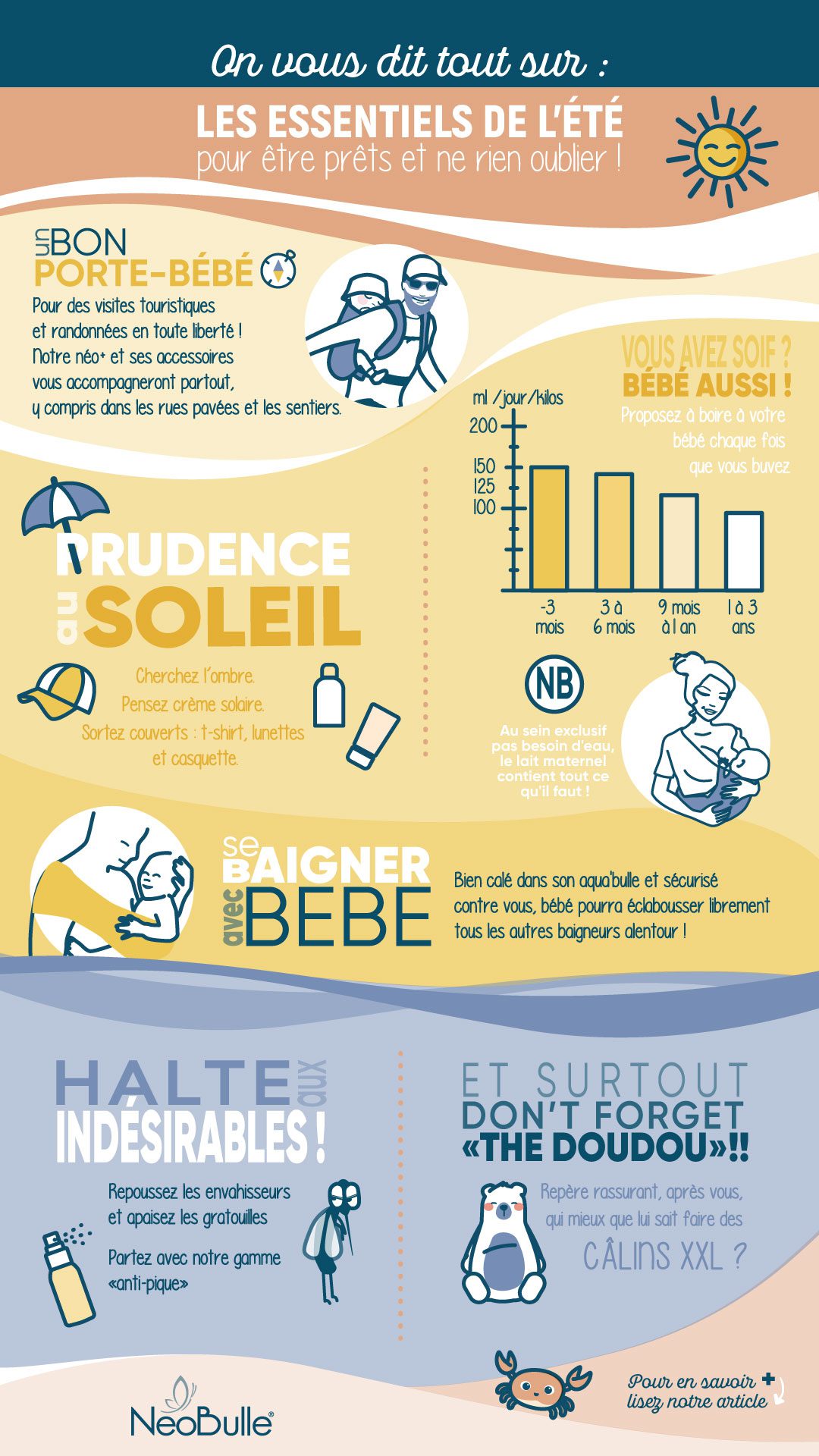
A very small baby generally has more difficulty regulating their body temperature, and as a result, risks getting cold very quickly in water cooler than 37°C. Even in your well-maintained personal pool, unless the water is at 36-37°C, you’ll need to wait a bit!
Meanwhile, if it’s very hot, nothing prevents you from dipping your baby’s little feet at home if you feel like it!

What precautions should be taken?
We mentioned the child’s age above, as well as the water temperature. It’s important to note that even with an older baby, this remains a key parameter to consider because the smaller your little one is, the faster they will cool down. As a rough guide, for baby swimming sessions, the water is generally a bit warmer (around 33-34°C) than during regular opening hours. A tip when planning a family outing is to come right after a session, while the water has not yet cooled down to its usual temperature.
Generally, we always remind that during summer it’s advisable to avoid exposing your child to the sun during the hottest hours of the day. Ideally, choose swimming times before 11 am and after 4-5 pm, in the shade, with appropriate sun protections (hat, sunglasses, UV-protective top, sunscreen, etc.), and remember to offer drinks regularly.
Stay vigilant and keep constant watch over your child whenever you are near a water point (reminder: a child can drown in just a few centimeters of water, and unfortunately, it can happen very quickly!), and also be attentive to their general condition.
(blue lips, shivering, heatstroke…)
And what about carrying during all this?
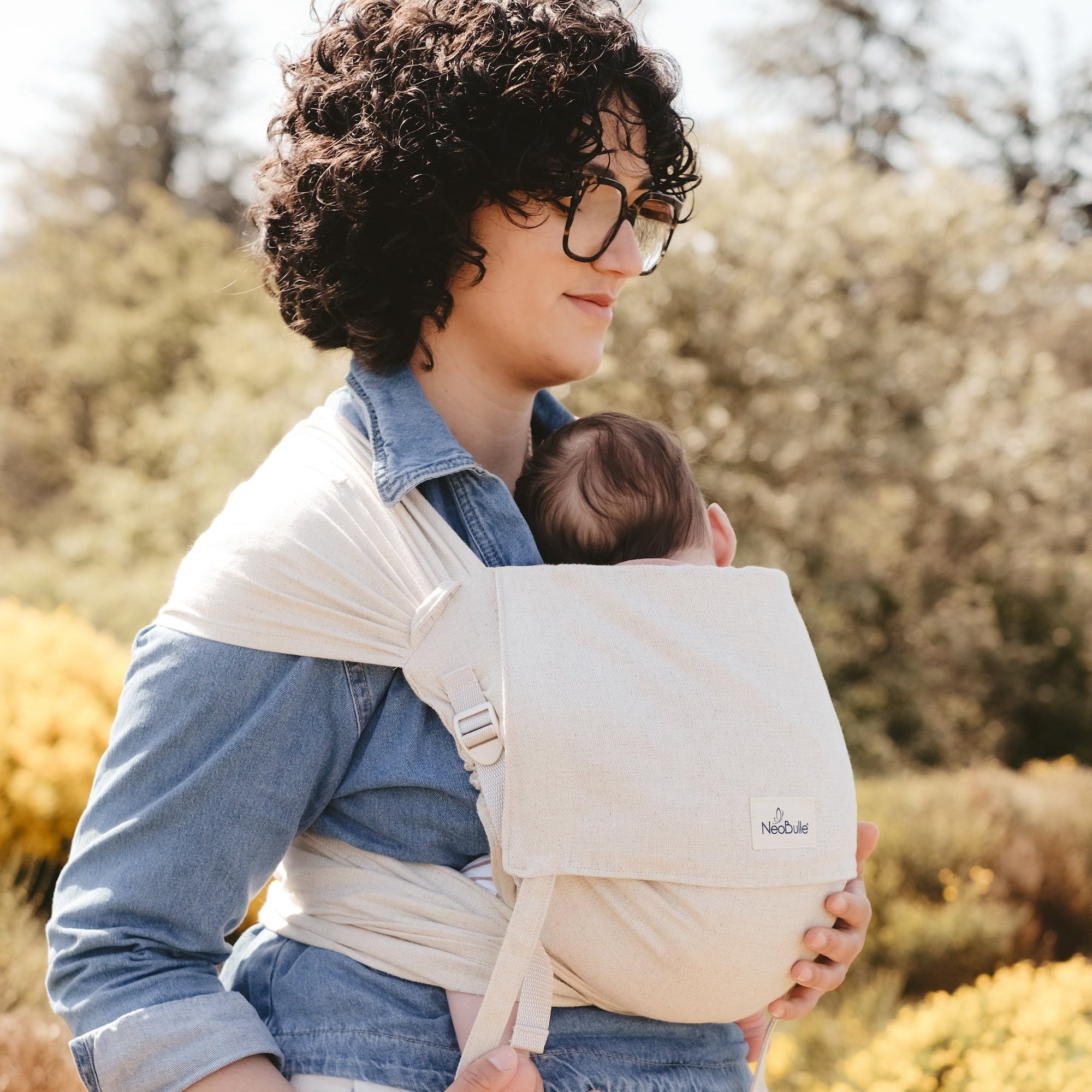
Already your everyday ally, carrying is also a real asset to facilitate going to the pool or the sea.
First of all because unfortunately, you can't teleport from the car or bus directly to the water's edge! You need to carry the bags, but especially possibly manage a hyperactive baby, etc... Carrying the youngest allows you to be more reactive and more pragmatically just cross the beach, for example, which is not possible with a stroller. If you go to the pool, it is also not allowed to move around inside with the stroller (hygiene, etc...), having them in a carrier is simpler and more stable than holding them in your arms.
Secondly, it allows you to secure your movements on sometimes slippery ground, or again to take care of 2 children at once in an environment that requires vigilance.
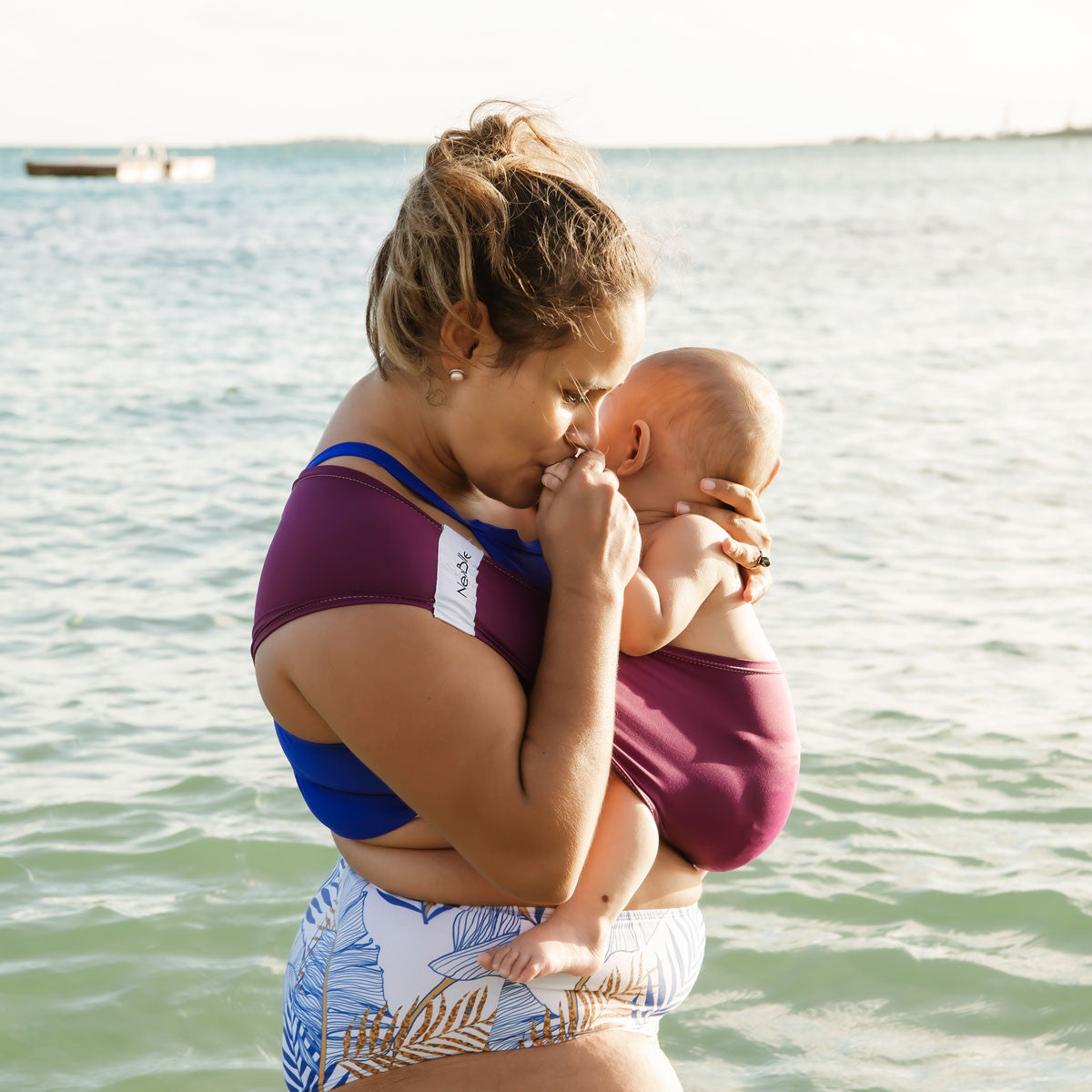
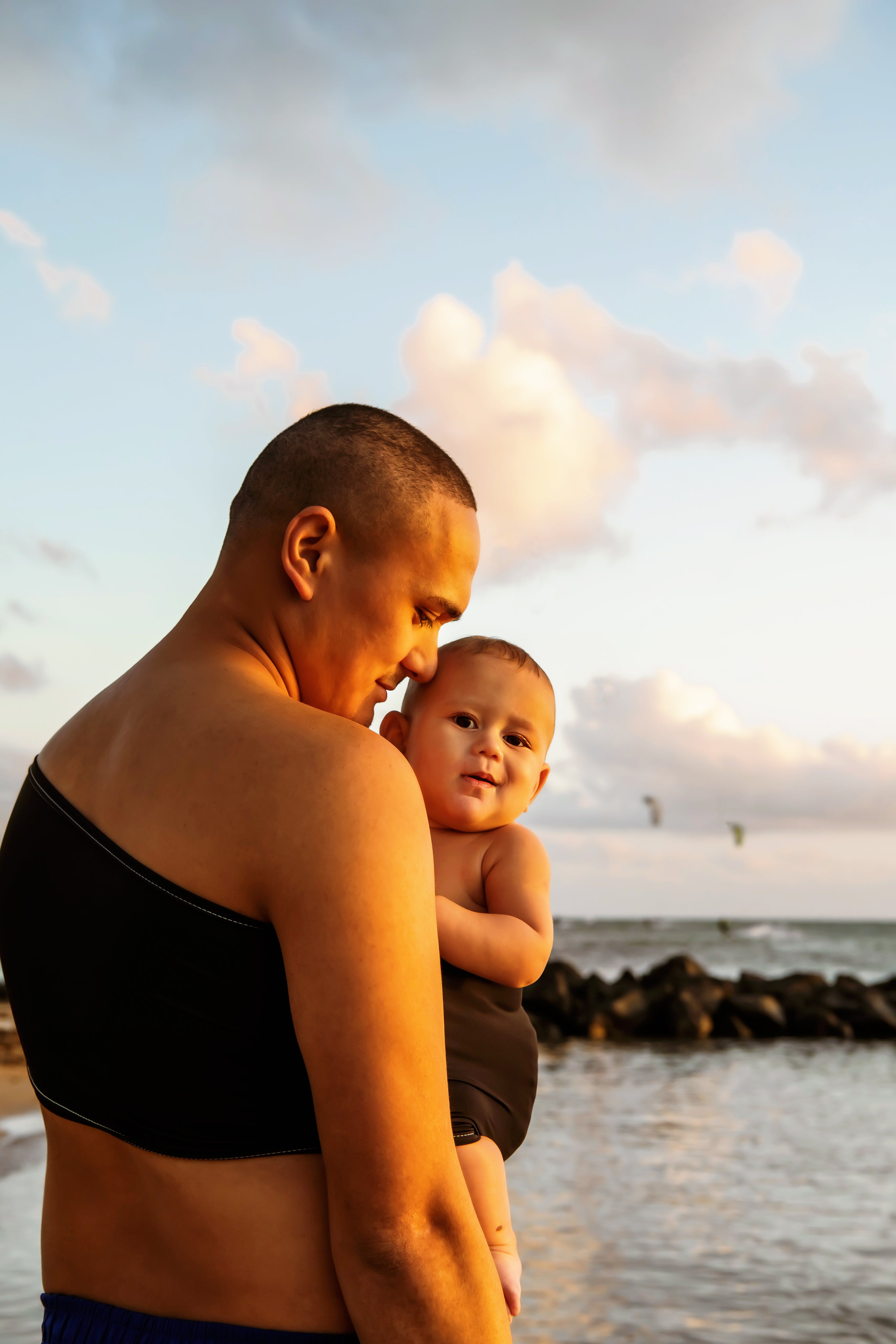
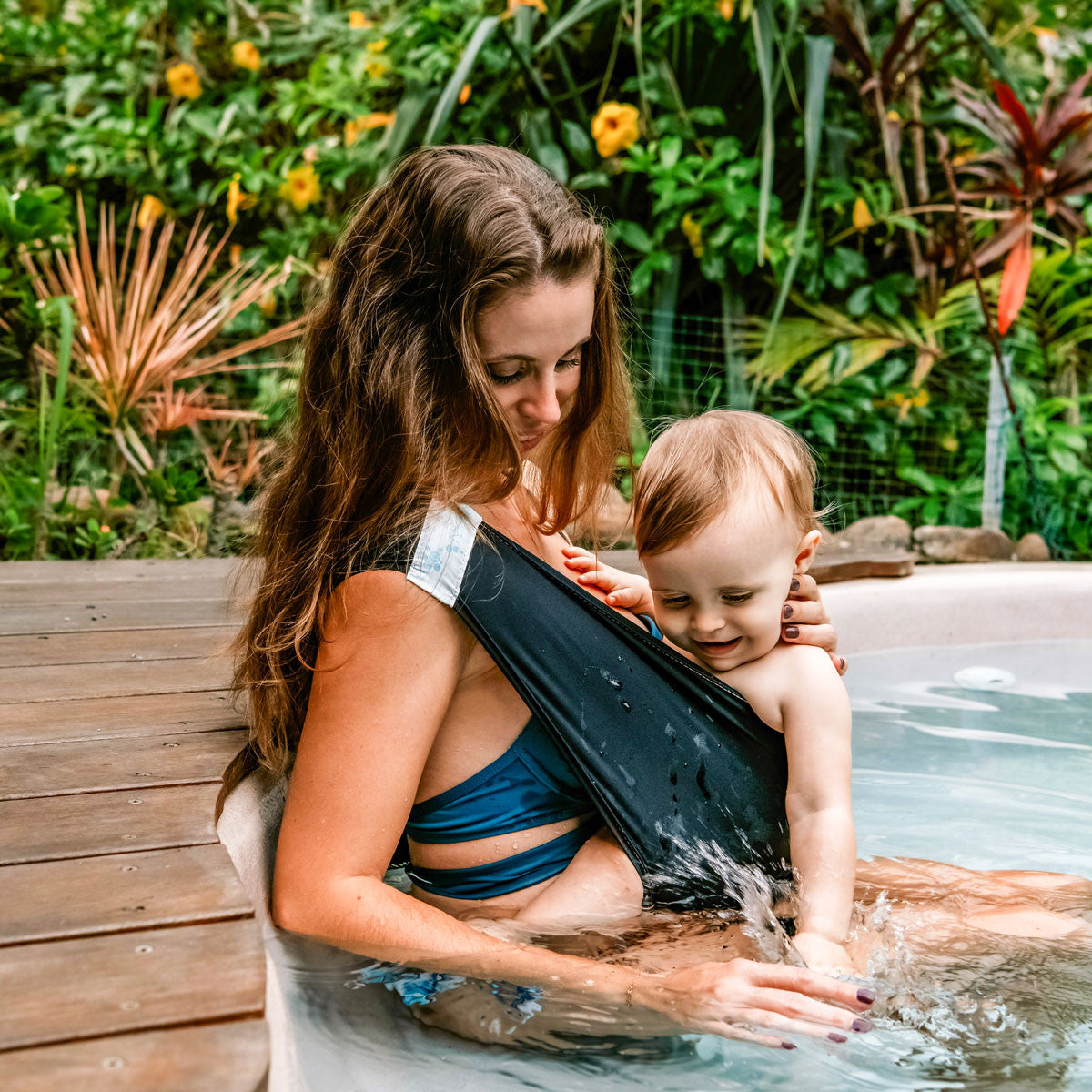
There are now dedicated swimming carriers systems. This is notably the case with our Aquabulle, made of lycra, which offers the advantage of being very quick and easy to put on, and to dry very quickly. Note that the "real" baby carriers are generally, like strollers, forbidden in pools, while the aquabulle is allowed! Water carrying can help some little ones who are a bit overwhelmed by reassuring and containing them, and open up to new sensations during this special contact with their parent.
Carrying in the water requires a system that can be easily removed so you can immediately take the baby out in case of problems (forget straps designed for swimming, as they are dangerous). It is not recommended to be alone to manage 2 young children in the water, nor to go to places where there is no foot support.

You are now prepared for the next swims! So, pool or beach near you?