


End of maternity leave: how to properly prepare for your return
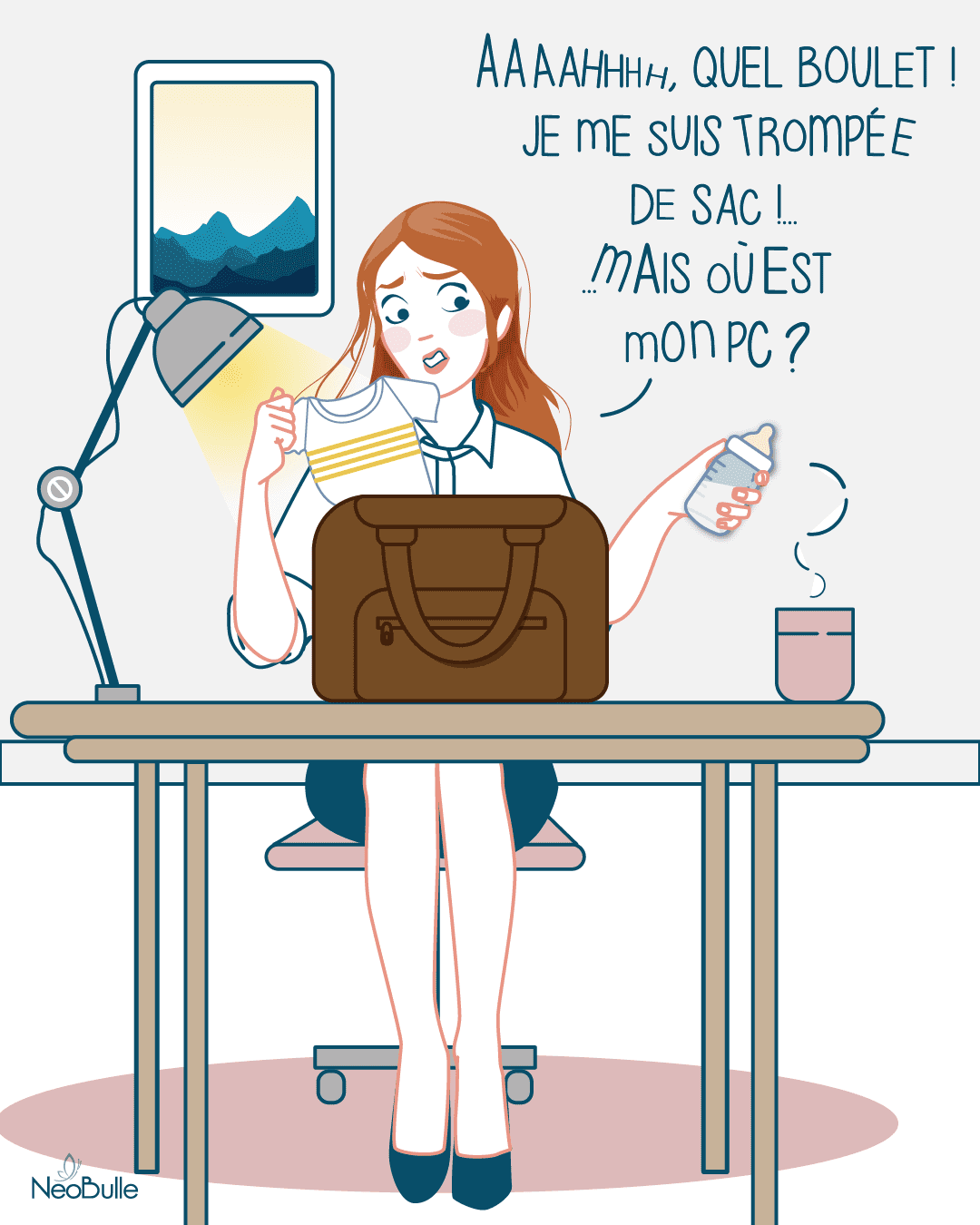
Your maternity or parental leave is coming to an end and after a more or less long break, it's almost time for you to return to work.How to prepare your return properly? What should you consider to make everything go smoothly? Let's try to cover it together? Accepting the ambivalence of feelings related to returning to work You love your baby and your heart breaks at the thought of leaving them in someone else's care…BUT you are so happy to do something for yourself…BUT it’s a heartbreaking feeling to leave your little one…BUT there’s also joy in talking with adults!You oscillate between intense joy and despair regarding this return to work, sometimes several times within the same hour.Rest assured, you're not crazy!You are just a normal mom experiencing all the ambivalence of feelings generated by contradictory emotions…Within each of us can coexist multiple desires, not always aligned with each other, and it is completely legitimate to love your child more than anything, but also to get a bit tired of it and want to regain a bit of your active woman’s life… But despite everything, it’s still difficult to leave them with someone else and to part from them (even though we dream of that moment without them!).Is there a magic solution to manage this? Unfortunately not. But knowing it’s normal is often already helpful!NB: often it’s also guilt that sneaks into the celebration, returning to work does not make you a “less good mother”! You have the right to really want and be eager to return to your activity without it meaning that you don’t love your little one! It’s not a competition of who does more for their child, each family should find the balance that suits them according to their constraints. Who will take care of my baby at the end of my maternity leave? Returning to work means finding a childcare arrangement for your little one. The process can sometimes be delicate because it involves many constraints that depend on parameters sometimes beyond your control.Some times of the year are more favorable for searching: especially September, or January. Indeed, with the start of the school year, many places become available. However, keep in mind that it’s not impossible to obtain a childcare arrangement for the rest of the year: structures open up, and childminders start their activities. , parents move or change their childcare arrangements… Sometimes you have the impression of searching for the perfect solution but aren’t quite sure what you can or cannot compromise on ? A little trick might be to make a list of criteria ranked by importance: you can easily cut back on items at the bottom of the list, but not on those at the very top, otherwise it’s likely you’ll find yourself urgently looking for a new childcare option shortly after resuming work! Continue breastfeeding or wean my baby to prepare for my return? If your baby is breastfed, the question may arise of weaning or not in view of the return. Know that contrary to many received ideas, it is quite possible to combine breastfeeding and professional activity, and it’s not even that complicated!Want to learn more about this topic? Don’t hesitate to visit this comprehensive article which will give you several tips and small tricks to evaluate the feasibility (or not!) of this project for you.We also invite you, in parallel, to discuss it with a trained health professional (IBCLC certified lactation consultant, midwife). You can also contact breastfeeding support organizations that often offer support groups which can help visualize and exchange with other mothers facing the same situation. Flexibility and letting go, the key words for a peaceful return to work Even if, of course, we know that taking care of your little one is not easy and that the "maternity leave" only has the name… Let’s be honest, after several weeks at home, rejoining 7 hours of work (+ commutes, lunch breaks, etc.) into your daily schedule creates some disorganization! Maybe it’s best, initially, not to set the bar too high and to organize your return gently… Give yourself time to find your bearings, see what new balance is established for your family, and avoid trying to be perfect on all fronts! Since parents’ time is not unlimited, each family must set its priorities, which will vary depending on personal circumstances Some people's house will be a bit more messy and the mop will be used a bit less diligently, for others it will go through a period of all ready meals, etc... And that's okay! As long as everything is roughly clean and you have something to eat that's roughly balanced on your plates, well, everything is fine. It will always be time later to get a slightly more organized routine!Don't hesitate to ask for some help in advance: family members or close friends will probably be happy to give you some time to accompany you through this important step of your new life. A little hello to colleagues before maternity leave ends If you have a good relationship with your colleagues, don't hesitate to come and introduce your little miracle before you return to work...Because it's the most beautiful baby in the world and it's essential that they know and can see for themselves! This is also a good way to gradually reconnect with the company, get some news, and if you feel like it and your return is fairly soon, start to see how your return will be organized.Generally speaking, it is wise to have contact with your manager before your return date to find out what is planned for you, ask if a handover period has been considered with the person who replaced you, etc. Don't hesitate to discuss any specific constraints that may be related to your new needs.Pampering yourself for a beautiful return Self-esteem is often somewhat diminished postpartum, we feel fat (baby is born but the kilos, they are still there!), flabby, we lose our hair…And why not take advantage of the adaptation hours at the nanny or at the nursery for your little one to take a quick trip to the hairdresser to refresh your hairstyle?After several weeks (months) of taking care of this little heart 24/7, you have earned this moment just for yourself! It can also be an opportunity to refresh your wardrobe so you can approach your return wearing clothes that make you feel beautiful. Isn't it less stressful like this?This time you're ready for the big day... Courage, everything will go well for you and your little one!
Taking transportation with your baby
Whether living in the city or in the countryside, there inevitably comes a time when the question arises of taking transportation with your baby. This could be a daily bus or metro, but also a more occasional train or plane trip!What are small tips to know so that everything goes smoothly? We tell you everything! Carrying your baby in public transport If you are required to take the bus, metro, or tram, we invite you to store your stroller and prefer the baby carrier!Between stairs, sometimes tricky access, and the reduced interior space, you will appreciate traveling lightly!Transport can be quite demanding for very young children who are sometimes quickly overwhelmed by noise and crowds. Being against you reassures them and allows them to observe this new environment at their own pace while enjoying lots of cuddles.The small bonus, especially during winter season: if you are reluctant to let strangers touch your baby without your prior permission (especially without washing their hands AND in public transport), it is likely that the situation feels less with your baby carried in a carrier than in a stroller! Your little heart being nestled against you, they need to penetrate your personal space to reach it, which acts as a barrier for most people. Carrying your baby on the train On the train too, we strongly encourage you to prefer the carrier system over the stroller! It is much easier to move around the station while pulling your suitcases, allows for easy climbing into the carriage, and avoids the hassle of storing the stroller in already full spaces (not to mention the risk of theft).Sometimes, if the journey is a bit long, your little one may have trouble finding sleep, and carrying them can help you "walk around" a bit between the different cars and help them fall asleep. In the baby carrier, your toddler can also enjoy snuggling and feeling "protected" from all the stimuli around them and may sometimes get a bit annoyed. Carrying your baby at the airport Traveling by plane with your baby, is quite an expedition! The adventurous parents know that light traveling is so much more practical, and for that, nothing beats a good baby carrier that will faithfully accompany all your adventures, even the wildest ones!And the very first of these is passing through the airport security gates… Removing shoes, the coat, the belt, and everything in your pockets, while holding your baby who himself shouldn’t carry anything delicate… A real Koh-Lanta challenge!Equipped with your baby carrier, the operation will be less acrobatic. We recommend a system that can be easily removed, such as a sling or a preformed carrier, which will allow you to put your little one in or take them out as needed. It will also be very useful for peacefully managing boarding and disembarking, which can be quite sensitive with little ones but also sometimes difficult to control with older children! Occupying baby during transportation To ensure that the trip with baby goes smoothly, it is highly recommended to prepare something to keep them occupied!For a short daily trip, a basic toy usually suffices:RattleBook to read if you manage to get a seat on the busSmall sensory bottle that’s easy to carry A hungry child, being by nature a grumpy child, having a packet of biscuits and a bottle of water in their bag is generally a good idea when you feel the trip becomes complicated. It also helps to cover unexpected situations such as a subway breakdown or other incident causing significant delays, which can alter the usual mealtime!For longer trips, by train or plane, you can opt for new entertainment options to distract your little one! Pack a special bag filled with small toys bought specifically for the occasion, which you will take out gradually during the trip (not all at once!).Whether for short or long journeys, for everyone’s comfort (yours, of course, but also that of other passengers), we strongly recommend avoiding battery-powered sound games and other musical instruments ! Adjusting the outfit in transportation When we move around, we like to be comfortable in our clothes : it’s the same for our babies!In the city during winter, outdoors, we protect ourselves from the cold and humidity by bundling up in our coats. Then we get on the bus where there are people and where the heating is on, and naturally we take off a little.Think about doing the same with your little one! Remove their hat and lightly uncover them so they don’t get too hot.Now you are ready to take transportation with your baby, what will be your next trip?
Anti-lice hairstyles!
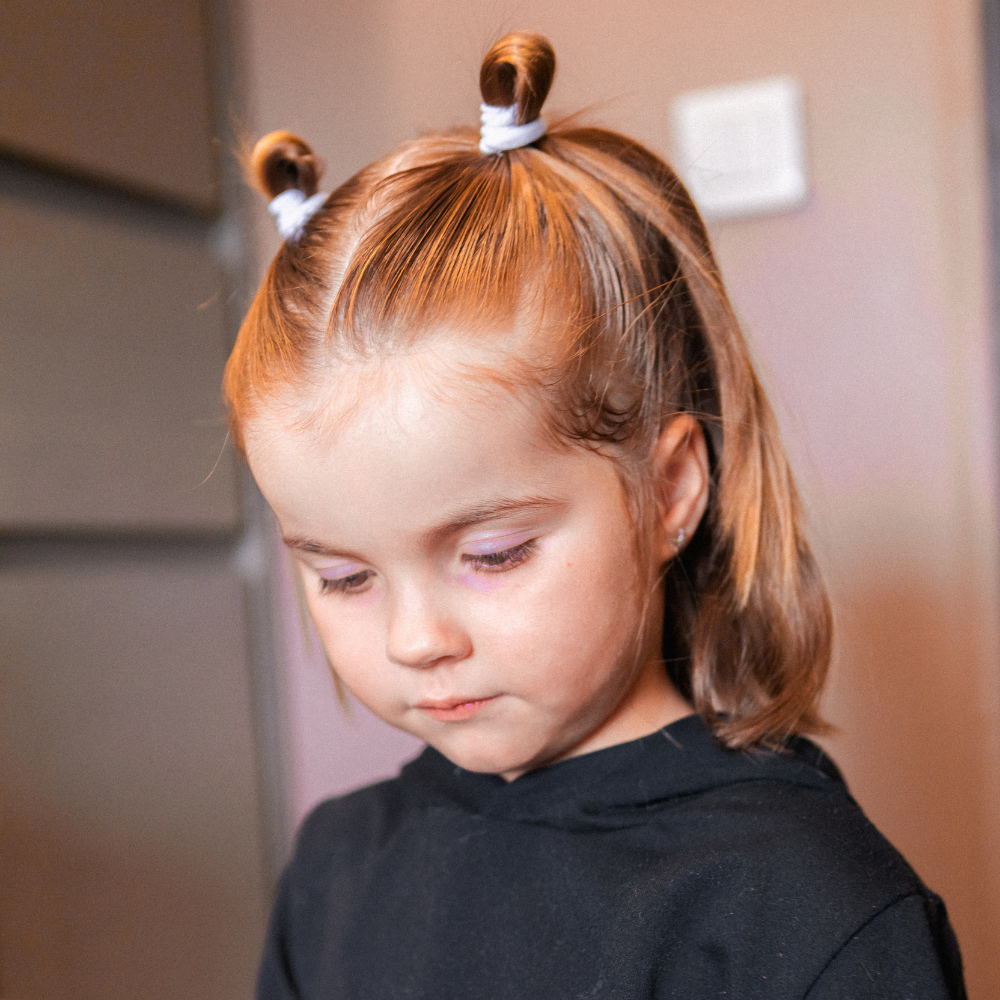
You know EVERYTHING about lice. You have already read our previous article about them. You smear your children with protective oil every morning, and you have what it takes to prevent any invasion. What is the next step? What more can you do? We offer you 5 hairstyle ideas to fight lice! Top lice-proof hairstyle idea: a ponytail Level of difficulty: Beginner hairdresser Execution time: Less than 3 minutes Accessible with a simple elastic band, even the most inexperienced can achieve a more than satisfactory result! Anti-lice hairstyle idea number 2: a braid Level of difficulty: Hair apprentice Execution time: 5 minutes A bit more technical than a ponytail, the braid remains accessible to beginners, as long as they can count up to 3! Anti-lice hairstyle idea number 3: pigtails Level of difficulty: Aspiring Hair Artist Execution time: 5 minutes Prerequisite: Knowing how to do a simple ponytail The main difficulty of this hairstyle is to center the parting (the part)... Or fully accept that you don't know where the middle is and deliberately decenter it (and go all out to clearly show that yes, it's done ON PURPOSE)! Anti-lice hairstyle idea number 4: braided buns Level of difficulty: Tangle Padawan Execution time: 10 minutes Prerequisite: - Knowing how to make pigtails - Knowing how to braid Skillful combination of pigtails and braids, braided buns clearly take you to the next level (hair-wise) in the playground comparisons. Much less technical to do than it looks, you too can show off at school pretending you spent a lot of time styling your kids! Anti-lice hairstyle idea number 5: African braids Level of difficulty: Grandmaster of the Frizz Wig Execution time: 30 minutes Prerequisite: - Knowing how to make pigtails - Knowing how to braid - Knowing how to do African braids We include it because it's a bit the Everest for beginner parent-hairdresser, just to be somewhat comprehensive, but let's be clear, we strongly advise against venturing there until you master at least basic hair skills! The big advantage of this hairstyle is that once well done, it can be worn for several days in a row without coming undone, which greatly saves time spent on styling. Plus, it's pretty! That's it, you're ready for the next wave! We're waiting for photos of your wildest experiments, anything goes as long as no hair strand falls in!

The urban carrier's checklist
Here you are setting out to attack the city, your baby snuggled in its stroller and your bag slung over your shoulder! Is there something to consider to ensure the adventure goes well? We have prepared a little checklist so that you can just enjoy! A baby carrier in good condition and well adjusted Because comfort is fundamental! In the city, carrying needs are very varied, and you may need to carry both for short periods and for longer trips, and these are often very recurring needs.The right adjustments of the carrying system are the guarantee of your future consistency: no matter how practical it is, no one uses long-term a tool that causes pain. Neobulle Tip: We recommend checking once a week roughly that the settings of your baby carrier are still adjusted to your child's growth (and yes, they grow quickly!). Don’t hesitate to check the good condition of your equipment. Comfortable outfits for carrying In the comfort category, you’ll also find clothing! Whether for your little heart or for yourself, plan an outfit in which you feel comfortable to move… Soft clothing, the right size, that does not constrict the body, does not pinch and does not ride up with movement should be prioritized when you plan a carrying trip with your baby. Between stairs, sidewalks, and construction sites, the terrain is not always stable for walking, so we invite you to wear practical shoes: no heels or high shoes, prefer sneakers, trainers, and other sneakers! We also think of seasonal classics: A hat and slippers for winter A hat and sunglasses for summer Neobulle Tip: Be careful with decorations on some adult clothing (pearls, zippers…), which can sometimes irritate or hurt your little one. Baby essentials! What ranks 3rd on this list and not 1st? A moment of distraction, perhaps… We are obviously talking about the comforter and the little head! NEVER forget! Never! Like if it happens to you, turn back, even if you risk being very late for work afterwards. We invite you to take them first, check during preparations that you have packed them properly, then before leaving the house, and again before exiting the building (you never know!). Neobulle Tip: Plan a backup set in the diaper bag. Be prepared for all emergencies, even outside carrying Parenting Murphy's Law is just like that: no matter the duration of a trip, the diaper will always leak RIGHT on the day where you haven't planned for something to change your baby.Ward off bad luck by always having on you a diaper, some cotton, a small lotion bottle and a clean onesie in your diaper bag. Yes, even for a short outing!Neobulle Tip: Remember to regularly check that the spare onesie is still the right size! Food and Drink! As long as your little one is breastfeeding, managing outings is quite simple since the breasts are always ready to provide meals and drinks as desired.When this is not or no longer the case, we advise you to always bring a bottle in advance in the bag (or for older children, a packet of biscuits and a small water bottle), to prevent the small hunger pangs that are sure to occur during the metro ride. Neobulle Tip: Having food ready is always useful in case of an incident during travels (like a stuck train), even later with older children! You can also use this little "emergency bag" in the car and supplement it with a survival blanket in winter. A diaper attached to the baby carrier Not all trends are good to follow, the "milk stone" perfume popular among new parents is actually one of them. Especially once your work routine resumes!The morning rush, a quick snack or bottle in haste, and suddenly your little one takes advantage of the 10-minute walk between your house and the daycare to give you a nice vomit of some of their milk… on your clean shirt? No! Because being prepared, you had attached a diaper to your baby carrier, and sensing the "wet" burp, you had time to protect your clothes!Hats off to super parents!Neobulle Tip: We never have enough diapers… Don’t hesitate to leave some everywhere — in the diaper bag, the car, on the baby carrier, etc. An activity suited for carrying your baby Whether in the city or in the countryside, it remains essential to adapt your daily life and your leisure activities to your child's presence, especially when carrying himIf you can definitely resume a bit of walking or other gentle physical activities with your baby in a baby carrier, more intense practices such as jogging should obviously be avoided! Neobulle Tip: There are now dancing classes in carriers! Don't hesitate to look around if this activity is offered near you? Getting around in the city: when baby carriers are prohibited! Sometimes you see baby carriers in the city in places where they shouldn't be found!A quick reminder about safety AND legislation: on the road, during transport in a vehicle, the highway code states that babies must be secured in approved seats, which baby carriers are not.Subject to the highway code: cars, but also bicycles!Therefore, it is not only highly discouraged, but also illegal to use a carrying system to transport a child in a car, or on a bicycle (or an electric scooter by the way…).Neobulle Tip: If you need to get around by bicycle with your child, we recommend choosing a suitable seat and getting advice on this subject at a specialized store… Or walking on foot alongside your bicycle while dropping off baby at their childcare!

Which carrying system should be used for a short trip?
We often talk about the choice of carrying systems for hikes and walks... But less so when it comes to carrying over shorter distances. Yet, it is also a real issue! And yes... Quick trips, school/nanny/crèche runs, and other short errands punctuate the parents' daily life. So which baby carrier to choose? Can we use the same as for hikes? We tell you everything! What is my main need for carrying my baby? To choose the right carrying system, it’s a bit like when you want to buy a pair of shoes or clothes: you need to be clear about your main need, to avoid ending up stuck on the beach in flip-flops. Most often, when you want to carry over short distances, you will look at the following criteria: Practicality: the baby carrier must be easy and practical to put on in all circumstances (including in the middle of the street)Quick donning/doffing: the baby carrier should be put on (or taken off) very quickly, possibly in a waiting room or in a parking lotNo straps dragging on the ground: the baby carrier must be able to be installed in the middle of the street, for example after getting out of the carThese criteria are, of course, not exhaustive but already help to get a sense of the overall situation.In daily life, unlike during a walk where once properly adjusted and fitted you don’t touch anything for a long time, you need to imagine that the baby carrier will be frequently put on and taken off, sometimes a bit "on the fly" (not to say completely haphazard!), so it’s really important to choose a model that is not a headache and that truly makes your life easier! If it takes too long to put on (meaning more than the travel time itself), it can quickly become frustrating and discouraging.Then, you will find several configurations depending a bit on your lifestyle and whether you have other carrying systems to complement or not. I just want a model to carry my baby during my short urban trips If you only want a small carrier for short trips: the sling is your friend!This is THE portable baby carrier par excellence. Set up over the shoulder on one side, it pre-installs and can be kept on you, for example in the car while the baby is in the car seat, ready for easy installation as soon as you arrive at your destination. He adjusts easily and detaches with one hand: tensions are self-blocking in the rings and do not require any knot at the end.Since it is quite compact, it easily slips into the diaper bag to stay, for example, at the daycare in the baby bag during the day.By offering off-center carrying, the sling allows you to show your little one many things and to share many beautiful moments with them. Off-center carrying is also appreciated when you have a bigger one to manage because it frees up a bit more space in front! At the "expert" level: the sling is the only carrying system that does not require you to lay down your baby to be able to install it! Bonus? The most skillful among you will also be able to breastfeed their little one while walking (not too fast!).Disadvantage: carrying on one shoulder is not suitable for long-term carries, where it will become quickly uncomfortable. I also want to go hiking with it! Want to combine the needs inherent to both small and large movements? Why not opt for a preformed baby carrier? The Neo range is the ideal solution for parents who like to alternate between metro rides and café terraces, and open spaces. Installed in 2 clips, preformed carriers blend into daily life and provide both comfort and freedom.Like the sling, the preformed can simply stay clipped at the waist while waiting to welcome your child, and even then , it doesn’t drag on the ground and stays clean, which is all the more appreciable when it rains.At the "expert" level, the baby will do the shopping with you on your back and will show you all the vegetables and fruits they want to put in the basket!Disadvantage: when changing carriers, there are a few adjustments (quick ones!) to be redone. My toddler is walking When the child walks, the needs change and often carrying becomes less and less necessary… Especially since toddlers love exploring their environment on their own and playing superheroes as soon as they find a nice stick!Nevertheless, even the most enduring superheroes are entitled to be tired and need a super-parent to rescue and carry them during a more challenging journey than usual.This obviously happens when you no longer have a backup baby carrier with you. We recommend all parents to have a hip seat carrier support of the Hop-la type on hand in their bag! Ultra-compact, the hop-la fits in a handbag, designed to support your child's bottom and relieve your arms. It does not replace a real baby carrier but can save your day in many everyday situations and proves to be a wise choice for many small trips with a "small-big"! And the other carrying systems? What about other carrying systems? Indeed, we did not mention slings and mei-tai in this article. These tend to be a bit more time-consuming to set up (especially for the sling) and/or have significant fabric lengths, making them less suited for quick uses than a sling or a preformed carrier, and we would not recommend those for specific quick-use scenarios. However, if you already own them, do not hesitate to experiment with many different configurations to see for yourself and in your daily life whether they suit you, before considering other purchases!As always in carrying, there is no single truth and it is up to each individual to choose based on their feelings.You are now equipped for your small trips with babies! So, which baby carrier will you choose?
Lice alert!
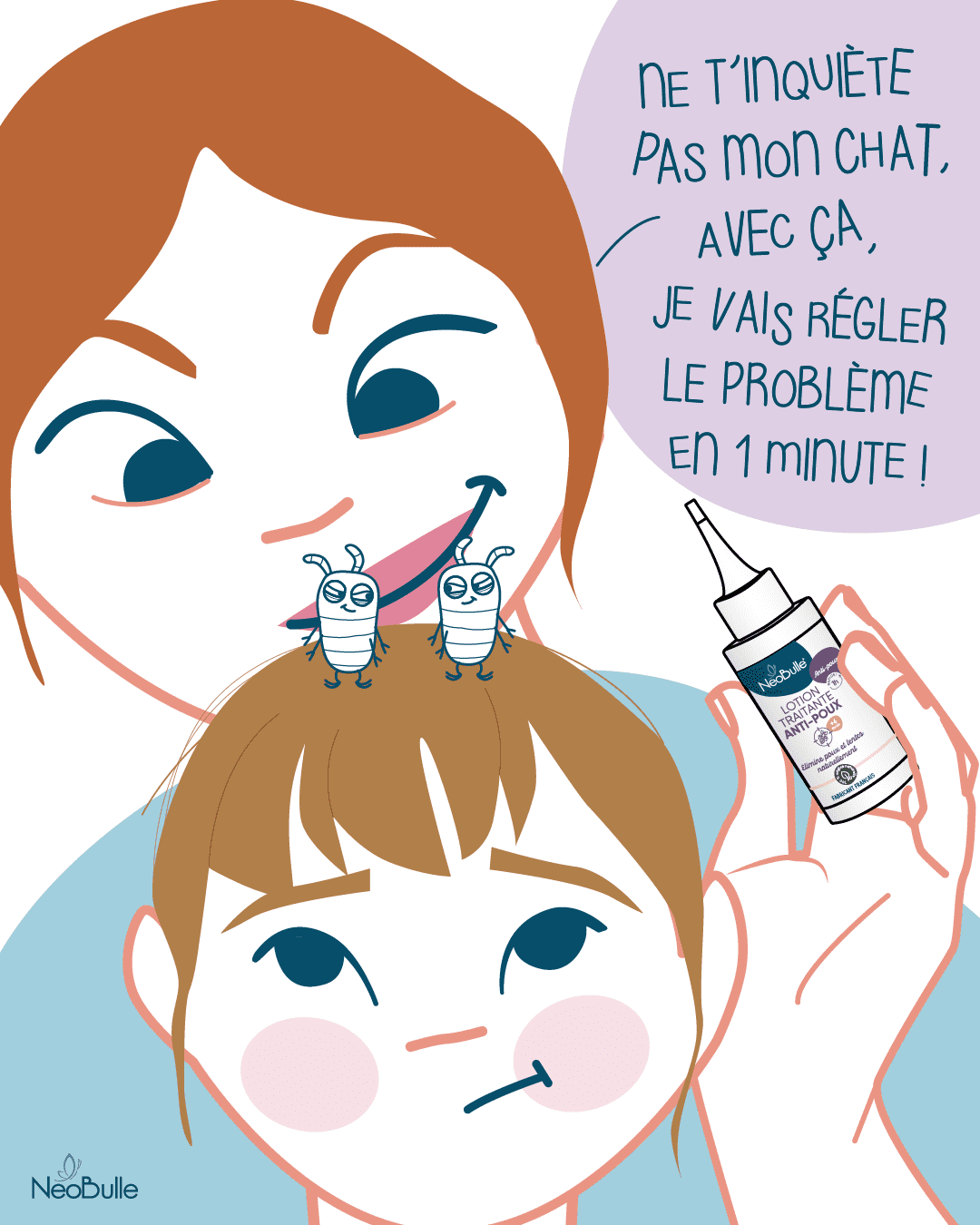
“Lice have been reported in the classroom, please check your children's heads.” This little note in your child's notebook triggers a tachycardia attack doubled by a furious urge to scratch your head and disinfect the entire house to get rid of the invader? Don't panic, put away that hair clipper, and let's take the time together to see how to face the situation! 1 – Some general information about lice Lice (Pediculus humanus capitis for their scientific name), are parasites of humans. As for us, we will only talk here about those that live in the hair, but some can also live in body hair (morgellons) or on the body (less common). They measure about 2 to 4mm and feed on blood, their bites causing significant itching (related to their saliva). If an infestation does not pose a danger to health by itself, prolonged situations where scratching occurs can eventually lead to infection. During its life cycle, the lice go through several stages of development: J0 : laying an egg (the nit) at the root of the hair J7-8 : hatching Between J10 and J17 approximately : the larva goes through 3 successive molts J17-18 : first possible mating From J18 until the end of its life around J50 : females can lay up to 8-10 eggs per day We spare you the calculations: During its lifetime, a single female louse can lay up to 300 eggs! Each egg once laid can generate a mature louse capable of mating in about 3 weeks. Dizzying, isn't it? It quickly becomes clear why it is better to take the problem in hand as quickly as possible! 2 – Identifying the infestation How to tell if your child has lice? Often at the beginning, there is not much visible, and you have to wait until proliferation has started to realize that your little one scratches his head a bit frantically, mainly around the neck or behind the ears. A more careful examination of the scalp can reveal small red spots on the skin of the scalp, nits (about 0.5 to 1mm, yellowish or grayish in color while the egg is full, then white once the larva has emerged), or even lice that are walking around… Distinguishing between nits and dandruff is sometimes not easy. Dandruff are not attached to the hair, and can be easily removed with your fingers or a brushing. Nits, on the other hand, are firmly glued to the hair. In case of lice alert in a setting frequented by your child, it is highly recommended to check their scalp, or even preventively use a fine-tooth comb throughout their hair to remove any unwanted lice before they start reproducing! It should be noted that, contrary to popular beliefs, an infestation is not at all related to poor hygiene. 3 – What to do if you find lice on your child? The time when they shaved their head is fortunately over! And chemical and aggressive products are now forbidden (potentially harmful, lice have developed resistance anyway…) Smother nits and lice with an appropriate product At Nébulle, we offer a lice treatment lotion, made from ingredients derived from coconut oil. It contains no insecticides, fragrances, or essential oils, and its primary action is mechanical: it blocks the respiratory openings of lice and nits, suffocating them. During rinsing, lice and nits lose their fluids, which kills them through desiccation. Applied carefully over the entire scalp (not wet), it is enough to leave it on for 1 hour before using a fine-tooth comb and rinsing. Attention: the application time is calculated from the moment the lotion dries, you can use a blow dryer to speed up the process. Use a fine-tooth comb The fine-tooth comb is a comb with very close teeth that allows you to remove lice and nits from the hair. For an effective pass, it is recommended to thoroughly comb the entire hair and to start from the scalp. You can use clips or hairpins to identify areas remaining to be combed. Regularly passing the comb is also an effective technique to get rid of lice, but it requires a bit of patience. ! Indeed, this requires using it long enough to have: Eliminated all adults capable of laying eggs Eliminated all larvae from previously laid nits before they are able to reproduce If you followed the above, the development cycle of the lice taking about 3 weeks, this means you should commit to daily treatment for at least this period… This also requires being sufficiently diligent not to miss any areas. Treat the environment Lice do not survive very long away from a head (about 36 hours), and they do not detach from hair when still alive. Environmental transmission is therefore quite limited. Nonetheless, it is recommended to wash bed sheets and pillowcases at 60°C, the same goes for other surfaces in contact with hair : car seat covers, hats… You can also consider disinfecting the hairbrush to prevent recontamination, using for example our Deo Couches spray! Note that if something cannot be washed at 60°C, it can be replaced by either placing it in the freezer for 8 hours or leaving it in a sealed bag for 48 hours. Inspect the whole family Since family cohabitation is a major factor of infestation, it is strongly advised to inspect and comb all heads in the household when one of the residents shows signs of lice! Lice can colonize everyone and not just children: babies, teenagers, adults, elderly… As long as there are hair, lice can be present. Sooth the scalp Bites and scratching can cause scalp irritations. Alongside treatment products, using a soothing shampoo can help relieve discomfort! 4 – Avoid lice! Better to prevent than to cure… Although it can sometimes be difficult to completely eliminate, we can significantly reduce the risk of infestation with a few simple gestures: Tie long hair in a ponytail or braids Use different brushes and combs for each of your children Encourage your children to not exchange hats with friends Apply a little of preventive anti-lice oil behind the ears on school mornings Regularly inspect your children’s heads who attend group settings, even if there are no reports currently in the class. If your children have "a head full of lice" and catch them easily despite all prevention advice, it may be helpful to use the comb regularly (at least once a week) to immediately stop any new infestations! Lice are able to survive in water, so swimming pools can also be a place of contamination. It is recommended to wear a swim cap while swimming. There you go, you now know everything about these infernal creatures! Stay strong, parent team, and we wish you encounter them as little as possible!

The benefits of aloe vera for the whole family
Stretched, itchy, prickly, peeling skin... Does that sound familiar? Have you also tried applying fifty-two creams, sold for 4 arms and 6 kidneys to fund them, and all for a at best mixed result (when it doesn't end with allergic reactions)? And what if you tried aloe vera? We're about to tell you everything! 1 – What exactly is aloe vera? Aloe vera is a succulent plant (from Latin suculentus meaning full of sap) cultivated for a long time in Mediterranean regions, North Africa, the Canary Islands, and Cape Verde. It is mainly found in arid environments, where it grows by storing water in its leaves. Besides its aesthetic appeal, aloe vera is appreciated in cooking, as well as in cosmetics and dermatology. Don't have a green thumb? It's a plant that is generally easy to care for (except that, like cacti, you shouldn't drown it!). 2 – In what form should you use it? In culinary form, aloe vera can be found in many different forms: yogurts, drinks, desserts, dietary supplements... Rich in proteins and vitamins, it can be recommended to aid digestion or even regulate bowel movements. However, be careful: only the pulp is edible! Preparations using the whole leaf can cause poisoning and are classified as carcinogenic due to the significant proportion of aloe latex it contains. For internal use, aloe vera is not recommended for pregnant and breastfeeding women as well as children under 6 years old. Cosmetic uses have been documented since antiquity. Again, it is the pulp that is used. You can simply cut a leaf directly from the plant and press the pulp onto the skin; however, since it oxidizes quickly, this limits its use as it is delicate to preserve once extracted. Many attribute virtues to aloe vera, including: Hydration of the skin Assistance in healing Soothing of irritations and redness 3 - Aloe vera for the whole family So that the whole family can enjoy the virtues of aloe vera safely and without having to dig up flower pots around the house, at NéoBulle we have designed a ready-to-use gel : The Aloe Caresse Gel. We use for its production an organic Aloe Vera juice, directly sourced from a Spanish producer (Andalusia). Organic polyculture farming allows the soil to maintain its natural organo-mineral balance. Water needs are met by a pollution-free source and rainwater collection reservoirs. The harvest is done manually on leaves that have reached maturity, and the juice is then extracted from fresh leaves. The manufacturing process is artisanal and the processing unit is located within the plantation (short supply chain). Leaves are brushed, washed, and peeled meticulously to eliminate aloe latex, a laxative substance contained in the skin. The pulp (called mucilage) is crushed and pressed to extract the juice, following a specially studied protocol. Fresh and whole, the juice then retains all its properties. The quality of the juice mainly depends on how the plant was cultivated, the type of soil, climate, and care it receives. An organic Aloe Vera plant is mature between 4 and 5 years, and at that point, the juice has its potential nutritional components. It is at this stage of maturity that leaves are harvested to extract their juice. The rest of the formula? A natural thickener (to achieve the desired texture), glycerin (a powerful moisturizer), and a natural extract for preservation. The only one on the market to have been tested and approved for babies (from birth) and pregnant women (from the 1st month of pregnancy), it is a true must-have that can save you in many everyday situations. 4 – Little Neobulle Tips! Focus on hydration: For daily skincare, Aloe Caresse gel pamper your skin by providing real hydration but without greasing it! Ideal for oily skin that also needs water… It also pairs very well with our Radiance Face Oil : enhance your morning routine by mixing a small amount of gel with a few drops of oil. before application on the face. Recommended for very dry skin, aloe caress gel can also help relieve discomfort caused by eczema. Do not hesitate to seek advice from the health professional who follows you to assess its relevance for your case. A dream hair: Aloe not only nourishes the skin; it is also an excellent hair care! Applied as a mask, it nourishes dry, brittle ends, regulates scalp sebum, itching, and helps fight dandruff. Ouch ouch ouch, that burns! A missed spot of sunscreen? Aloe vera gel can help soothe the burning sensation from a sunburn and stimulates skin repair cells. Don't hesitate to place your bottle in the fridge before application for an extra refreshing effect! A pretty scar A scar that remains ugly, swollen, and pulls? You can try to massage it for a few days with a hazelnut-sized amount of aloe caress gel to help resorb and soften it. Be careful not to apply the gel on a fresh scar! 5 – Aloe in summer! Sanding friction that gets into clothing and the layer Sea salt or pool chlorine that irritates the skin Friction of clothes made sticky by sweat Sunburn (even without a sunburn) Summer is clearly not the friend of your skin: aloe vera can help you effectively soothe all small aggressions. An opportunity to establish a new beauty routine with a daily application on clean skin to keep it well hydrated? Now you know everything about aloe vera! And you, how will you use it?
The essentials of family hiking
Long live holidays! The fresh air of the countryside, the little paths lined with flowers and wild strawberries, the beautiful panoramas… You're eager to share your passion for hiking with baby, and we understand you! But planning baby’s gear can sometimes be a real headache, so how about we help you not forget anything before departure? 1 – A baby carrier Have you already imagined taking a stroller on a steep trail? Forget right away this ridiculous idea! Some have tested it (yes, we’ve already seen it at Néobulle!), and frankly, it’s a no-go. The baby carrier is by far the ESSENTIAL accessory for all hiking parents, whether their child walks or not (because even good walkers, little ones tire quickly, and carrying them by the arms along with the bags is not very practical). Want to know more about how to choose your ideal baby carrier? Here it is! Otherwise, know that our new version of the Néo+ has been specially designed to support family adventures, with lots of little details (thumb rests, loops for attaching accessories…) that make a difference! 2 – Things to protect It’s difficult (impossible) to ensure you’ll stay in the shade throughout the trip… So it’s essential to plan how to protect baby from the sun: A hat, ideally that covers the neck Sunglasses suitable for their size and with a good protection (at least category 3) Comfortable and lightweight clothing but covering (which also protects against insects) Depending on your child's age, also consider sunscreen (SPF 50 and apply every 2 to 3 hours). And because the weather can sometimes turn bad and/or cool down unexpectedly, a light jacket and waterproof clothing can complete the equipment! 3 – How to stay hydrated This is obvious, but we still remind you! Always carry plenty of water, for both adults and children. Plan for an ultra-large amount, and add another 1 or 2 liters for safety to these generous estimates, so you will have the right quantity! Children do not always realize If they are thirsty too, don't hesitate to take frequent breaks to offer them a few sips of water. Note that a child is perhaps simply slightly dehydrated! If your baby is still exclusively breastfeeding, no need for water (which is less hydrating than your milk!), but small snacks. 4 – Things to treat minor injuries Even if it’s not necessary to carry the entire house, it is always recommended to have the basic essentials on hand to treat the most common minor inconveniences: An antiseptic and some gauze, to clean scratches Our 2 emergency sticks badaboum and p’tits bobos, to help absorb small wounds and bruises Bandages An analgesic suitable for all family members and easy to administer (99% chance it will be unnecessary but it takes up little space and we’re glad to have it when needed!) A tick remover Our Adoupik stick to relieve insect bites and falls into nettles! 5 – Time to eat! Hiking with an empty stomach, by default, is already a bad idea… With kids, it becomes more than critical! If usually the little one nibbles on their plate with difficulty, be assured that fresh air will open their appetite and it’s highly likely they will turn into a bottomless pit. So now is not the time to forget snacks or to worry about quantities! Focus on everything that provides energy but remains digestible: dried fruits, cereal bars… off? A little convoi struggling to move due to fatigue? Now is the perfect time to boost the troops with a small snack! 6 – How to change the baby A few diapers, some wipes, and a spare onesie… The basics of all outings with a baby! We also recommend adding a small bag that will serve as a trash bag, which you can throw away upon your return. Nothing worse than ending up with a messy diaper overflowing in your hands and nothing to store it in until the end of the walk! 6 – And how do we carry all this? Once the child is strapped into their baby carrier, how do you easily carry all that without turning into a Sherpa? Thanks to our 2 new accessories! From changing to clothing to pharmacy items, the wandering swaddle will allow you to store everything related to baby. Attached directly to the neo+ V2 baby carrier, its load distributes perfectly and it takes up very little space for the carrier, while avoiding accumulating XXX bags and straps that get tangled. On the meal side, the wandering bib as its name suggests can keep the bottle water warm… but not only! It can just as well be used to keep a small water bottle or the baby's meal at the right temperature. It too attaches directly to the neo+ V2, or if not, to your shorts' loop… You're ready to go on an adventure with baby!
The essentials of summer
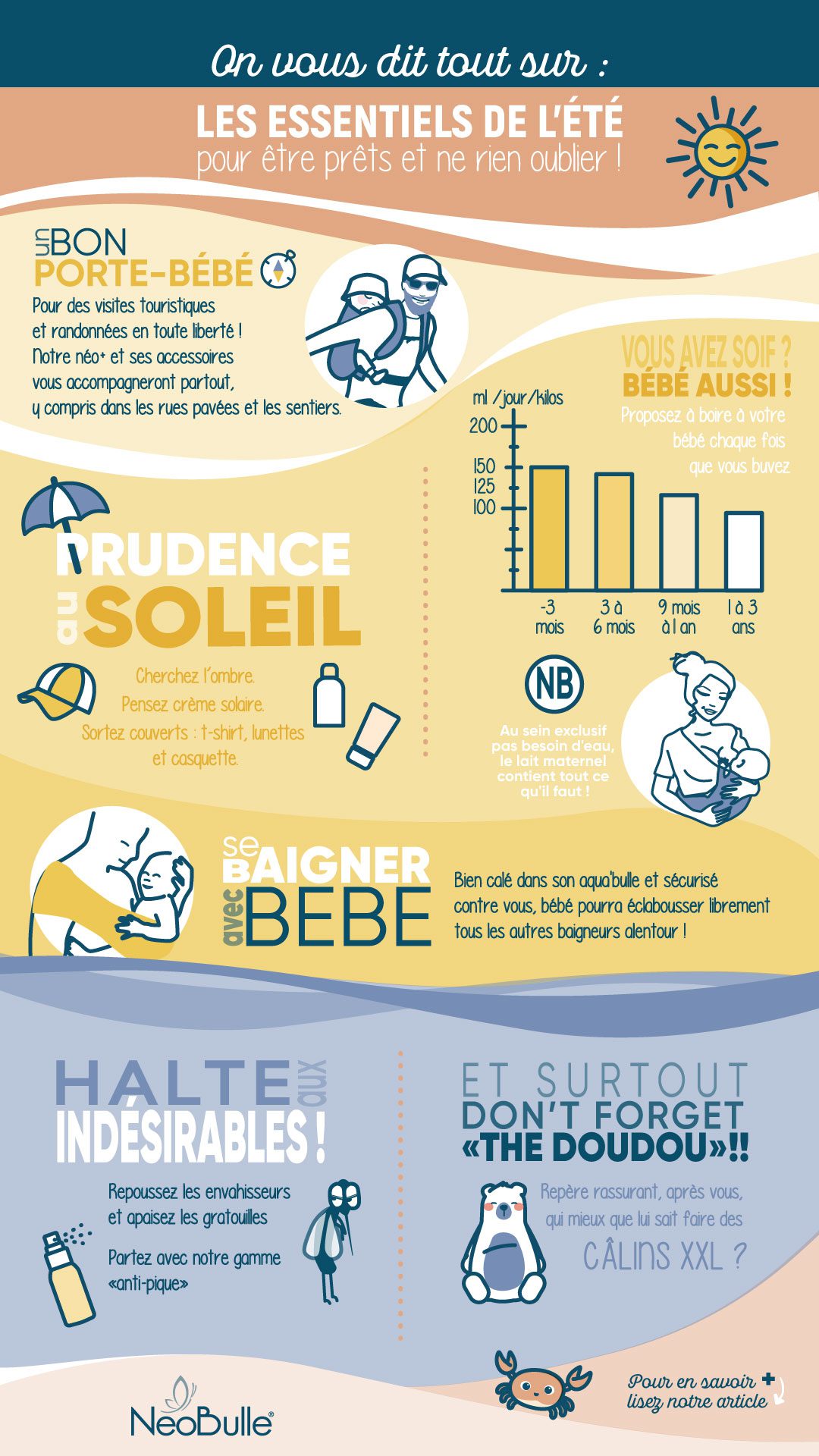
It's almost time for vacation departures… and packing suitcases. You know yourself that the amount of stuff to transport is to the size of the child. And your partner doesn’t hesitate to remind you in parallel that the family vehicle is not a semi-trailer and that no, really, bringing their crib is unnecessary and IT WON'T FIT in the trunk (even disassembled). At Néobulle, we work for family peace, and we have put together a small list of essentials to slip into your luggage! 1 – A baby carrier More compact than a stroller (which frees up a LOT of space in the trunk for other things), the baby carrier is the true ally of travelers! Thanks to our Neo range, you can move around freely without getting stuck in a cobbled alley or a restricted access to a historic monument (holiday memories at Mont Saint-Michel and its forbidden to strollers abbey...). Also ideal for nature walks, it’s a great way for baby to discover the landscapes at a good height. The Néobulle tip: Discover the Lange and the Bib en Vadrouille, the perfect accessories for easily carrying baby’s belongings and skipping the stroller and diaper bag! 2 – Protect yourself from the sun We can never say it enough, the sun is not a friend to our little ones’ delicate skin. Besides the usual advice to avoid the midday sun and prefer outings during the cooler hours (before 11 am and after 5 pm), we invite you to pack in your bag: Sun cream with SPF 50 (ideally safe for marine life if you’re heading to the sea) A hat or a cap Well-fitting sunglasses for the face An anti-UV top The Néobulle tip: UV-protective clothing effectively shields baby and reduces the amount of sunscreen needed (and the risk of forgetting to reapply it) 3 – Say no to unwanted guests! The little monster that grows, grows, is cute in the nursery rhyme, but much less in real life. Mosquitoes and other unwelcome guests can quickly turn a pleasant stay into a scratching hell. Do you know our anti-sting range ? Repellent oils and sticks to easily fit in your bag and naturally keep six- or eight-legged invaders away. Similarly, we highly recommend doing a full inspection (including hair) upon returning from a walk in the forest to check for ticks, and so also keep a tick remover in your bag. Neobulle Tip: Anti-sting repellent oils also help repel ticks, and the roll-on adé pik is also very useful in case of a wasp sting or falling into nettles… 4 – The first aid kit While it’s not necessary to carry your entire pharmacy, and although in theory it’s always easy to get specific treatment if needed at your holiday location, having a few supplies with you remains reassuring and practical (especially since we know that children tend to fall ill at night or on weekends when everything is closed)! Bandages, compresses, and supplies to disinfect a small wound. An analgesic / antipyretic (to be prepared in baby/child doses but also for adults…) Physiological saline solution Hydration solution Our emergency kit with roll-ons suitable for big accidents and all little bumps! Tissues And of course all ongoing family treatments (making sure beforehand that you have enough to finish the trip peacefully before the next renewal) Neobulle Tip: Pack at the bottom of your suitcase a pouch containing prescriptions for ongoing treatments and health records 5 – The essentials for swimming No joke: don’t forget your swimsuits! Another must-have: our Aquabulle! It’s no bigger than a pair of socks, and with it you can cross the beach with baby and your bags, as well as introduce the waves to your little one in complete safety. Want to learn more about swimming with baby? ? Find here our article dedicated to this topic! Neobulle Tip: the aquabulle is also very practical for taking a shower with baby at the campsite 6 – Water bottles and flasks Nothing is more disagreeable than planning a family outing and discovering when preparing the picnic that we forgot the water bottles… If it's hot, you need to ensure that baby drinks often and in sufficient quantities to avoid dehydration. If your baby is exclusively breastfed, your milk is more hydrating than water thanks to the sugars and minerals it contains (equivalent to a rehydration solution). Neobulle Tip: offer your baby a drink or a breastfeed each time you take a few sips of water yourself. 7 – THE DODOU!!! Last but not least… The ultimate comfort for baby, his companion at every moment, his precious ally for naps and nights, (almost) more important than you, I call it: THE DODOU! Forgetting this one exposes you to consequences similar to those of a world war. Same for the little head if baby has one, by the way. Really, don’t do that. Neobulle Tip: plan a backup doudou and some spare tétines in advance at the bottom of the suitcase, just in case. Now you are ready for the big departure! All that remains is to wish you a fantastic holiday full of beautiful moments with family.


