


10 Mistakes to Avoid When Buying a Baby Carrier
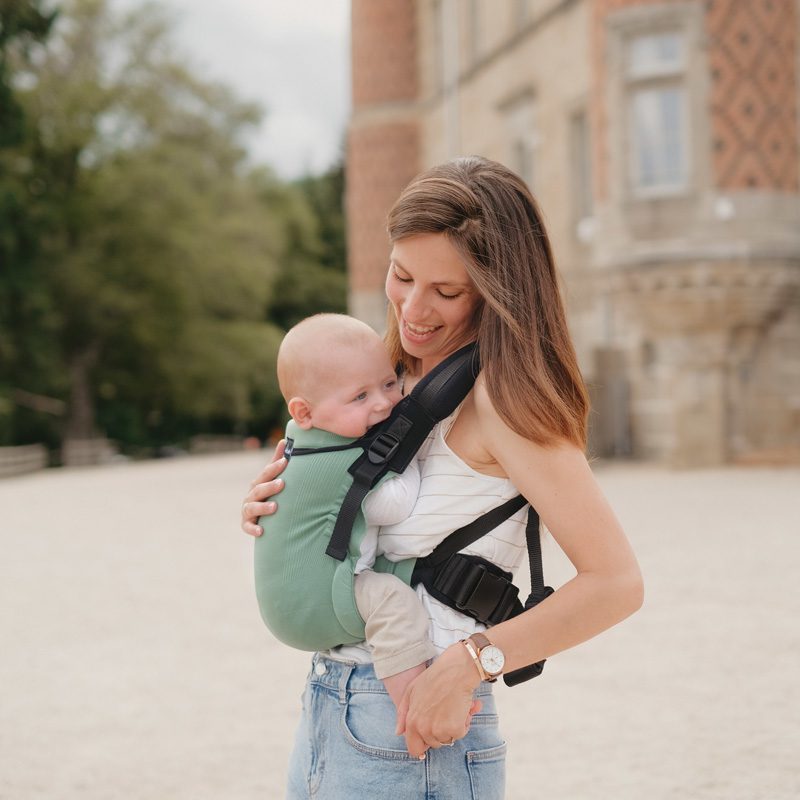
Are you looking to invest in a baby carrier but don't know how to choose? From price to online reviews, the number of carrying positions, and recommendations from friends, this article is here to help you sort through the questions you need to ask yourself before purchasing. 1 – Respect for physiology Let's start with the basics: respecting physiology is one of the criteria to keep at the top of the list! It impacts both your comfort and that of your baby . The carrying system must be flexible to respect the natural curve of the baby's back , allow him to be grouped with his knees higher than his hips, and promote body-to-body contact and proximity . Beware of ambivalent mentions of the "ergonomic" type, which are not really in line with true physiology (often slightly wider crotch, but always rigid backrest for example) 2 – Security Another important point: the baby carrier must comply with safety regulations . The main points to check are: Compliance with current standards which guarantee safe manufacturing, strong seams, etc. Textile standards guaranteeing the absence of toxic products in materials (Oekotex for example) The baby must be able to be carried upright with clear airways (no lying position, no material behind the head) 3 – Facing the world The forward-facing position is not recommended in the field of physiological babywearing. Indeed, it is a posture in which you cannot really allow your baby to sit in a squat position without ending up parallel , squashed, or arched because of your chest behind his back. The forward-facing position offers far too many stimuli that your little one cannot handle. And above all, it is a posture in which he is not one with you: he pulls you forward and obstructs your field of vision, thereby increasing the risk of falling with him. Brands offering forward-facing babywearing are responding to a public demand to open babies outwards to stimulate them, but at the expense of safety and respect for their physiology . This is a good way to assess the brand's overall ethics! 4 – The “Swiss army knife” baby carrier Being aware that buying a good baby carrier remains a significant budget, it is very logically tempting to invest in the model that will offer the most possibilities . We will then look for the baby carrier that allows carrying from birth to 4 years, in front and back, adapted to the mother of 1.50m but also to the father of 1.95m, which is practical and quick to install but comfortable, suitable for both everyday use and hiking, breathable in summer but warm in winter and which protects from the sun, wind and rain, and if it could also make coffee that would be perfect ! Consider a newborn, a one-year-old, and a four-year-old, and see the enormous disparities in their sizes, weights, motor development, and needs. No baby carrier can perfectly meet such different requirements! The same goes for uses , we could compare the baby carrier to a pair of shoes, we will not use the same pair depending on whether we want to go to the beach, just do a little shopping, or go hiking. It is therefore advisable to target the main need that we will have as well as the age of the baby to be carried, to look for a model that will adapt precisely to these criteria and not to be caught up in the illusion of the baby carrier that does everything (and which in fact does not exist). 5 – Too much simplicity Conversely, a carrying system sold as too simple should always be questionable. What has been cut to simplify its use ? Can the system still be properly adjusted to the size of the wearer and their baby? One-size-fits-all systems without any adjustment will never provide you with a satisfactory carrying experience ; they will always be too big or too small , leading to questions about the safety of their use. 6 – Anticipation of needs As we saw in point number 4, it is important to target our desires and constraints to choose the model that will be the most suitable. Be careful, however, not to anticipate too much! No one can know how it will wear 6 months or 1 year later and the risk is to make a choice that will not suit the needs of the present moment, nor later , and from which you will not benefit. Choose according to the needs you know, in order to fully enjoy these sweet moments with your little one and make the experience as pleasant and helpful on a daily basis as possible. 7 – Advice from friends and other internet comments Your friend whose baby is a few months older than yours assured you, " the Model X is gen-ial " and she swears by it! But on the internet, the Model Y also seems to be well-rated and has lots of good reviews. Who to believe? No one. Choosing a baby carrier is extremely subjective . It depends on the sensations you like and your body shape (preformed carriers have different cuts depending on the brand, for example, like clothes ). The Model X may have suited your girlfriend perfectly, while you will be terribly uncomfortable in it. Online reviews are also biased because they are rated by people who are mostly just as new to the subject as you are and will not have been able to try other systems to have points of comparison. Would you be as satisfied with the comfort of your 2CV if you had also tested a Mercedes before choosing? 8 – The price Quite counterintuitively, price is not necessarily a good selection criterion . While a low cost should indeed alert you to the overall quality and place of manufacture of the product, a high cost does not guarantee that the model is comfortable, physiological and safe! 9 – The soft textile Your baby seems tiny and fragile, and you dream of wrapping him in a cocoon of softness. Your choice might then fall on a very soft sling, so pleasant to the touch. But your cute, tiny baby will soon grow up. He's expected to gain about 1 kg per month and quickly start to kick more vigorously! A material barely thicker than a bodysuit or pajamas will quickly become difficult to handle and unusable in good conditions (we are looking for a baby carrier and not an item of clothing). A firmer fabric poses no problem on a newborn and will provide more lasting comfort. 10 – The baby carrier that stays in the closet Last but not least: the best baby carrier is always the one you REALLY see yourself carrying your little one in! While the baby sling is often cited as the ideal system, if you're not comfortable with it staying at the bottom of the closet, the benefit will be very limited. As long as the system is age-appropriate and safe for your baby , the main thing is that you are comfortable with it and comfortable using it. In short, choosing a baby carrier is very subjective and personal. Take the time to assess your needs and constraints, and don't hesitate to contact a baby carrier instructor for more specific advice, to try out different models, and to learn how to use them! Comparison of Néobulle preformed baby carriers

How to properly carry your baby?
You're expecting a baby or have just given birth, and you'd like to try babywearing, but you're not quite sure where to start (with the sling) or how to go about it. And the more links you read on the internet, the more lost you feel! This article is here to help you sort things out and start babywearing calmly. 1 – What is physiological babywearing? You have probably read this term at least 52 times, but what exactly does it refer to? We talk about physiological babywearing when it respects the natural posture of the little one. The main criteria to keep in mind are as follows: Rounded lower back: the spine of the newborn is naturally rounded, unlike that of an adult which forms a kind of S, it tends to form a slightly stretched C (like a comma). An upright back position corresponds, in terms of comfort, to an arched position in an adult, which can quickly become uncomfortable Knees higher than hips: raising the knees allows the baby to sit well into the hip socket and provides better comfort. To illustrate a posture that does not allow for grouping, you can think of sitting on a tall barstool with legs hanging down. These two criteria are of course to be considered in a very overall way. When the child grows, for example, their spine will gradually evolve to reach, around 18 months / 2 years, the shape we see in adults. From a newborn often very curled up, you will observe less and less pronounced rounding over the months, especially as the child wakes up and moves around. Some children are also more tonic than others and will not let you raise their knees higher than their hips, especially common in babies suffering from gastroesophageal reflux (GERD). This should not become a barrier or a source of stress; your baby does not face any risk of injury or poor development if they are not carried in a perfectly physiological way, the main thing is that they are carried and that it helps you in daily life. 2 – Your first babywearing system: your arms It is often overlooked, but your first babywearing tool is your arms! Before even considering using any baby carrier, it seems quite logical to start with the basics: being comfortable with handling your little one. It is recommended to handle your baby respecting their natural wrapping (see point number 1), we will ensure to limit traction and hyperextension postures. This involves avoiding especially lifting the baby by the armpits, preferring for example to first sit him down and then support him by the hips. Supporting your baby's pelvis provides comfort and stability; its base acts as a center of gravity. This reassures and calms him, and also makes handling him easier for you. For your comfort, you can prefer using your forearm as support instead of your hand: when carrying with your hand, you tense up enormously, which promotes tension even in the neck and can lead to wrist tendinitis. Moreover, the hand that carries between the baby's legs invites him to lean backward, which is the opposite of the desired effect. Generally speaking, don't hesitate to use your entire arm and torso to provide a good anchor for your little one without overloading your joints. Remember that when the child reaches 6kg (around 3-4 months), it’s equivalent to carrying a milk pack for several hours a day! Protect your body daily as it is essential from the start. Take the time to find areas on your torso where your baby fits perfectly (body fitting), then adjust the carrier at these points to prevent the head from tilting backward. 3 – Choosing the baby carrier Choosing your system is often the most difficult step! Wrap, sling, mei-tai, preformed carrier, do these words seem like Chinese to you? Don't panic, that's normal. It is true that the market has developed much faster than the usage instructions, and it’s easy to get lost! We invite you first to read our article on the 10 mistakes to avoid when buying a baby carrier, which can give you some useful tips on the subject. To simplify things a bit, we suggest you first evaluate your main need: are you considering practical carrying for home, quick errands or school runs, or rather longer duration carrying for baby naps or walks? The most practical systems are generally slings and preformed carriers . They settle in very quickly, don't drag on the ground, and allow you to immediately carry the baby. The most durable systems are generally the carrying wraps and the mei-tai. They require a bit more time to set up and adjust properly, but they allow for long-term carrying in the best conditions. Practicality and comfort unfortunately tend to oppose each other : the more we want a practical system, the fewer adjustments and settings it will have, and the less comfortable it will be (at least it will remain comfortable but less than others). Being comfortable will instead require a bit more manipulation, which doesn't really match ultra-fast setups. We could compare the wrap to a pair of hiking shoes and the sling to a pair of flip-flops : both are useful but not at the same time ! And just as we wouldn't walk long in flip-flops, we wouldn't wear hiking shoes to go pick up the mail. Do you want to carry both in daily life and during walks ? Rely on 2 different systems to get the best benefits ! 4 – Safety You have your arms, your baby carrier, your baby, and are well prepared for carrying, bravo ! Now let's talk about safety. The safety rules for carrying are quite basic : Baby vertical and facing you : lying in a system, it risks sinking and the fabric can limit good air circulation, these positions should be reserved exclusively for carrying in the arms. Facing outward is also to be avoided (increased risk of falling). Clear airways : your baby's head must always be free, with the carrier and covers pulled up high behind the neck. Is it cold ? Put a hat on! At worst, it's always better to have a small draft than a baby who can't breathe anymore. Clear airways also mean checking that the baby isn't sagging into the fabric: you can pass a finger between their chin and their chest. High carry on the chest : a too-low setup will tend to be too loose, and your baby might get squished. Well-adjusted baby carrier : the fabric wraps around your little one, the adjustments support them, and they can't slip underneath or fall. No sports activities : no running, cycling, skiing, or trampoline with the baby carried! Other important rules can also be added, even if less essential : Flexible clothing that doesn't hinder the baby. Whether in carrying or on the ground, favor loose and non-restrictive clothes; no one would nap or do yoga in slim jeans or a wedding dress, and neither would your baby ! No coat or snowsuit : it is better to keep your little one as close to you as possible to promote thermoregulation. Thick materials hinder proper adjustments, tend to obstruct the airways, and press on the femoral artery, impairing blood circulation in the legs. Cover him from the outside with a carrying blanket or a coat, for example. Regular short breaks so that baby can move a little, ideally every 2-3 hours (which is convenient, as he will generally demand to suck or need his diaper changed around the same rhythm!). In summer, also remember to keep him well hydrated! Generally, regularly check that everything is OK during carrying. 5 – Choose the right moment Classic beginner mistake: "Baby is crying! Hmm, what if I put him in the sling I’ve never used in my life?" Equivalent: "Hey, shall we go take the first driving lesson at Place de l’Étoile in Paris?" You see, it’s a very bad idea! Even for an experienced carrier, installing a newborn in a remake of The Exorcist in a baby carrier is a delicate exercise. Aim for a moment when everything is OK: baby is calm and fed, you yourself are calm and unconstrained (appointment or other). The first setups are not meant to satisfy a need for carrying but a need to LEARN how to carry. In practice, it’s quite common for baby to cry during installations; this doesn’t mean he doesn’t like carrying but rather that he doesn’t like the setup in the carrier, which, let’s admit, is not the most pleasant step for him. Don’t hesitate to go all the way as you can (this is not the time to aim for perfect adjustment), walk to calm him down, and then revisit the adjustments afterward. 6 – Enjoy! That’s it, you’re finally ready! The main thing now is to enjoy these sweet moments with your little heart! Take your time to learn calmly and without pressure, aiming for reasonable goals at first: a baby who breathes and doesn’t fall. Ease and comfort will come gradually over time. Don’t hesitate to also get support from a carrying instructor! Happy carrying!
Everything to know about skin-to-skin contact
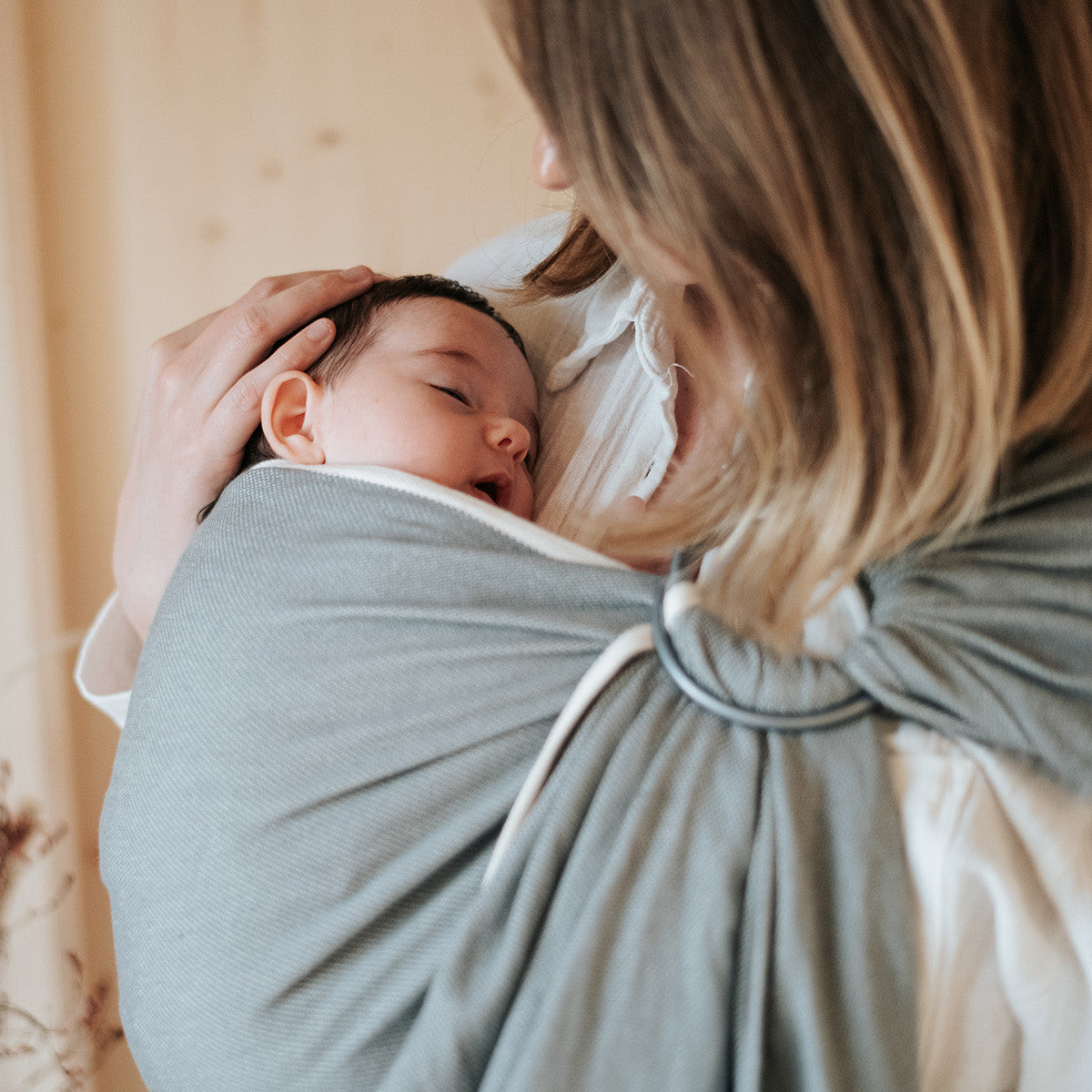
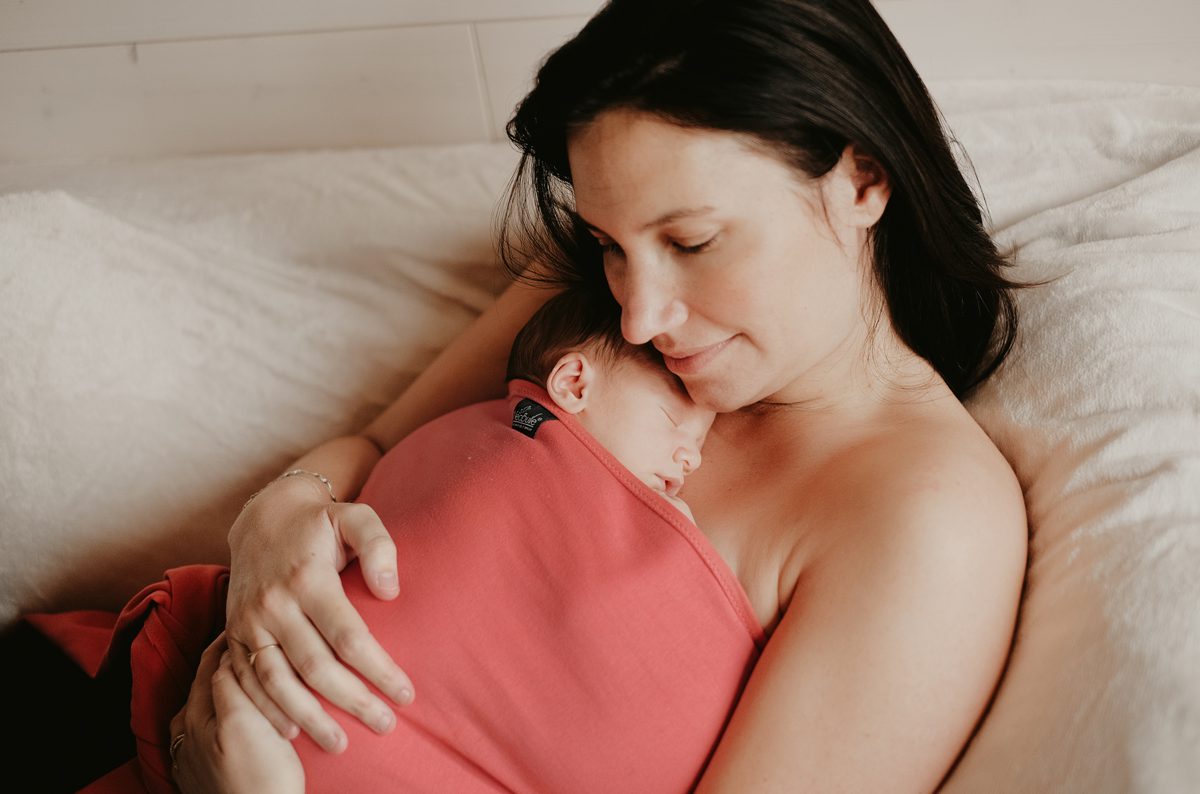
It has long been a tradition to wrap the baby in a cloth before handing it to the mother after birth. But this trend is giving way to skin-to-skin contact. The practice involves placing the baby, nude or in a diaper, directly against the mother’s chest. It is not uncommon for skin-to-skin contact to be offered to the father when the mother is unable to do it herself. It is also called the Kangaroo method. So, is it a passing trend or a recommended practice? And why practice skin-to-skin contact? How is "nurturing" skin-to-skin contact? It was in Colombia, 40 years ago, that Dr. Edgar Rey Sanabria imagined warming premature babies by placing them, undressed, against the bare chest of their parents. The practice has existed for a long time. However, it has only recently been adopted by French maternity wards. How to practice skin-to-skin contact? Baby must, of course, be undressed initially. Usually, their diaper is left on. Their chest is placed on the parent’s chest, who has previously undressed their torso. Their head must be free to breathe comfortably. They are generally covered with a sheet and a blanket so they don’t get cold. Skin-to-skin contact can be practiced sitting or standing. To do this, you will choose a carrying sling made of Oeko-Tex cotton (a fabric free from pollutants, heavy metals, and toxins). Similar to a physiological baby carrier, it adapts to all body types and allows you to keep the baby comfortably against you, safely. Neobulle offers several models of slings, including the without knot sling My Sling Jersey. Why practice skin-to-skin contact? Calming the baby Practiced immediately after birth, skin-to-skin contact, as we mentioned, has the advantage of warming the baby. Indeed, against the parent’s chest, the baby regulates its temperature and, at the same time, stabilizes its heart rate. Through this practice, it also regulates its breathing. Skin-to-skin contact even helps increase its blood sugar levels! Later, the kangaroo method is reputed to calm the baby’s cries. Studies have shown that babies practicing this method cry much less than those placed in their cribs. Reassuring the baby Childbirth is a test for the mother… but it is also for the baby. The transition from the mother's womb to open air is the first great adventure of their life! No more the comfort of a warm, cozy belly! When born, baby loses their bearings and needs to be reassured. This is why the first skin-to-skin contact is important for baby. It reconnects them with the heartbeat of the person who carried them for months, it hears the familiar voice of mom or even, dad. And then the warmth of the parent's body helps to reassure them! All these "little details" allow them to enter their new life more gently. Reassuring parents It's not only baby who is soothed by skin-to-skin contact! Parents who practice it also feel a sense of calm. In the practice of the kangaroo method, an increase in oxytocin, the "love" hormone, is observed. This hormone has the ability to soothe and release anxieties. And it is scientifically proven! Skin-to-skin reduces parental stress! This close contact with baby may even promote the production of endorphins, hormones secreted by the brain that are known to create a sensation of euphoria. Facilitating breastfeeding The hormones produced during skin-to-skin offer a feeling of well-being that helps to strengthen the parent-child bond. Oxytocin, in particular, already produced by the mother throughout pregnancy, contributes to the production of breast milk. The milk let-down reflex is thus promoted after birth. Skin-to-skin also helps to maintain lactation afterward. Practicing the kangaroo method from birth finally promotes the baby's instinct to find their mother's breast! Developing the child's immune system Skin-to-skin truly has more than one trick up its sleeve! It also has the recognized ability to develop the baby's immune system. And this is important because it will help limit the infection rate they may face. * Beyond the practice carried out immediately after birth, skin-to-skin retains all its benefits for months! That is why it is important to continue practicing it upon returning from the maternity ward and until the baby is 12 months old. A way to continue fostering calming exchanges between parent and baby! The first months with baby will be all the sweeter!
Interview with Séverine Martial: Babywearing, breastfeeding, and parenting
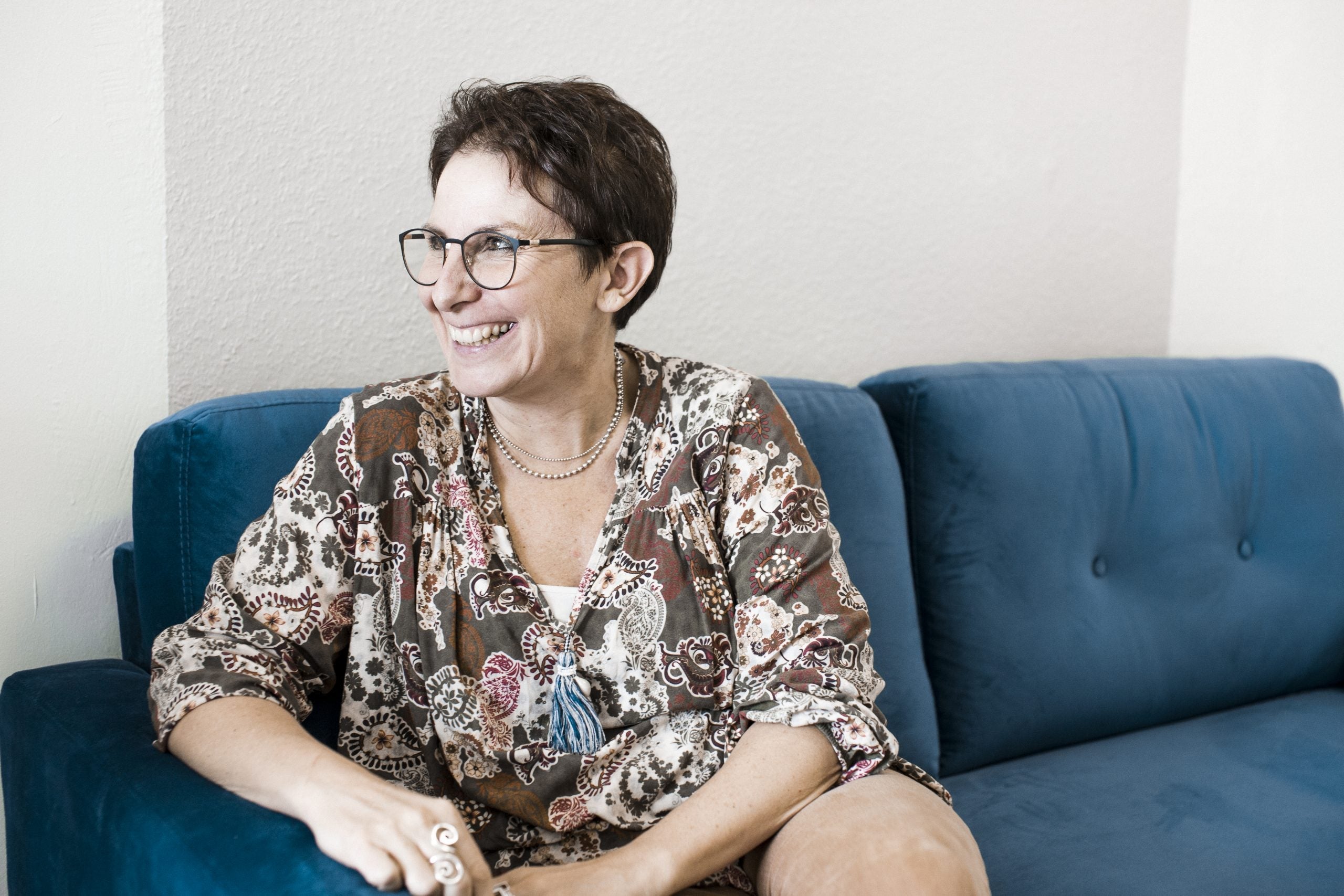
Nurse and creator of support associations for moms, carrying workshops, then Néobulle, Séverine has more than one trick up her sleeve. But above all, she has a deep understanding of mothers and a passion for babies! Let's get to know each other! I am a trained nurse, born into a family of caregivers with a midwife mother. After my first child, a little girl, I breastfed for 3 months without questioning it. Then, engorgement with a fever occurred. I visited my doctor, who knew nothing about it, but I didn't realize it. He told me to stop breastfeeding and to pump my milk because I risked poisoning my baby. It was a big mistake. This marked the end of my breastfeeding because production decreased very quickly. The end of the first episode, with no regrets or questions, because during my nursing studies, breastfeeding was not discussed except to warn us that weaning could be dangerous and lead to risks of autism. Of course, those were still mistakes. However, we had learned how to prepare bottles! And then, a meeting changed everything. A mom who came to the baby swimmer class with me and was breastfeeding her 9-month-old toddler. That made me question myself. Why was I no longer breastfeeding? Why are we so poorly informed as mothers? Why are we so poorly trained as health professionals? From that moment, I immersed myself in this fascinating world. I discovered how well-designed nature is, how a harmonious life with a baby brings joy to families. I decided to act to raise awareness in maternity wards. Did you succeed in getting your message across? It was difficult. I fought for years. I created a first support association for breastfeeding called "Ref’Lait." Then a second, "Naturellement Parents," to help parents stay calm and serene with their baby and to make them feel supported by guiding them on carrying, parenting, massages, and even singing. Ref’Lait still involves about fifteen health professionals who continue to support breastfeeding mothers through consultations or visits in maternity rooms. We operate free of charge in the Loire thanks to funding from the Regional Health Agency. I am very proud of that. After support associations, did Néobulle come along? Yes, Néobulle came naturally, without ever thinking about creating a business someday. Initially, to further improve support and to leverage the craftsmanship of my region known for its weaving artisans, I developed and had physiologic carrying scarves manufactured just a few steps from my home. Then, passionate about aromatherapy, the idea of creating 100% natural, organic skincare products that are free of artificial ingredients and, most importantly, effective, came to mind. Always with the goal of better meeting the needs of babies and giving parents confidence. When did you realize that breastfeeding is important? About twenty years ago, during my nursing training, I did an internship at a retirement home. I was struck by the elderly women I cared for. As soon as the topic of babies was mentioned, they talked about their breastfeeding experiences. Regrets, satisfactions, pleasures, and unfulfilled desires… At that moment, I thought that breastfeeding a baby was something very important in a woman’s life, to the point of leaving a mark on her entire life. How would you describe parenting? It is the natural way of caring for a baby. Parenting simply means taking care of and responding to their needs. During the first few months, their needs are simple. They are only vital. Sleep, being fed, changed, washed, cared for, and carried to feel secure. And of course, a baby needs attention and love. It is important to be aware that parenting has existed forever. It has disappeared over the centuries for several reasons. In the nineteenth century, carrying and breastfeeding were associated with so-called “primitive” populations, while so-called “modern” inventions, like strollers and swings, reduced the essential proximity between a baby and their mother. The lack of time with women’s emancipation also... Exactly. Women’s emancipation naturally took more and more time away from mothers to care for their babies. Not to mention the numerous pediatric hypotheses that have contradicted each other over the years: not carrying, feeding at fixed times, not responding to cries… All these factors, combined with carrying, parenting, and nurturing, gradually disappeared. Yet these are instinctive and ancestral practices! This is the famous maternal instinct. If a mother were on a deserted island with her baby, she would take care of her baby, breastfeed without question, hold her constantly against her, and the baby would have everything it needs to be healthy and happy. But fortunately, instinct takes over! And carrying, breastfeeding, and parenting are coming back to the forefront. Can you tell us about the benefits of parenting? Yes, of course! The relationship created through parenting is just as beneficial to the mother as it is to the baby. The baby feels better and cries less, while the mother gains confidence and asserts herself in her new role, whether it's her first baby or a new little one in the family. Having the feeling of understanding your baby and responding well to their needs gives parents immense confidence and an unparalleled sense of fulfillment. It creates a virtuous circle that promotes harmonious development of the baby within their family. Then, you become a parent, and the rest is won! So, is this also beneficial for future education? The more the mother understands her baby, the more confident she is in her role as a mother. The same applies to the father. It then becomes easier to gradually set boundaries when the little "caprices" start to appear. The confidence and serenity that parenting provides are the starting points for simple and natural education. Séverine wants to emphasize one point… During the first months of the baby, it is essential to meet all their needs. Whether they ask for cuddles, want to breastfeed 10 times in a row, or desire a comforting cuddle, these are only basic needs essential to their physical, mental, and emotional development. A baby does not make their parents work or play the comedy, as some still believe. Carrying helps immensely in daily life and during moments of intense demands. It allows the mother to stay close to her baby continuously while continuing her activities. So, no frustration. Moreover, by being in contact, she secretes hormones that keep her alert and help her instinctively know what to do. This close proximity with her baby allows the mother to understand him, quickly detect his needs, and learn to anticipate them. As a result, the mother gains confidence, and the baby cries less or not at all. Should a baby not cry? The cries of the first months can be completely avoided thanks to carrying and parenting. This gives confidence to the mother and reassures the baby. The tears are a source of exhaustion and stress for the baby. He no longer sleeps properly, has less appetite, and the mother worries. Crying doesn't serve much purpose; it's the ultimate sign that we failed to recognize his needs earlier. But it's normal not to manage everything perfectly on the first try! Being a parent is learned little by little, by listening to your inner voice and not just the advice of those around you. What is your opinion on co-sleeping? This is a very controversial topic in France. It is discouraged by pediatricians in the first few months to avoid sudden infant death. On the other hand, it is a practice that has lasted through the centuries and is still practiced almost everywhere in the world. It is important to note one key point. When the baby is in the parents' room, the mother feels more at ease. She sleeps better being close to her baby. Breastfeeding hormones also help develop lighter sleep and keep alert. Recently, it has been recommended to have the baby sleep in the parents' room during the first 6 months. Regarding co-sleeping, WHO has established safety rules to follow if practiced. Thank you, Séverine, for all this valuable information!


